A campaign story built from ads, party labels, hard numbers, and a dry supermarket coda.
Alastair Cooke frames George H W Bush and Michael Dukakis through a campaign shaped less by excitement than by anger, disgust, and the force of advertising.
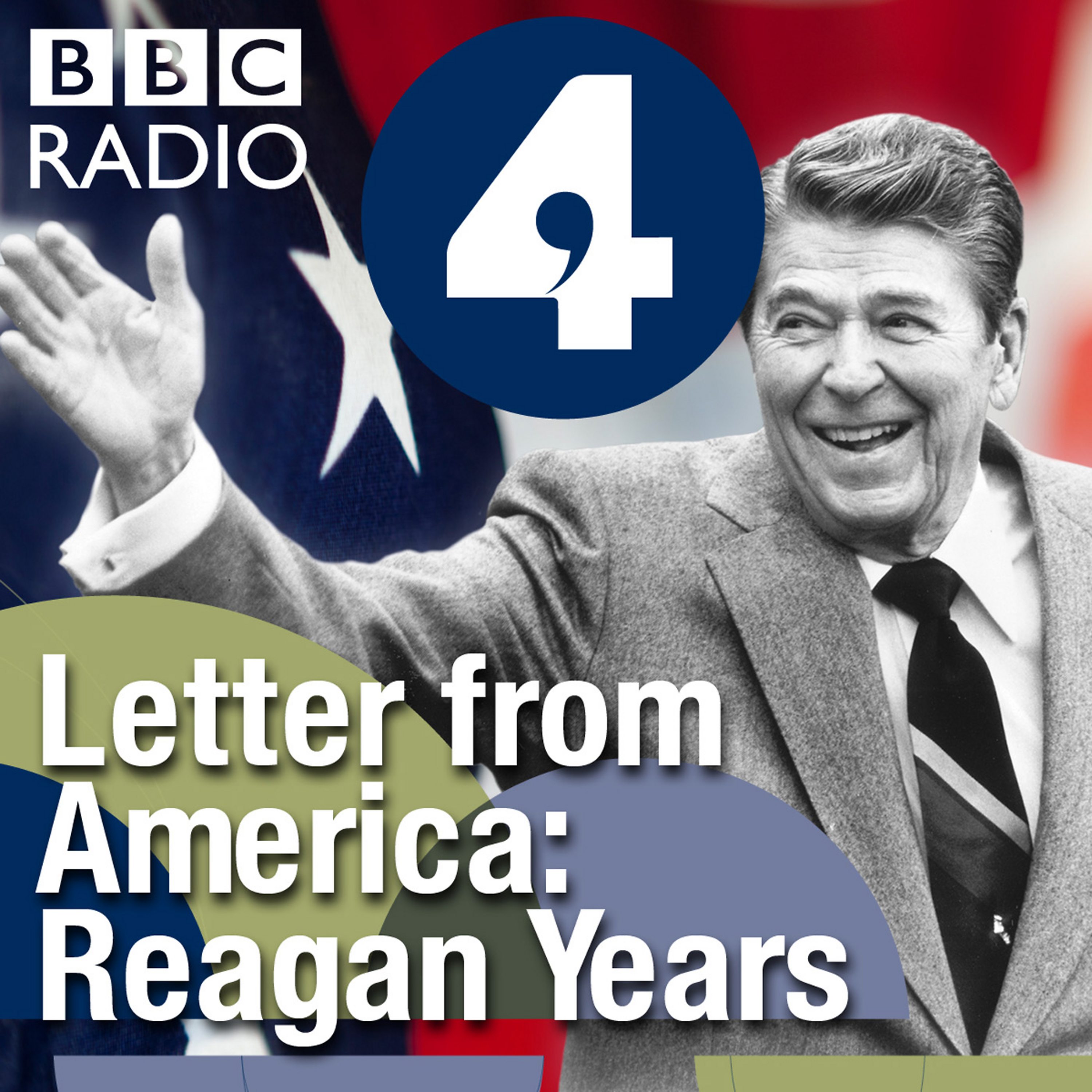
418 episodes listed below
Reagan-era America, observed at close range.
Alistair Cooke’s archived letters follow the United States through the Reagan years with patient observation and dry precision. Elections, political language, media pressure, and public character become small, revealing stories rather than abstract history.
PRESS PLAY
Alistair Cooke’s archived American dispatches offer a measured, story-rich account of the Reagan years and their aftermath. The show is political history, but its method is often domestic, scenic, and conversational. Cooke begins with lived detail: scarlet maple leaves gone brown, a country road, a small schoolhouse, a polling booth. Then the frame widens. Voting becomes a maze of propositions, legal jargon, time zones, television restraint, and national impatience. A campaign attack becomes an excuse to compare modern dirt with the brutal electioneering of earlier American politics. The result is not nostalgia. It is a reminder that democratic manners have always had a rougher underside than official memory admits. The contest between Bush and Dukakis receives close attention, especially the Democrats’ difficulty naming what they stand for and the Republican hold on the South after Reagan. Cooke also follows the sudden national fixation on Dan Quayle, treating a vice-presidential choice as a lesson in how television can turn obscurity into household knowledge almost overnight. The show is strongest when character and institution meet. Bernard Kalb’s resignation, placed beside other acts of public conscience, becomes a meditation on truth, silence, and the pressure placed on official spokesmen. There is wit here, but not flippancy. There is judgment, but it usually arrives by way of anecdote, comparison, and a carefully chosen historical parallel. The pace is deliberate. The sentences have room to turn. Archive framing and modern ad insertions sometimes surround the original talks, yet the center remains Cooke’s voice and his habit of making American public life legible through particulars. It is for listeners who want the Reagan era as it was observed week by week: messy, theatrical, procedural, principled, compromised, and intensely human.
Made for: For listeners who like political history told through scenes, manners, rhetoric, and institutional memory. It especially suits anyone interested in Reagan-era elections, media culture, and American public life.
What sets it apart: The show stands apart by treating weekly politics as historical evidence in the moment, using anecdote and long comparison rather than retrospective summary. Cooke’s perspective gives campaign noise and official language unusual depth.
Ronald Reagan’s presidency, from Reagonomics and the invasion of Grenada in his first term, to the Iran-contra scandal and reconciliation with Soviet leader Mihail Gorbachev in his second. A fascinating social, cultural and political history of American life, through the words of British-American journalist and broadcaster, Alistair Cooke (1908 – 2004).
Short reviews from the PlayNext desk, based on the episodes we processed.
A campaign story built from ads, party labels, hard numbers, and a dry supermarket coda.
Alastair Cooke frames George H W Bush and Michael Dukakis through a campaign shaped less by excitement than by anger, disgust, and the force of advertising.

A season-long narrative reconstruction of the 2012 Benghazi attack and its political fallout.





Politics after the headline breaks open.
Alistair Cooke analyzes the 1988 U.S.
Alistair Cooke examines Bernard Kalb's resignation as State Department spokesman in 1986, framing it as 'The Third Man' alongside two earlier principled resignations.
Alistair Cooke narrates the political and social history of Ronald Reagan's presidency from 1981 to 1988.
Alistair Cooke introduces the sudden fame of Dan Quayle after his selection as George H.W.
Alistair Cooke reflects on the end of the Reagan era, covering key political and social events of the 1980s.
Alistair Cooke introduces the sudden fame of Dan Quayle and reflects on the Reagan presidency.