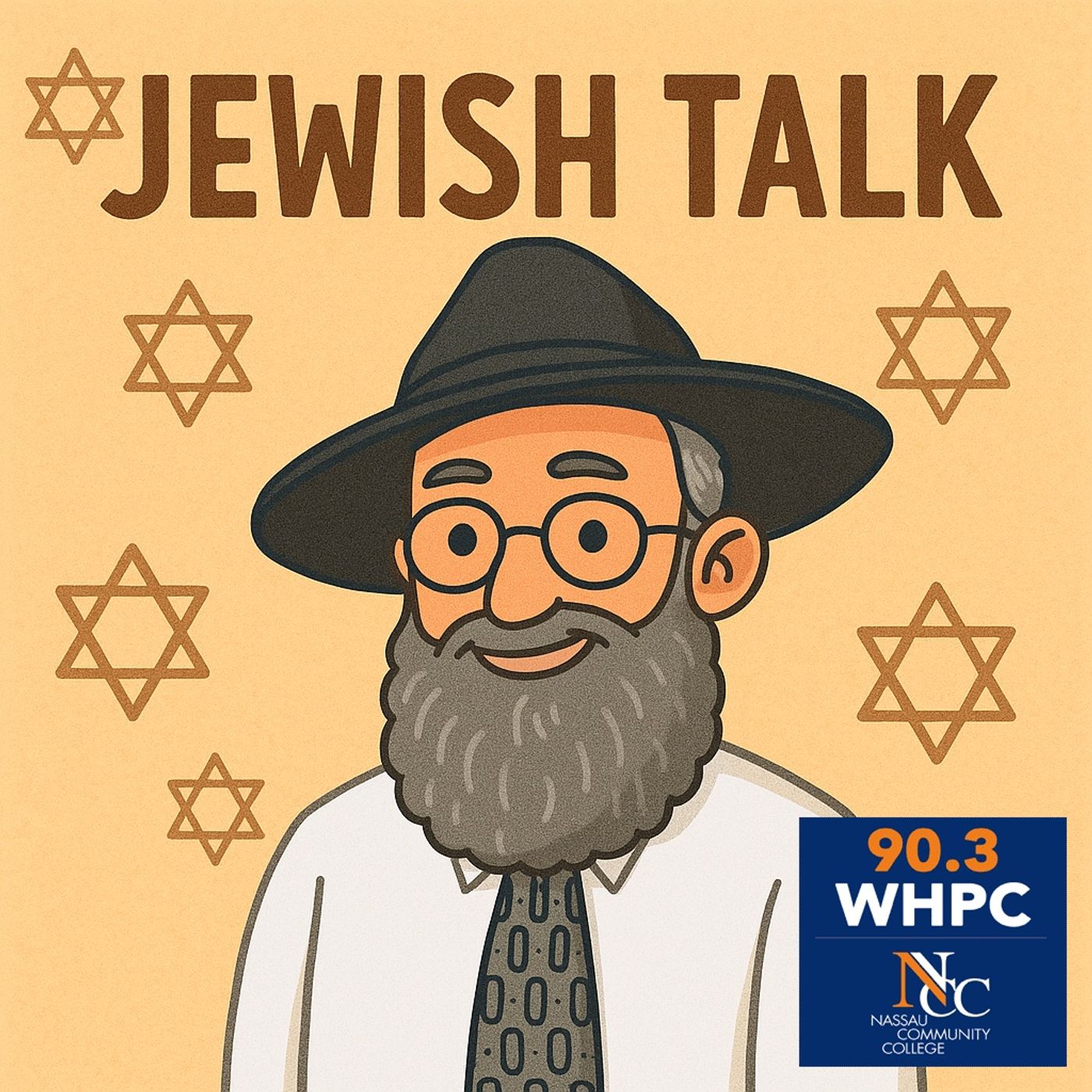
Jewish Talk is a live radio program broadcast from the Nassau Community College campus on 90.3 WHBC, streamed worldwide and simulcast to Facebook, with episodes archived afterward. Rabbi Anchelle Perl hosts it. The opening is a ritual. He counts in, welcomes Mineola, Garden City, Nassau and Suffolk, and tells listeners they can see which color shirt he is wearing if they watch the video feed. Then he starts naming people. Listeners and friends get greeted on air, comments posted during the broadcast get answered, and the effect is less like a lecture and more like a room filling up. The subject matter is deliberately mixed. Perl describes one episode's contents as a potpourri and means it. Passover dominates several installments, approached from different angles each time: the countdown of shopping days, the structure of the Seder, the hunt for the afikoman, and what the evening is actually reflecting on when it talks about freedom. A separate stretch turns to the return of astronauts from a mission that took four crew members farther from Earth than any humans before them. Purim arrives with its own episode. Underneath the variety there is a consistent method, which Perl states outright: take the issues of the day, civic life, family life, leadership, faith, responsibility, and ask what three thousand years of wisdom says about a three-minute news cycle. He is good at inventing a handle for an idea and then hammering it. The clearest example is his split between rut stories, the ones people tell themselves about why a thing only works for the rich or the lucky, and river stories that move a person forward. He tells listeners to grab a pen. He restates a line until it sticks. He digresses into someone's middle name or a move to West Palm Beach and then steers straight back to the lesson. The show also functions as a community noticeboard for Jewish Long Island. Listeners hear about gatherings well before they happen, including a program built around the birthday of the Lubavitcher Rebbe, Rabbi Menachem Mendel Schneerson, at which eleven Chabad emissaries from across Long Island each share a teaching. Perl draws a clear line about tone. He says the program does not shout and does not cancel, because conversation builds community and respect builds bridges. Sometimes there is laughter, sometimes a challenge, and the aim each week is to lift the conversation rather than win it. Judaism, in his framing, is something applied rather than merely practiced. That makes the show useful to listeners well beyond the broadcast radius: a holiday primer, a local calendar, and a weekly nudge toward taking the week's news seriously without getting lost in it.