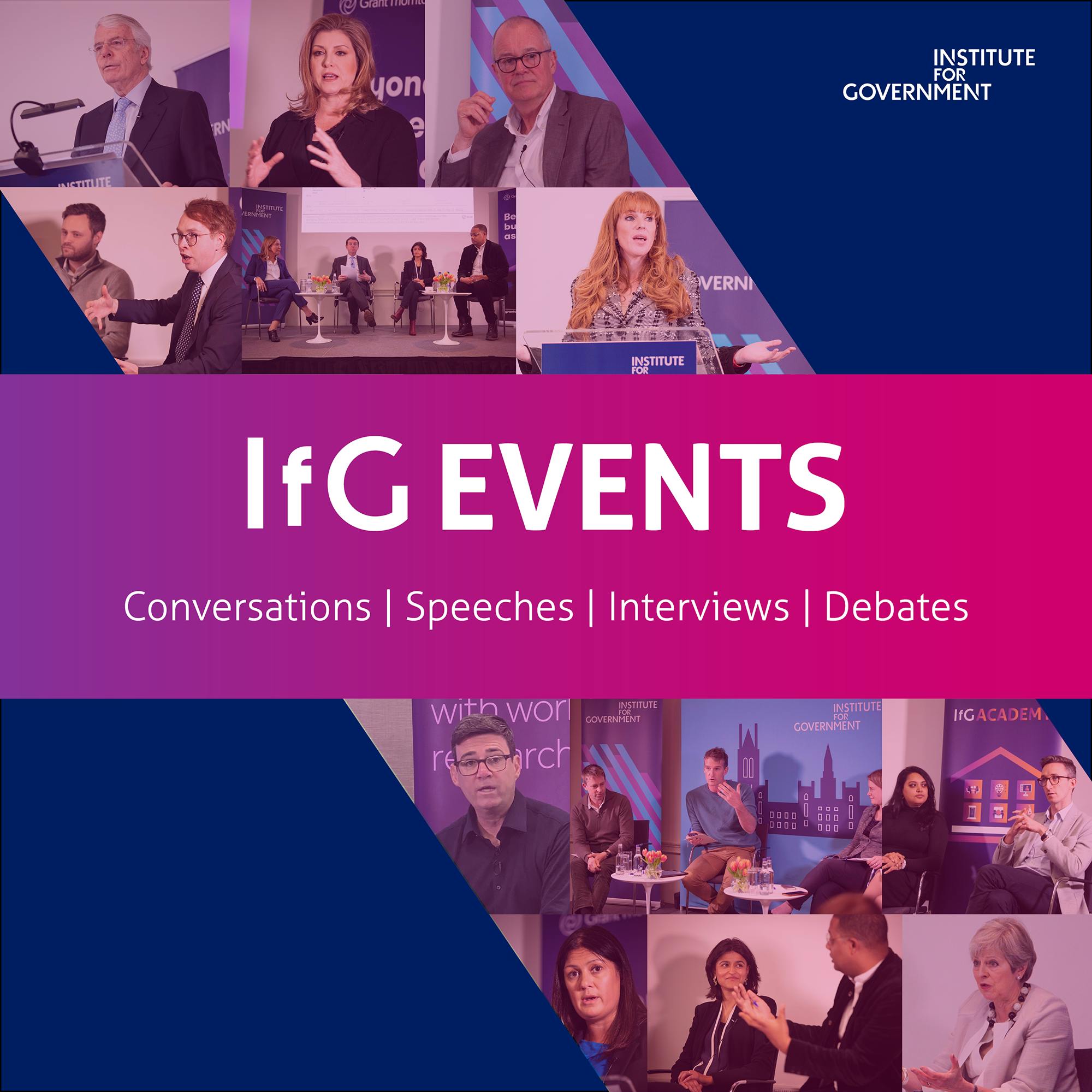
IfG Events is where the Institute for Government publishes the audio of its events, and the recordings arrive with the event still attached. Chairs welcome the room and the online audience, thank partner organisations, invite questions and apologise to those they could not reach. Inside that framing, the substance is dense. One thread is the civil service read through data. Hannah Keenan, an Associate Director at the Institute, introduces webinars built on Whitehall Monitor 2026, the Institute's annual data-driven report on the state of the civil service, under the banner 'A state rewired?'. In 'A state rewired? Civil service size, shape, and turnover', a speaker describes people leaving because nobody made their next opportunity clear, even while departments keep hiring. The companion session on digital transformation, data and artificial intelligence makes a sharper claim: AI treated as an IT experiment tends to stay one. The remedy offered is ownership by senior operational leaders, a named business owner for each use case, clarity about where human judgement sits, and a starting point in what a service is failing to deliver rather than in what the technology can do. The second thread is devolution, chaired in these episodes by Akash Pound, the Institute's Programme Director for Devolution. Ahead of the devolved elections, he holds a series of conversations with party leaders in Scotland and Wales. Malcolm Offord, Lord Offord of Garvel, Leader of Reform UK Scotland, uses public spending as a share of GDP to argue that devolved Scotland reaches for money whenever a problem appears. Rhun ap Iorwerth MS, Leader of Plaid Cymru, is asked about readiness for government, a plan for the first 100 days, and what he has learned from Labour's example. Pound opens that event with a greeting in Welsh and an apology for his accent. Devolution here also means mayors and councils. 'IfG DevoLab #4: How can mayors increase the supply of affordable homes?' was held at Manchester Art Gallery in partnership with Legal & General, and includes a national agency's account of its strategic place partnerships. 'How should ministers decide the size and shape of new unitary authorities?' puts four panellists, with support from Grant Thornton, on a question the chair calls contentious. One panellist argues that without a transparent decision framework, reorganisation will struggle to land and be hard to judge afterwards. The register throughout is measured and courteous, and arguments are built from figures, frameworks and delivery experience. It rewards a listener who wants to hear government decisions argued over in detail, and the large feed leaves room to follow one thread at a time.