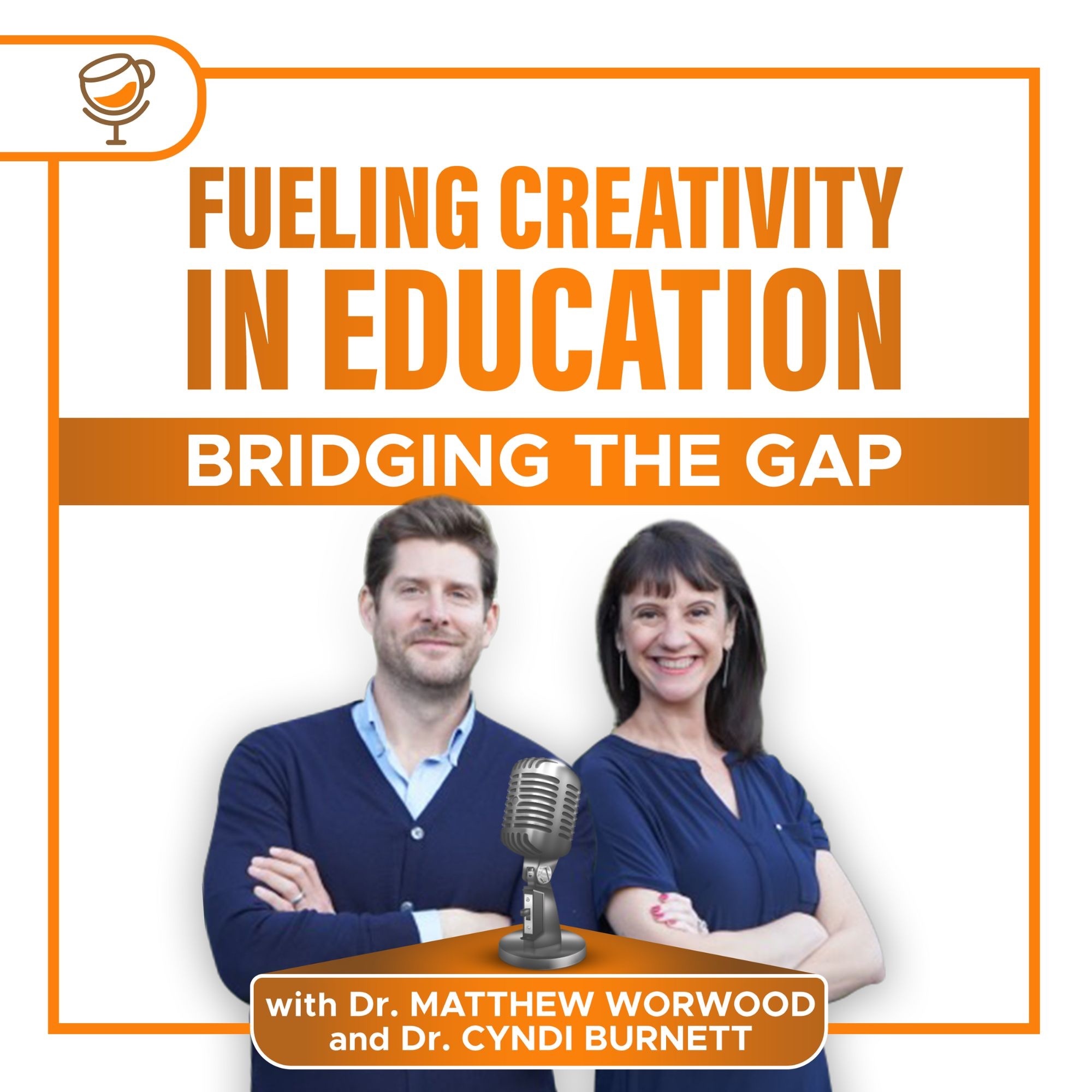
Fueling Creativity in Education examines what creativity looks like when it has to fit inside actual classrooms, schedules, budgets, and school cultures. The show treats creativity as more than talent or decoration. It is a student’s confidence to act on ideas, a teacher’s ability to redesign learning, and a school’s willingness to align practice with stated values. Recent episodes move from Emma Widmer’s Wonder Museum to research conversations about engagement, creative agency, teacher training, and AI. The show often begins with a practical puzzle. Does creativity drive engagement, or does engagement create the conditions for creativity? What happens when funding priorities leave imagination as an afterthought? How can AI support productivity without replacing the moments when people need to think deeply? These questions are handled in a conversational register, but the emphasis stays on application. Teachers are asked to notice where students withdraw, then redesign a small moment to invite curiosity and participation. Schools are asked to look past mission statements and examine whether values are actually being implemented. The show also makes room for unexpected angles, including handwriting as creative connection and tactical creativity in sports. Its debrief episodes are useful because they connect separate interviews into a larger argument about schooling. Creativity is not missing from education, the show suggests. It is often under-prioritized, under-trained, or squeezed by systems that reward more measurable outcomes. Guests bring research credentials, classroom stories, and organizational examples, while the recurring speakers translate those ideas into questions educators can use. The result is steady, practitioner-minded listening for people who care about teaching, learning, and the conditions that let students make meaning.