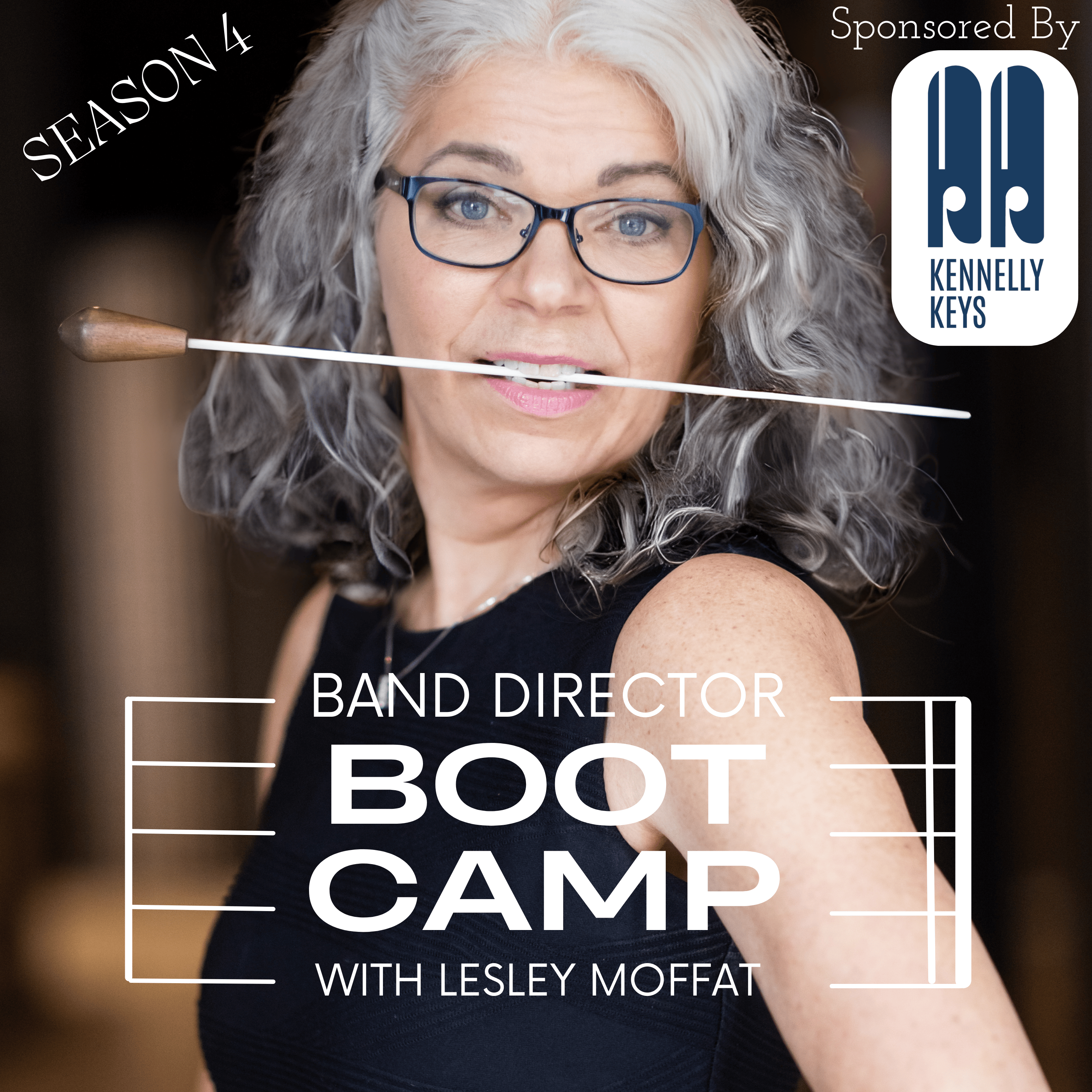
Band Director Boot Camp speaks to the part of music education that does not fit neatly on a concert program. The show is about rehearsals, yes, but also planning periods, parent volunteers, administrative buy-in, first-week procedures, student confidence, personal stamina, and the private cost of keeping a school music program alive. Leslie Moffitt frames the conversations with a clear concern for sustainability. The guest usually carries the main story. That gives the show its lived-in feeling, because advice often arrives through a classroom memory, a hard season, or a system someone built because there was no full team available. Episodes can be very practical. A conversation with Mike Perez turns parent help into a relationship-based support structure, not just a task list. Tim Ostro’s middle school band help list points toward templates, routines, and systems for directors trying to get out from under daily chaos. Dr. Scott Watson’s back-to-school discussion treats fundamentals as something that can be made playful without becoming unserious. Jazz episodes focus on confidence, improvisation, and the way some students come alive when they are given room to step forward. Other episodes move into heavier territory. A conversation about motherhood in music education names isolation, miscarriage, physical strain, and the lack of institutional support without rushing past them. The show also widens beyond band technique into energy management, scheduling, boundaries, and personal capacity. Michelle Niemeyer’s episode connects flow and focus to the teacher who feels drained no matter how much gets checked off. Erin Lilly-Fors brings organization, parent communication, composing, single motherhood, and varied school settings into the same practical frame. The result is a podcast that treats band directors as whole people with demanding jobs, not just conductors looking for rehearsal tips. It is warm, specific, and grounded in the daily mechanics of teaching music. It does not pretend that better systems solve everything. It does argue that support, routines, and honest conversation can make the work more humane.