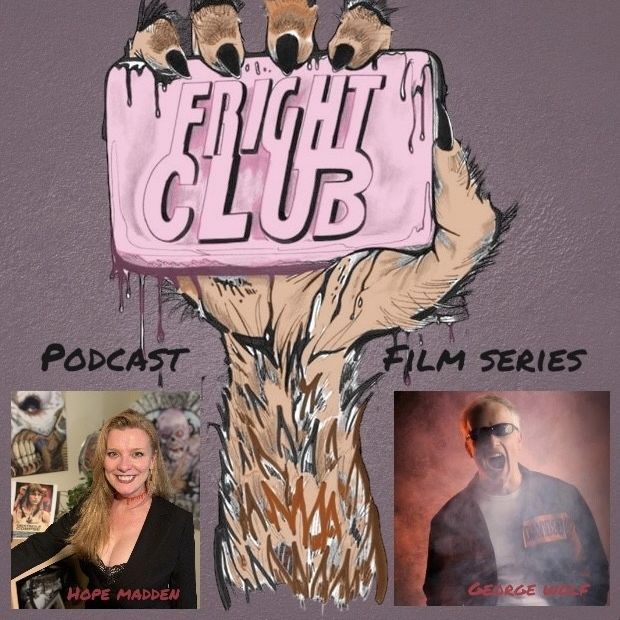
Fright Club Podcast treats horror criticism as a night out. Hope Madden and George Wolf host it, and its live editions are recorded at Gateway Film Center in Columbus, Ohio, where the crowd is told that if nobody leaves drunk or bloody, it has not been a fun night. Those nights run on the themed list. The hosts pick a corner of the genre, then defend every entry. On teenage vampires, Fright Night beats The Lost Boys, and the reason given is that the Lost Boys teens all seem to be about thirty, while Fright Night's Evil Ed reads as a kid worth grieving for. On budding physicians, American Mary makes the cut: a medical student in money trouble, wronged by the doctors who teach her, who leaves school for body modification work. There is also a detour into its title, which was meant to be Bloody Mary and ended up, for a very Canadian film, as American Mary. The Valentine's Day Eve edition went looking for heartbreak and paired the discussion with a screening of the 2002 film May. Short films turn up at the live shows too, including one the hosts saw at Nightmares Film Festival. Then there is Skeletons in the Closet. Each Oscar season the pair go back through the nominees' filmographies for the bad horror movies in their past, a habit that began as a blog. The judgments are candid without being cruel. One entry is called 'not good' but 'fine', while Session 9 gets an unreserved recommendation for anyone drawn to asylum horror. The interviews change the register. With Florian Frerichs, the talk turns to Dream Story, his own take on a story that earlier films, Kubrick's among them, had already told. The conversation sets it beside the Kubrick film, which one host finds to be about wealth, while this one reads closer to a love story, and Frerichs brings the discussion around to impotence. He names Carpenter, Cronenberg and Lynch as influences. Jeremiah Kipp, a returning guest, describes the embalming close-ups in The Mortuary Assistant as a way of turning the game's step-by-step procedure into film language, and the talk makes time to praise the actors who played the corpses, which is harder than it looks. Across all of it, what holds the show together is how easily the two hosts talk to each other: quick agreement, teasing about movie crushes, and technical hiccups waved off with a promise to 'fix it in post'. For more, the hosts point to their other podcast, Screening Room, for new releases, and to MadWolf.com for reviews and interviews. A good first stop is any of the live themed nights, where the crowd, the list and the arguments all come together.