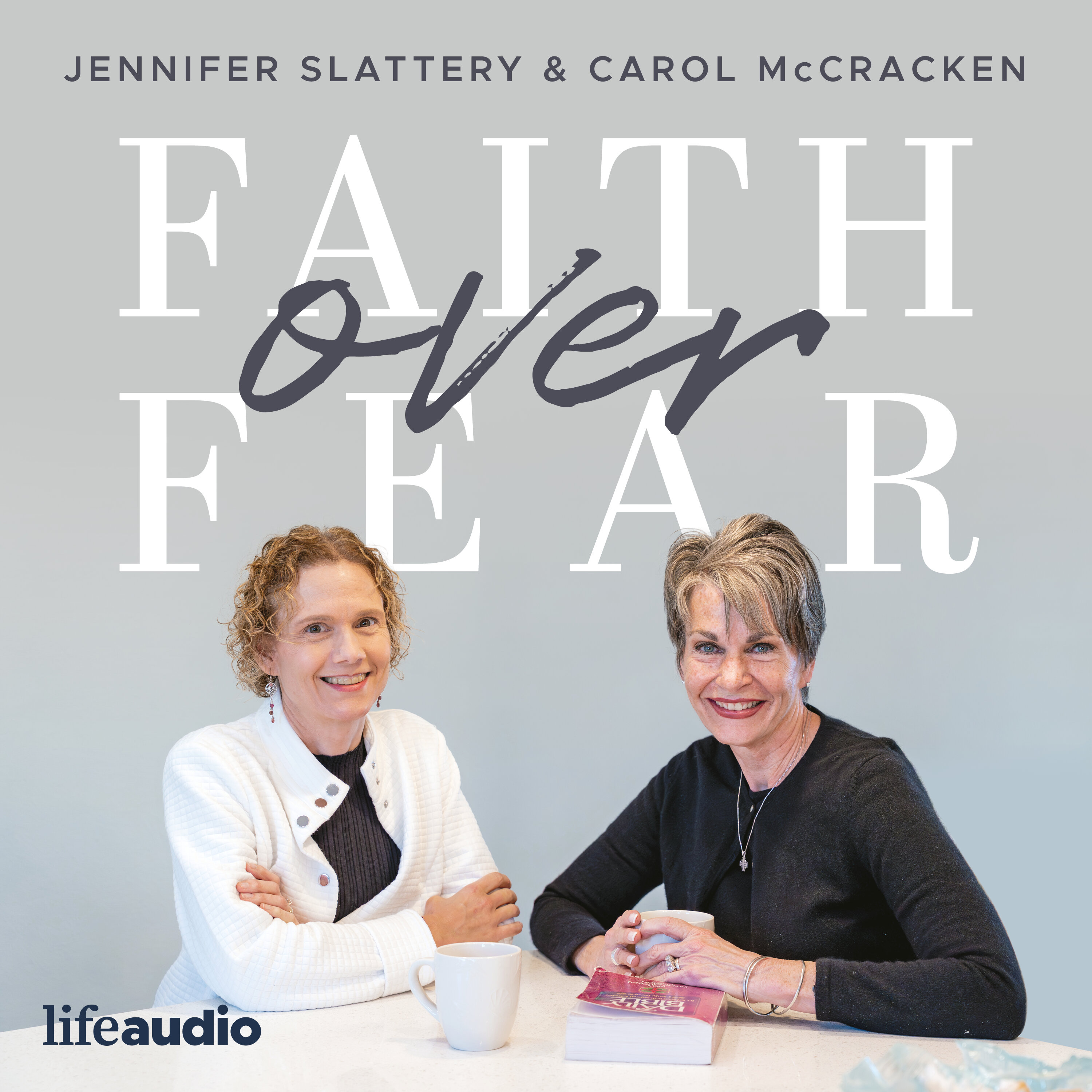
Faith Over Fear is a Christian podcast about anxiety, fear, and the hard spiritual questions that surface when life does not improve on schedule. It is not breezy reassurance. The show spends time with people who are waiting on test results, carrying relational wounds, recovering from deep discouragement, or trying to trust God when prayers seem unanswered. Jennifer Slattery and Carol McCracken shape many episodes around a clear emotional problem and a corresponding Christian truth. That structure gives the conversations a steady rhythm. Fear is named plainly. So are the lies that can attach to pain, including the belief that struggle means weak faith or divine rejection. The show’s strongest episodes combine biblical language with practical regulation tools. Breath prayer, Scripture focus, progressive muscle relaxation, deep breathing, and stress awareness appear alongside discussions of grace, identity, hope, and God’s presence. That mix gives Faith Over Fear a useful texture: devotional, but not detached from the body. Guests broaden the frame. Courtney Reisig talks about belief when circumstances change. Kirby Kelly brings testimony, theology, and language around hope after severe emotional pain. Mary DeMuth speaks to past wounds, safe relationships, disagreement, misunderstanding, and restored patterns. Dr. Charles Stone addresses stress, resilience, peace, and productivity. Chris Roman connects emotional limits, self-care, and continuing work through change. The show is also recognizably Christian in its assumptions and vocabulary, with regular references to Jesus, Scripture, prayer, redemption, calling, and God’s faithfulness. Its tenderness is grounded in conviction rather than vagueness. Some episodes include sponsor segments and cross-promotions, which can briefly shift the flow. Still, the editorial center is consistent: fear may be loud, but it is not treated as the final authority. Faith Over Fear suits listeners who want Christian counsel for anxious thoughts, painful waiting, family stress, and old relational patterns without being told to simply try harder or move on.