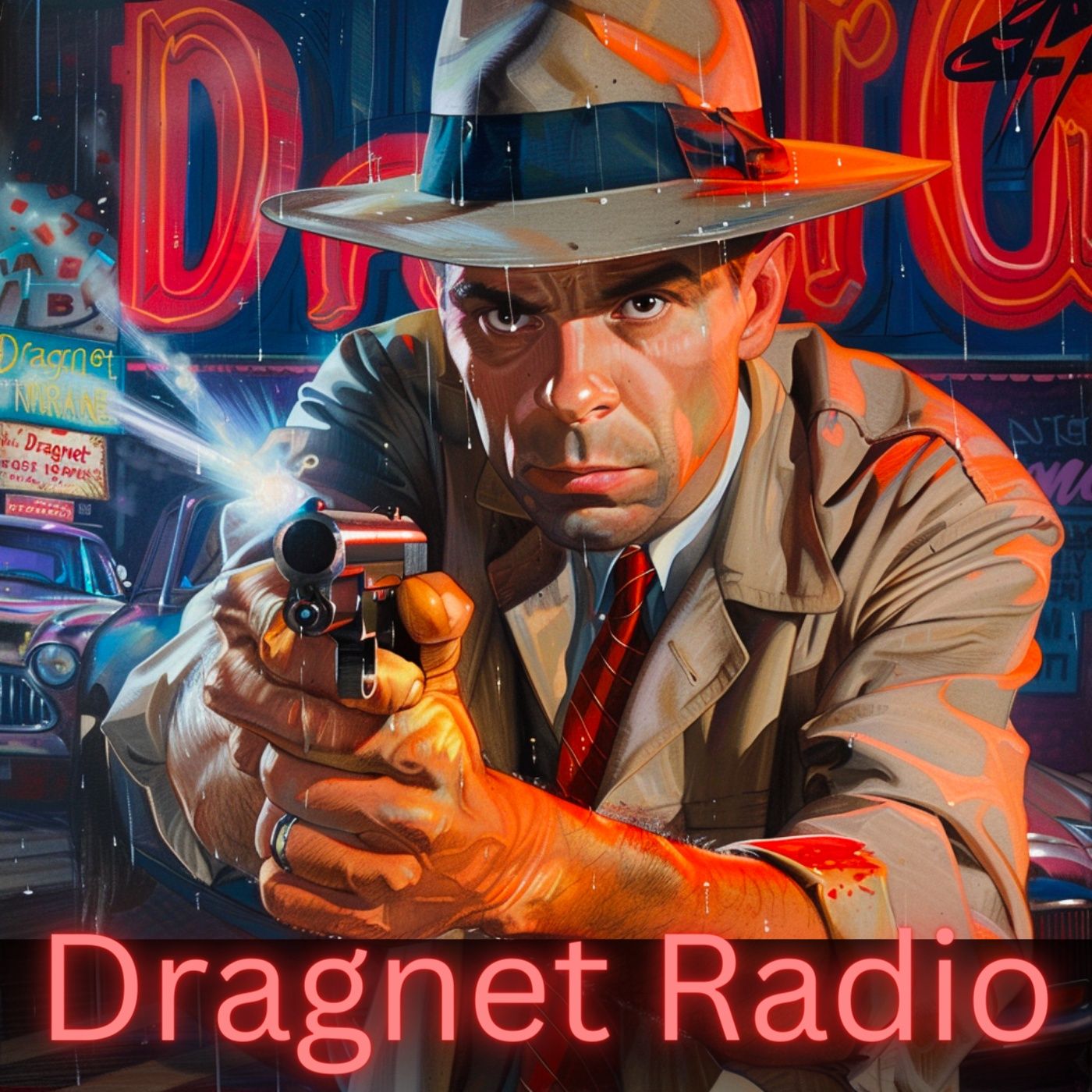
Dragnet | Old Time Radio treats crime drama as a sequence of verifiable steps. A call comes in. A detail is assigned. A time is logged, a room is entered, and the next question narrows the field. The show’s cases range across burglary, robbery, homicide, narcotics, and juvenile detail, but the basic pressure stays the same: find the missing fact that makes the file hold together. Its Los Angeles is built from markets, hotels, taverns, motels, offices, apartment rooms, and bureau desks. Nothing sits still for long. Detectives move from witness statements to suspect interviews, from casual conversation to accusation, from a vague description to a name that can be checked. Friday and Frank Smith are often the steady center, working through leads with clipped patience and a dry tolerance for each other’s side remarks. Their banter is brief. It never takes over the case. A stakeout can make room for a complaint about a birthday present, but the thief still has to be caught. A poolside conversation can sound almost ordinary, until the homicide detail behind it comes back into view. That rhythm gives the series its charge. The danger is present, yet the storytelling is usually controlled, reportorial, and procedural. Suspects bargain, deny, exaggerate, panic, or protect someone else. Witnesses remember fragments. Parents defend children. Robbery suspects argue about the value of stolen jewels. Narcotics inquiries turn domestic rooms into evidence searches. Juvenile cases bring in fear, anger, and institutional rules. The episodes also keep a formal relationship to authority, ending with convictions, sentencing, probation, or official closing notes. That can make the show feel severe, but it also gives each story a hard edge of completion. For listeners drawn to classic crime drama, the pleasure is not a twist ending so much as the grind: one question, one answer, one lead, one report. The machinery is visible, and that is the point.