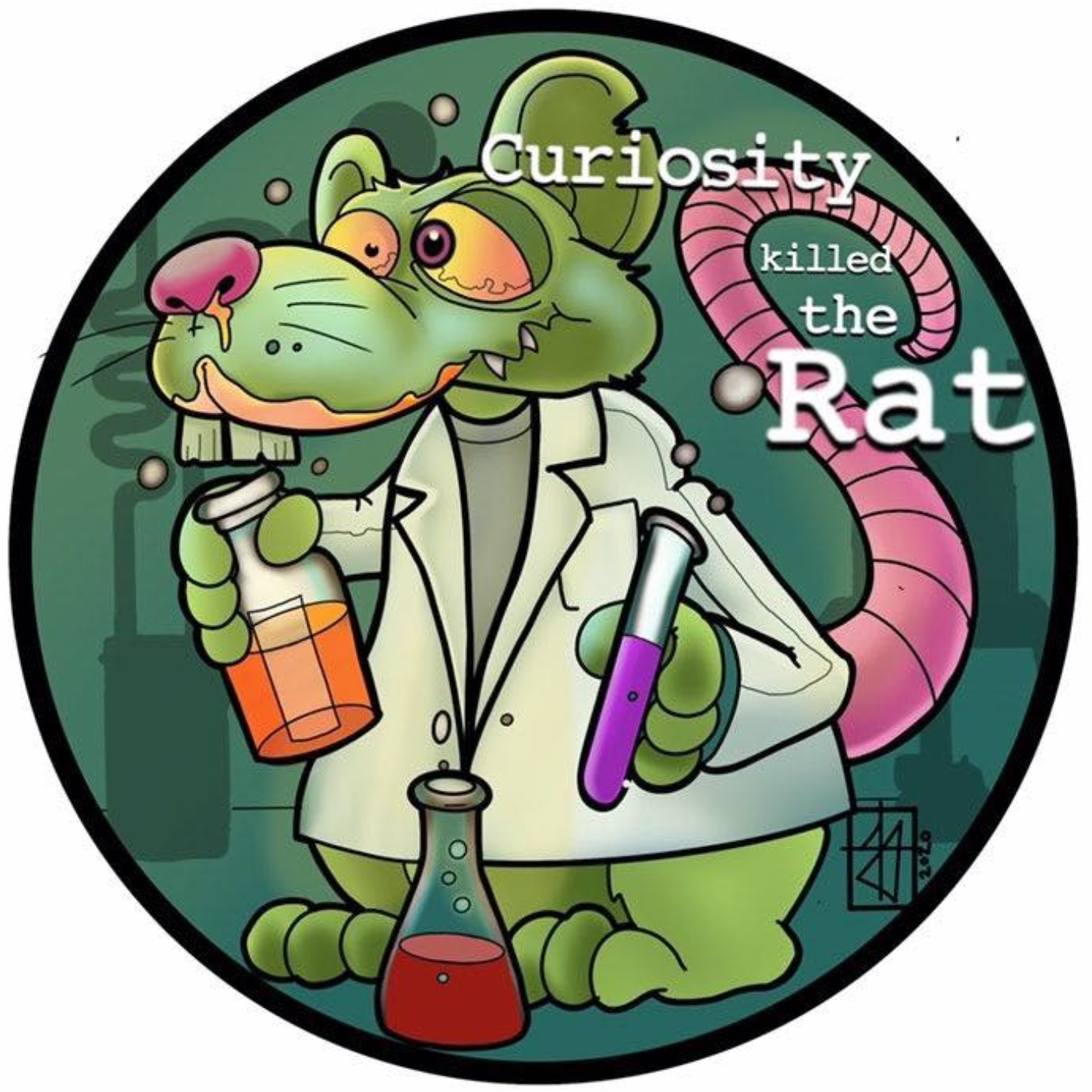
Curiosity Killed the Rat is a science conversation between two people who know very different amounts about the subject at hand, and it makes the most of that. Matt introduces himself as a science enthusiast. Cade is a neuroscientist, the regular scientist on the show, and mentions doing a PhD in addiction neuroscience. In 'Stomach Ulcers', Cade checks whether Matt has any idea what the topic is. He has absolutely no clue, and he calls it another class. That is how the show works: the explanation gets built for a newcomer on the spot, and the newcomer asks questions back. The titles show how far it roams: Pumpkins, Acetylcholine, Stomach Ulcers, 'CKtR Flashback: Crying', 'Epilepsy (ft. Dr Lauren Bleakley)' and 'Antarctica 2: Electric Igloo (ft. Dr Jarrod McKenna)'. Botany, brain chemistry, medicine, human behaviour and polar science all fit under one roof. The pumpkin conversation is a good sample of the method. It sorts out why so many things casually called pumpkins are really gourds and why Australians and Americans mean different things by the word, then turns to why pumpkins get carved into jack-o'-lanterns, and it ends on a joke about Australia's quarantine laws ruling out mailing pumpkin seeds. Acetylcholine strays even further. One host, a self-described physics enthusiast, remembers calculating the mass of Jupiter in year 12 physics and says physics is easier to grasp than biology, where living things add complications of their own. The episode closes with a joke about Aussie pronunciations of technical abbreviations that earn a funny look in a scientific presentation. Guest episodes change the texture. The Epilepsy episode includes an account of lab mice bred to carry the equivalent of one patient's HCN1 channel mutation, used to learn how it causes epilepsy and how to fix what is described as a leaky tap, and it mentions the patient's family visiting the lab. The Antarctica episode touches on lectures about whales, seals, birds and penguins and on the policies governing the continent. It also explains citizen science, meaning science that non-scientists can take part in, which the resident science enthusiast is clearly keen on. The feed also carries an older favourite, replayed during a break from recording. That crying conversation connects the expectation that men stay stoic to bottled-up emotion and men's much higher suicide rates, calls this a social pattern rather than an evolutionary one, and says it matters to notice when research leaves out transgender, non-binary and gender non-conforming people. Then there are the openings. Matt piles adjectives onto Cade, and Cade needles him when he runs short. Both acknowledge the Traditional Owners of the lands they record from, the Noongar people for Matt and the Wurundjeri people of the Kulin Nation for Cade, and Cade calls Indigenous Australians the first scientists. The tone is loose, affectionate and sometimes sweary. The curiosity is real.