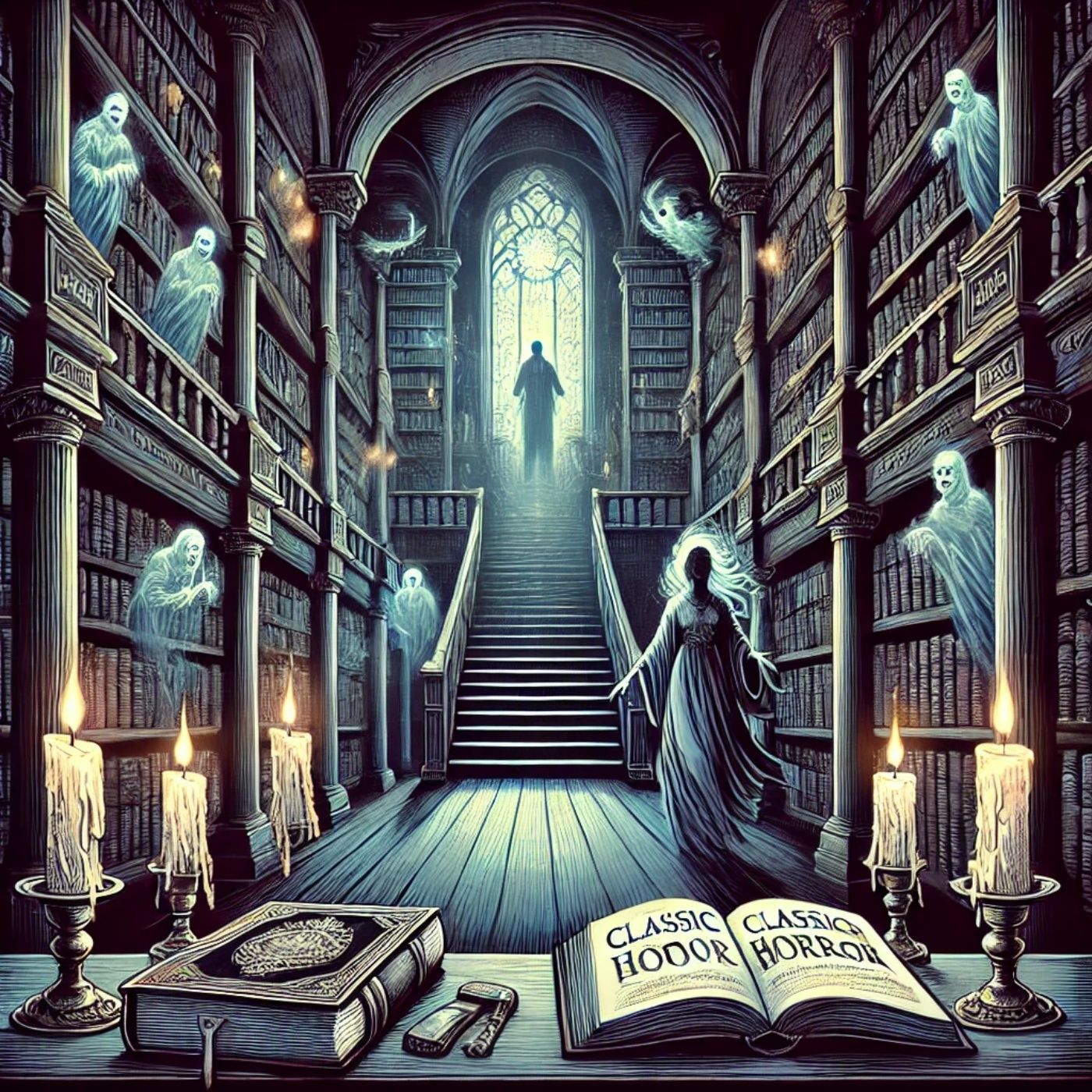
Classic Horror Book Collection treats horror as something inherited, recorded, and slowly revealed. Its episodes are readings of older supernatural and gothic stories, with little need for modern framing. Lazarus begins in miracle and ends in terror, as the returned dead man becomes less a comfort than a living witness to something no one can bear to see. Reality or Delusion turns on ghostly possibility, household suspicion, and the stubborn remains of evidence. Let Loose brings architecture, travel, and uneasy companionship into the orbit of the dead. Thurnley Abbey moves through rail journeys, smoking-room acquaintance, and the social quiet that often precedes a haunting. Pledged to the Dead adds a more melodramatic current, with Dr. Trowbridge, Jules de Grandon, urgent visitors, and death pressing at the edge of polite rooms. The Old Nurse's Story is among the most domestic of the examples, finding terror in snow, music, old family sin, and a child drawn toward danger. The Monster of Lake LaMetrie shifts the register toward weird science, where a Wyoming lake, a prehistoric creature, and a disturbing experiment blur natural history with nightmare. The Withered Arm returns to rural life, where gossip, jealousy, superstition, and bodily decline become inseparable. The appeal is cumulative. Many installments begin with ordinary observation, then tighten around one object, one room, one figure, or one unexplained mark. Some recordings include rough edges, repeated lines, or intrusive ad material. The show still holds together because the stories themselves are strong, visual, and severe. Its horror is rarely quick. Families keep secrets. Bodies betray hidden pressures. Science and superstition both fail to make the darkness manageable. It suits listeners who like classic ghost stories, strange survivals, haunted houses, marked women, and narrators who let dread take its time. It is less a thrill ride than a cabinet of old anxieties, opened drawer by drawer.