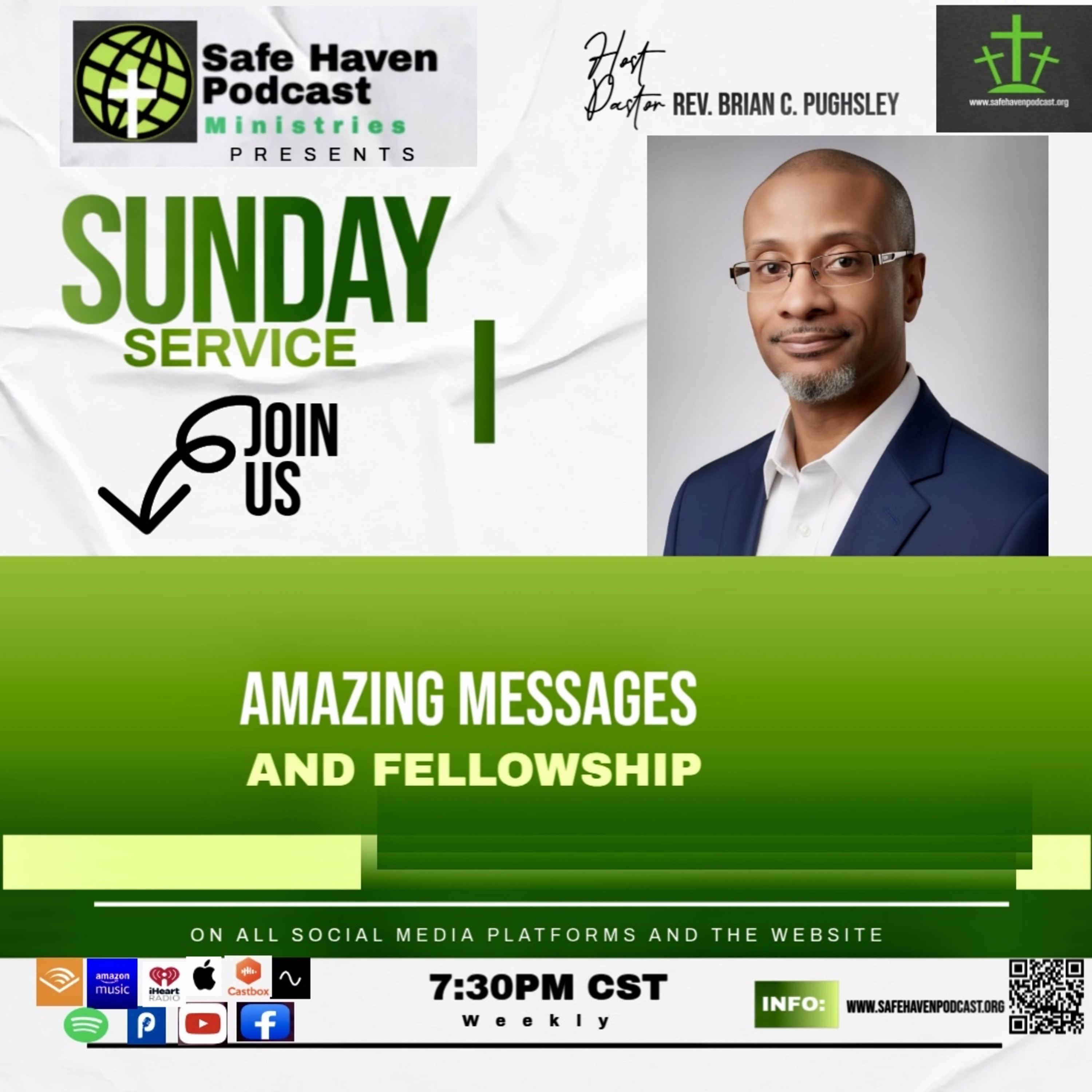
Brian C Pughsley’s Safe Haven is a Christian sermon and teaching podcast shaped like a continuing ministry. It opens the door slowly, with greetings, thanks, service reminders, platform notes, and references to earlier messages before settling into the central word. That rhythm matters. The show treats each episode less like a discrete media product and more like one stop in an ongoing worship life. Reverend Brian C. Pugsley speaks in a direct pastoral register, often moving from a recent service, a personal encounter, or a ministry update into scripture and prayer. The pacing is quick and rolling. Sentences gather force through repetition, testimony, and call-and-response language. Recent messages return often to worry, doubt, courage, sacrifice, and the meaning of standing up for God when the surrounding world feels unstable. Biblical scenes are handled as living examples rather than distant lessons. Lazarus, Palm Sunday, Resurrection Sunday, Good Friday, Paul’s words to the Romans, and Jesus’ return to his followers become ways to talk about fear, allegiance, hospitality, weakness, and renewal. The show is also personal. It makes room for unemployment, anxiety, therapy, job disappointment, church hurt, grief, depression, and the uneasy feeling that something is wrong in the spirit. Those stories are not treated as side notes. They become the road into the sermon. A recurring concern is whether believers recognize God in people who arrive without status, polish, or approval from the room. Another is whether faith can hold when control slips away. The program also functions as a bulletin for Safe Haven Podcast Ministries, with Saturday Inspiration, Lenten services, Good Friday, Easter, guest preaching, and ministry support woven into the feed. That gives it a lived-in, communal texture. The production can feel repetitive and informal, but the looseness is part of the identity. It is a microphone pulpit for listeners who want scripture, prayer, encouragement, and plainspoken Christian exhortation without losing the ordinary mess of the week.