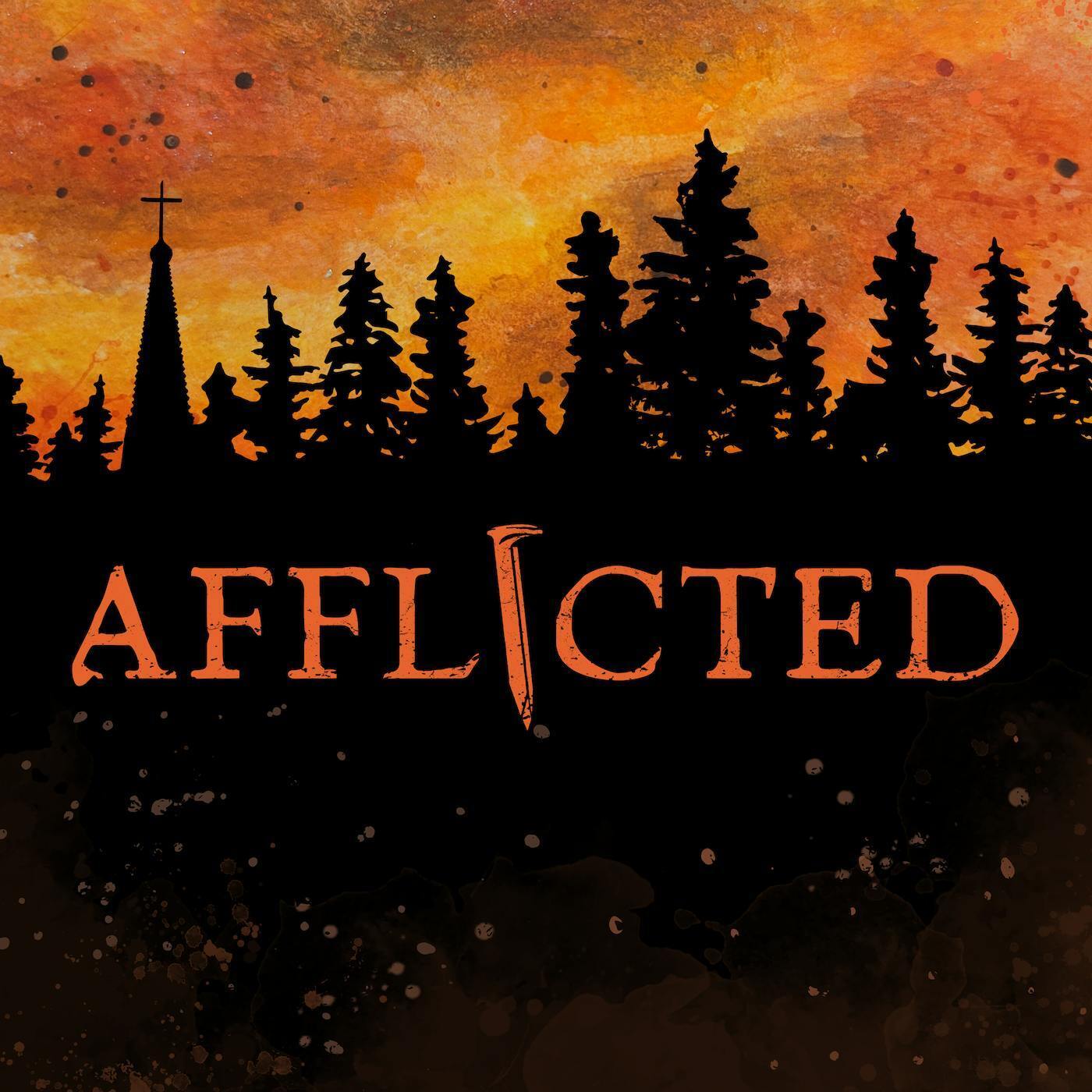
Afflicted is a serialized horror audio drama built around Gunaway, Texas, a town where supernatural disaster arrives through weather, violence, infection, and a book no one can afford to misunderstand. Its scenes have the feel of a crisis already in progress. People argue because they are scared. They make plans because waiting is worse. The show’s strongest tension comes from that practical urgency: hold someone down, finish the wards, find the medical kit, search the records, get the truth out before another person dies. Hoodoo is not background flavor here. It is part of the action, used beside scripture, holy water, antibiotics, candles, oil, blood, and old family knowledge. That mix gives the show a rough, specific texture. The supernatural threat is bodily, local, and deeply tied to history. Gemma wants out of town, but the past keeps pulling her back toward family obligation and loss. August, Andre, Bria, Maria, Rhonda, Dana, Mama Cherry, and others move through scenes where trust changes fast and every answer seems to create another emergency. The book itself carries a wider trail. Government agents track it. Ophelia Ballard’s diary links it to JFK, suspicious plane crashes, and official silence. Library research turns one woman’s death into a question about erased records and false explanations. The show is not only about monsters. It is about communities deciding who to believe when grief, religion, fear, and rumor have already made everyone dangerous. Afflicted also uses end-of-episode lore to widen its horror, from blood magic and conjure practices to ergot poisoning and unexplained aviation disasters. Those historical notes make the fiction feel connected to older patterns of panic and tragedy. The pacing stays brisk, even when the mythology expands. Exposition usually arrives under pressure, through interrogation, testimony, diaries, or someone trying to solve a problem before the room breaks open. The result is grim, intimate, and restless: a horror story where survival depends on memory, ritual, medicine, and the nerve to keep asking what the book has done.