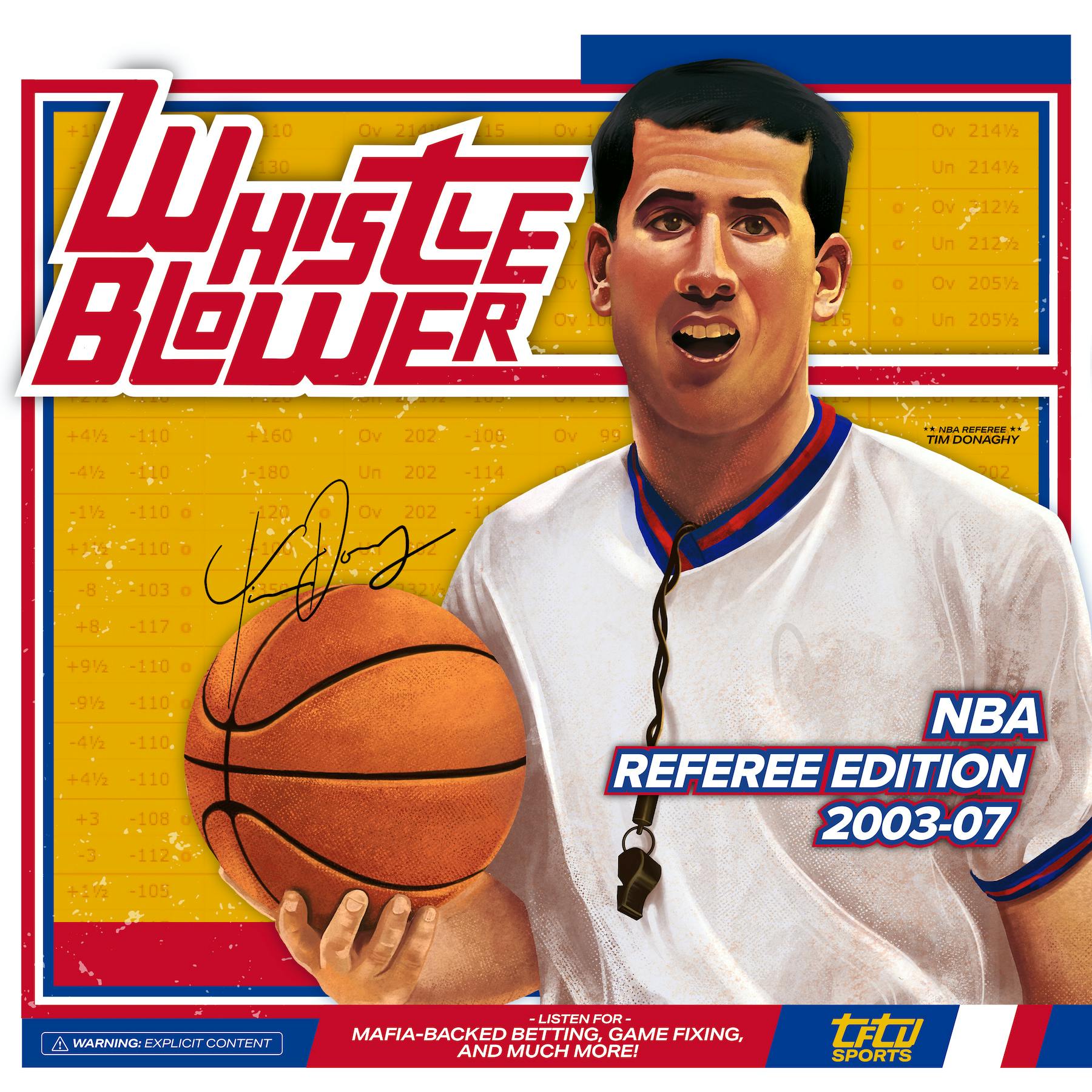
Whistleblower · Tenderfoot TV & Audacy

What's Afoul?

October 29, 2020·38 min·2 clips
Major League Wrestling COO Jared St. Laurent says post-Donaghy manipulation shifted to the 10.5-to-7.5-minute window of the second quarter — 'the most innocuous time of the game' — because end-of-game manipulation is now too scrutinized.
The clean chart breaks quickly. The episode opens with basketball reduced to its supposed chain of command: commissioner, owners, players, referees, and games protected by the whistle. That tidy version does not hold for long. Mark Lamont-Hill frames sport as a small version of society, where money, power, and influence make those relationships much less straight than fans may want them to be. The timing matters. After the Donaghy scandal, the argument goes, fixing the end of games would be too visible and too easy to question. So the alleged tactic moves earlier. The guest points to the second quarter, especially the stretch from roughly ten and a half minutes to seven and a half minutes, as the quieter window. It almost sounds too dull to matter. That is why it matters here: a sleepy patch of game time, with less attention on it, becomes a place where the whistle can bend the game. The guest's claim is blunt. Basketball is easier to manipulate than other major team sports because fouls happen often enough to look normal. Football has judgment calls too, but repeating the same kind of penalty would look strange fast. An NBA game can carry fifty or sixty fouls without making people gasp. The wrestling comparison makes the accusation sharper. Pro wrestling is described as having chosen full manipulation long ago, while basketball is cast as choosing a quieter path. The point is not that they are identical. The charge is that money, judgment calls, and public attention leave enough room for manipulation to work without announcing itself. That is the unnerving part. The episode keeps circling the gap between the structure fans think they are watching and what people inside the machinery say it can become.

As heard by us

A skeptical take on NBA officiating, money, and influence.

This episode treats NBA officiating less like a hot-take subject and more like a pressure system, with Mark Lamont-Hill pressing on how money, access, and influence can blur the line between the game and the people paid to police it.

Read the full review in PlayNext →

Why you'd press play

If you want the NBA's power map behind the box score, start here.

Read the full recommendation in PlayNext →
Listen to the show on