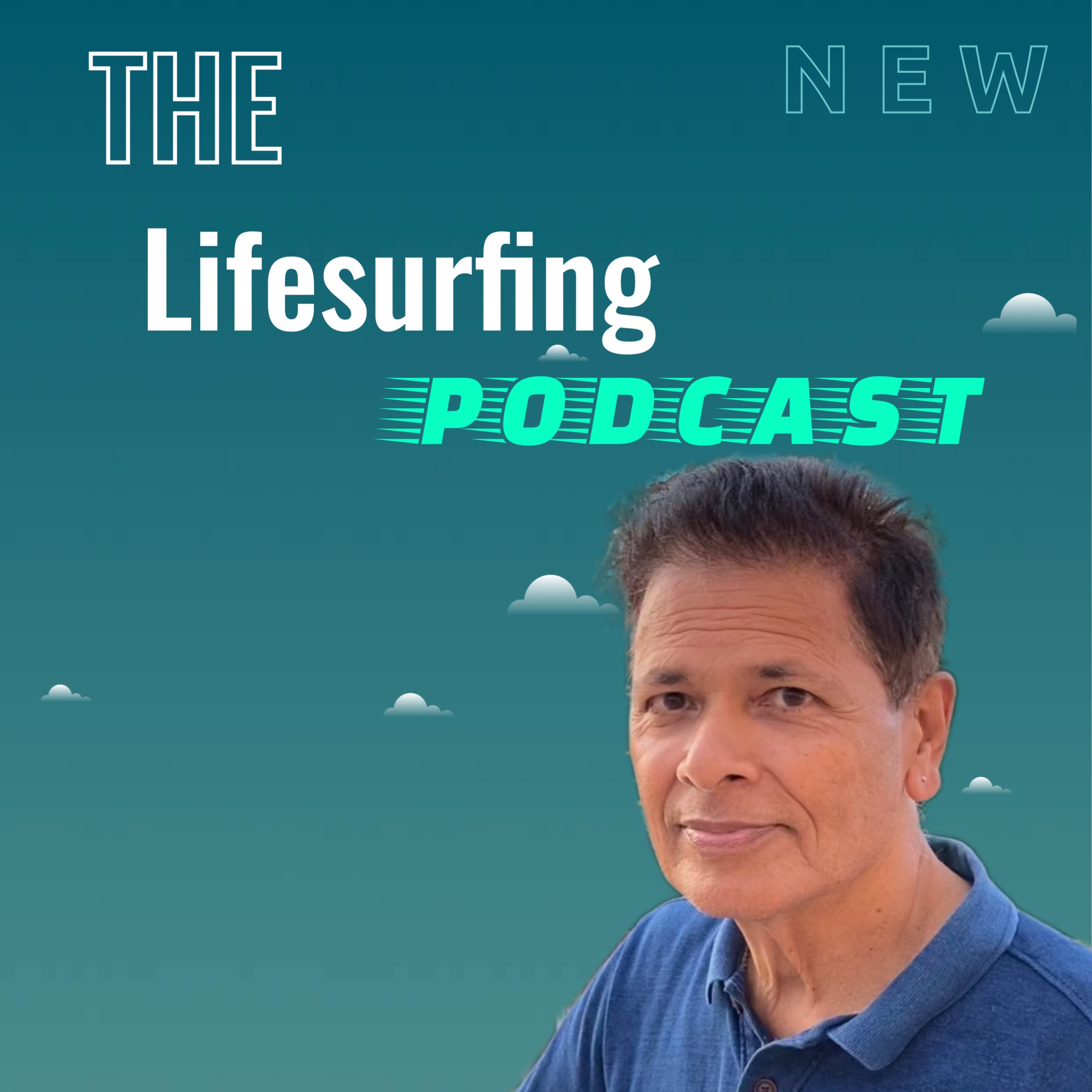
The Life Surfing Podcast · Bhashkar Perinchery

Find authentic joy and freedom // Realize enduring peace through experiencial understanding beyond words : Bhashkar Perinchery

·34 min·2 clips
Discussing a menu cannot satisfy hunger; understanding requires inner inquiry and direct experience.
1. The Life Surfing Podcast episode addresses authentic joy, freedom, enduring peace, and experiential understanding beyond words. 2. Bhashkar Perinchery appears as the guest, explaining how meditation and inner inquiry can address pain, anxiety, fear, and suffering. 3. The episode asks how a person can stop postponing reality and make awakening an honest, wholehearted priority. 4. Bhashkar says people often begin seeking deeply only after pain, helplessness, or hopelessness becomes difficult to ignore. 5. He distinguishes meditation as a relaxing hobby from meditation brought into ordinary life with intensity and commitment. 6. He identifies changing phenomena, transitoriness, and death as realities that people commonly avoid. 7. Bhashkar states that everyone who is born will die, while all other events in life may or may not happen. 8. He says people become trapped by dreams, desires, fears, calculations, and conclusions surrounding the changing body and personality. 9. He argues that confronting death before its immediate arrival can produce a different quality of life. 10. He describes meditation as awakening from identification with the body, personality, and the idea of being separate. 11. Bhashkar says people can watch the body, thoughts, feelings, and energy processes because they experience all of them. 12. He says awareness can reveal that the body will die and the personality will dissolve without requiring identification or suffering. 13. He frames human life as unique because human consciousness can observe processes and become inwardly disentangled from them. 14. He says nobody else can make a person clear or free unless that person wants clarity, seeks it, and is ready for it. 15. Bhashkar describes divine grace as something that cannot be forced or managed after a person makes themselves available. 16. He defines transformation as going beyond form and duality toward an experience of interconnectedness. 17. The discussion compares conceptual understanding with discussing a menu while a hungry person still needs to prepare and eat a meal. 18. Bhashkar invokes Lao Tzu's claim that truth cannot be said and Socrates' statement that he knows only one thing: that he does not know. 19. The episode uses a reflective interview format with repeated prompts toward silence, wakefulness, and observation without identification. 20. People seeking contemplative practice beyond relaxation may appreciate it, while listeners wanting empirical instruction may skip it.
Listen to the show on