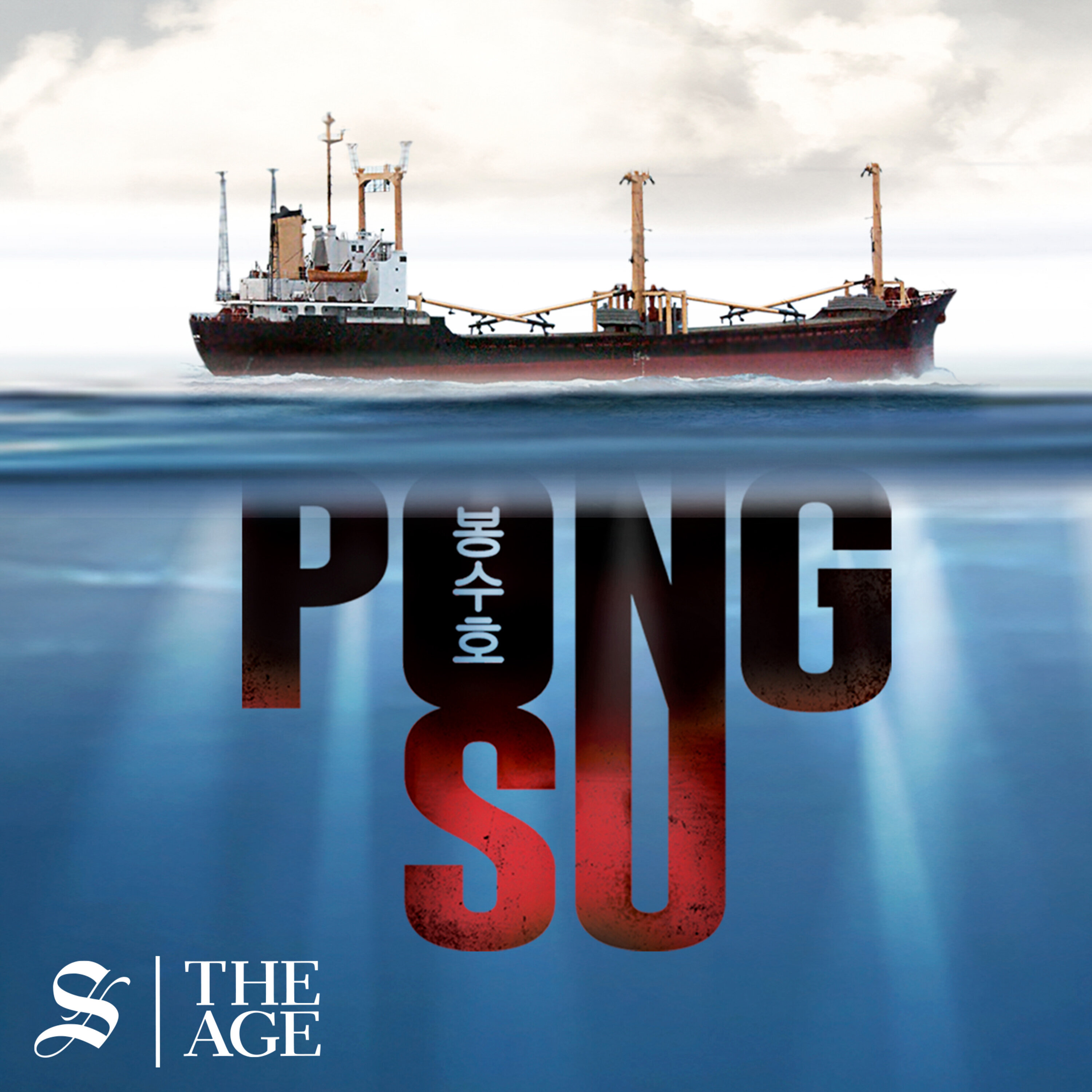
The Last Voyage of the Pong Su · The Age and Sydney Morning Herald

Hidden forces

November 11, 2019·41 min·3 clips
Australian warships threaten to stop the North Korean vessel Pong Su by any means necessary during a tense ocean standoff.
1. The Last Voyage of the Pong Su's fourth episode examines the state-level architecture behind the 2003 North Korean heroin shipment to Australia's Great Ocean Road. 2. Reporter Richard Baker is the narrator; his key sources in this episode are North Korean defector Thae Yong Ho, AFP boss Des Appleby, AFP detective Celeste Johnston, Victoria Police sergeant Tim James, and UN sanctions expert Hugh Griffiths. 3. The episode's central thesis is that the Pong Su was not an opportunistic private drug smuggling operation but a state-sanctioned or state-directed mission connected to North Korea's Division 39. 4. Thae Yong Ho, formerly a deputy ambassador at North Korea's London embassy who defected to South Korea in 2016 and is now on Kim Jong-un's hit list, describes Division 39 as the Kim family's primary foreign currency generator, running coal mines, gold refineries, luxury goods networks, and illicit operations with 'no moral in it.' 5. Division 39's most famous product was the 'supernote' — high-quality forged US $100 bills which the US Treasury acknowledged were technically impressive counterfeit operations. 6. The episode contextualizes the 2003 incident within the heightened global focus on North Korea after Kim Jong-il announced withdrawal from the nuclear non-proliferation treaty, which made the Pong Su seizure politically explosive for the US and Australia. 7. Colin Powell, then US Secretary of State, cited the Pong Su seizure weeks after the event as evidence that 'North Korea is exporting not only missiles but drugs — this is a regime that thrives in criminality.' 8. AFP boss Des Appleby recounts a mysterious phone call on the night of the Boggley Creek heroin drop from an unidentified caller who asked for his security clearance, found it too low, and asked what was happening — before police had identified the ship as North Korean. 9. A military aircraft also appeared unexpectedly the following morning, suggesting to Baker that agencies beyond the AFP had been tracking the Pong Su through Southeast Asia. 10. Political Secretary Choi Dong-song was treated by police as equally important as Master Sun; UN expert Griffiths later confirms that political secretaries on North Korean ships were assigned to conduct weekly loyalty readings and prevent crew defection. 11. Des Appleby describes Choi as 'a very measured, capable person, used to being in a controlling situation,' who told police with casual smugness 'you'll never link it to us.' 12. In recorded interrogation audio, Choi claims to have no idea what an intelligence agency is; his accompanying North Korean diplomat became visibly agitated — tapping feet and banging knees — when the topic came up. 13. Thae Yong Ho explains that private ownership of a ship is impossible in North Korea's socialist system: 'You can't even have a small corner shop in North Korea' — demolishing the official North Korean claim that the Pong Su was privately owned. 14. A GPS device found on suspect Wong led police to a roadside scrub location in the Otway rainforest where Lam had stopped to destroy evidence, with the device accurate to within meters: 'five, four, three, two, one — we're here.' 15. The cache included Pong Su Shipping Company letterheads, torn documents, and passport photos of the arrested suspects — the forensic link that connected the drug syndicate directly to the North Korean vessel. 16. Police were expecting 150 kilograms of heroin based on surveillance audio; only 50 kilograms was recovered with Lee and Teng, and 21 days of searching finally revealed three more plastic-wrapped packages hidden near Boggley Creek, totaling 75 kilograms — still the largest heroin seizure in Victoria's history. 17. The intended final destination for the heroin was Sydney, not Melbourne, despite the Melbourne underworld being in the middle of the Moran/Carl Williams gang war in 2003. 18. Baker closes the episode with UN expert Hugh Griffiths confirming that both Kim Chu-nam (Pong Su shipping manager) and Taiwanese national Neil Tsang were still operating in North Korean shipping and were sanctioned by the US and UN in 2017-2018 for ongoing sanctions violations. 19. This episode suits listeners interested in investigative journalism, North Korean geopolitics, or true-crime narratives that intersect with international state crime. 20. Those expecting court proceedings coverage, crew personal stories, or a focus on Australian policing procedures rather than geopolitical context will find this episode more expansive in scope than the earlier series entries.

As heard by us

A storm at sea opens into a patient, uneasy case built on evidence, denial, and survival.

Hidden Forces opens with Barry Langan, known as Tubes, recalling the June 1975 Bass Strait storm that brought force-15 winds, 90-foot seas, and five days of danger before the crew got home.

Read the full review in PlayNext →

Why you'd press play

When you want a storm story that opens into a North Korean smuggling case.

Read the full recommendation in PlayNext →
Listen to the show on