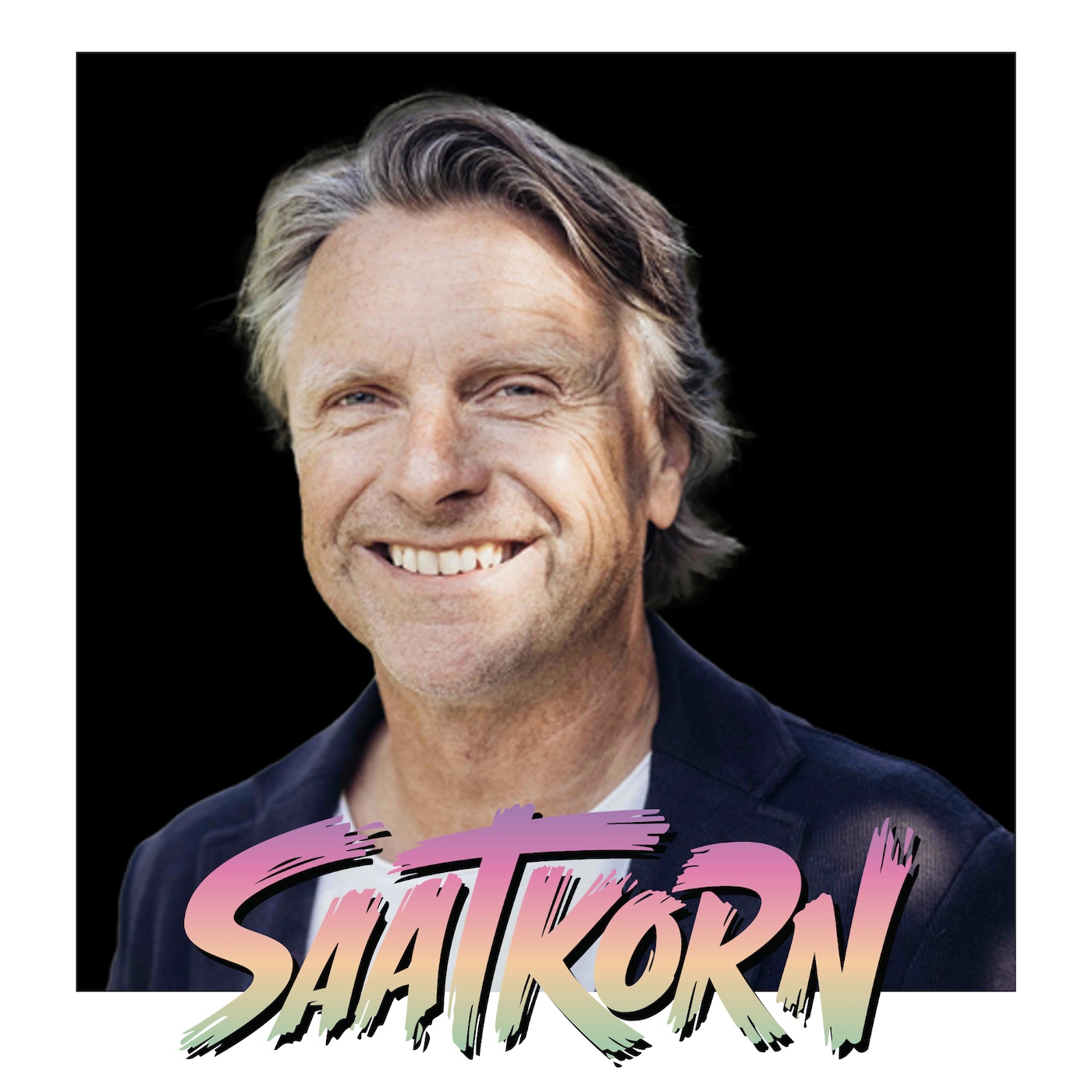
Ritu Mohanka reveals how she went from a girl in India not expected to work to CEO of a global HR tech company.
1. SAATKORN host Gero Hesse interviews Ritu Mohanka, CEO of VONQ, covering VONQ's product transformation, AI-powered hiring, and the European AI adoption debate.
2. Ritu Mohanka grew up in India, spent 15 years at Conexa (acquired by IBM in 2012), rose to SVP Europe at IBM leading 250 people, was then headhunted by Glint (acquired by LinkedIn), and joined Sindio to build a workplace equity platform before becoming CEO at VONQ.
3. The episode's core argument is that AI in hiring must be explainable, measurable, and operationally embedded rather than a flashy demo or black box, and that the distinction between hype and proof is VONQ's primary competitive challenge and opportunity in 2026.
4. VONQ's core product is multi-posting job distribution, programmatic advertising, and AI-powered screening, built on 18 years of recruitment marketing experience and headquartered in the Netherlands.
5. VONQ has two ICPs: direct enterprise and staffing customers in Europe (primarily DACH and Benelux), and ATS and HCM platforms globally who embed VONQ's hiring API natively inside their platforms to add job marketing, distribution, and screening capabilities.
6. The hiring API currently reaches 100,000 end customers through 70-plus ATS integrations, making it the scale vehicle for VONQ's global footprint even though direct enterprise sales remain Europe-focused.
7. Ritu defines VONQ's AI approach in four parts: skills-based scoring replacing CV keyword matching; structured, standardized interview flows with documented methodology; transparent candidate dossiers with visible reasoning behind each score (required under the EU AI Act); and automated candidate communication to reduce drop-off when recruiters are overwhelmed.
8. She explicitly positions AI as 'the capability layer that makes the product meaningfully better,' not as the product itself, distinguishing VONQ from vendors leading with AI as a marketing claim.
9. Gero cites a figure that US job applications rose 250% due to AI-assisted applying tools; Ritu reframes the implication as a shift from volume to relevance and intent, and notes that distinguishing authentic CVs from AI-polished ones is increasingly impossible for recruiters.
10. Ritu describes ATS integrations as a core competency: most are built in-house, with widget-based integration now cutting deployment time from three months to under one month for ATS partners.
11. VONQ is 110 people, with offices in Rotterdam, Amsterdam, Groningen, Düsseldorf, and London (where Ritu and the CTPO are based), and distributed product and engineering teams globally.
12. She describes her leadership approach as requiring weekly in-person presence in one of the offices despite London being her formal base, to maintain visible leadership and culture.
13. VONQ's 2026 priorities are: scaling the hiring API across more ATS platforms and extending partnerships from posting into screening; rolling out performance-based cost-per-application pricing (pay for pre-screened candidates rather than ad clicks); and building out AI screening and structured assessment with explainable workflows.
14. On the biggest challenge, Ritu cites McKinsey's finding that 90% of AI pilots are not successful, and frames VONQ's differentiation as proof-based ROI rather than demos — specifically elevating recruiter roles rather than replacing them.
15. On Europe versus US AI adoption, Ritu challenges the 'Europe always moves slow' narrative, stating that some of VONQ's most progressive AI-adopting customers are in Germany and the Netherlands, and that DACH companies' insistence on reliability and compliance is a feature not a bug.
16. She contrasts DACH with Benelux: Benelux companies are more progressive and first-mover oriented, but also have heavy compliance and bias requirements; DACH companies take longer to build trust but are direct about concerns once engaged.
17. VONQ is majority-owned by Capitalty, a UK-based private equity firm that acquired the business six years ago, alongside one of the original three founders (Tyco) who remains active.
18. The interview is conducted in fluent English and covers product positioning, go-to-market strategy, investment structure, and the political dimension of AI regulation in a consistent conversational tone.
19. Talent acquisition leaders, HR tech buyers evaluating AI-powered job distribution and screening, and ATS product leaders exploring partnership integrations will find the most value.
20. Listeners looking for deep technical detail on AI model architecture, or for consumer-focused HR content, are unlikely to find sufficient specificity.