Topics / Poland
Poland Podcasts
A guide to how podcasts cover Poland: the shows that reference Poland most, what they focus on, and where to start. 279 episodes across 243 shows in the PlayNext corpus.
Swipe · Poland only
Swipe through Poland
Save time discovering your next favourite podcast by listening to just the best minute of an episode.
The poland slate · every cover a link


The rundown
Inside the world of Poland podcasts
History supplies the deepest listening, but Poland rarely stays confined to a single historical period. One show follows rulers and unions; another narrows the frame to a wartime underground army; others arrive through Viking archaeology, Jewish history, democratic institutions, borders, energy security, or migration. The result is broad coverage with several strong entry points, though much of it comes from one-off episodes rather than long-running series.
The long historical view
For a sustained narrative, begin with The History of Poland Podcast. Its episode list suggests a chronological approach built around political turns and individual rulers: The End of the Teutonic Order, The Sons of Casimir IV, The Union of Lublin, and King Henry of France (and Poland). For connected episodes rather than a single thematic detour, this podcast is the clearest choice among the shows here.
The audiobook-style History of the Jews in Russia and Poland, Volume I, From the Beginning until the Death of Alexander I (1825) by Simon Dubnow (1860 - 1941) takes a denser route. Chapter 2 The Jewish Colonies in Poland and Lithuania, Part 1, 1. The Immigration from Western... 2. The Charter of Prince Boleslav... 3. Rise of Polish Jewry signals a chapter-by-chapter historical account, while Chapter 6 The Inner Life of Polish Jewry During the Period of Decline, Part 2, 3. The Sabbatian Movement, 4. The Frankish Sect, moves inward toward religious and communal life. It is better suited to patient listening than to a quick overview.
A more conversational door into early history comes from Vikingology Podcast. The Vikings in Poland brings its usual mixture of scholarly specificity, direct questions, digressions, and uncertainty. The show is comfortable moving between archaeology, language, historiography, and jokes, so this is the livelier option for anyone who finds formal historical narration too polished.
War, armies, and political consequence
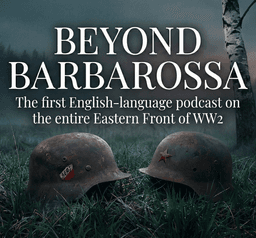
Military-history coverage tends to tighten the lens. Beyond Barbarossa: The Eastern Front of World War 2 devotes The Forgotten Army: Poland’s Armia Krajowa to a focused subject within its larger wartime chronology. Its solo narration is brisk and serious, with enough geographic and structural orientation to keep complicated developments legible. It also pays attention to politically loaded language, making it a good fit for listeners who want military events connected to questions of occupation, legitimacy, and control.
Flashpoints: The Wars That Shaped Us offers a more concentrated battle story in The Battle of Wizna: Poland's 300 Against the Blitzkrieg. The title promises a single dramatic episode rather than the broad situational scan found in Beyond Barbarossa: The Eastern Front of World War 2. Start here when you want one bounded wartime account.
Poland appears only as one part of the frame on My History Can Beat Up Your Politics. RONALD REAGAN PART FOUR: Central America, Lebanon, Poland and Grenada places it alongside several other subjects, so listeners should expect comparative political history rather than a dedicated national narrative. The mention is meaningful, but it is not the place to begin if Poland itself is your sole interest.
Jewish history through books and migration
Two scholarly interview shows use the same book as their route into a much longer history. New Books in Russian and Eurasian Studies is orderly, patient, and willing to let guests build arguments at length; The Jews in Poland-Lithuania and Russia: 1350 to the Present Day suits listeners who enjoy an academic interview room, complete with historiographical framing and extended answers.
New Books in Eastern European Studies also features The Jews in Poland-Lithuania and Russia: 1350 to the Present Day, but its house style is closer to a recorded seminar: leisurely, historically dense, and comfortable with technical vocabulary. Either version is a substantial commitment. Choose according to whether you prefer a carefully guided book interview or a more expansive scholarly discussion.
Migration provides a different focus on New Books in Israel Studies. Karolina Przewrocka-Aderet, "Polanim: From Poland to Israel" (Academic Studies Press, 2026) points toward movement between Poland and Israel. The show’s calm, book-centered format alternates between overview and detail, with interview questions serving as signposts through the author’s argument.
Poland in present-tense politics
For current affairs, Talk Eastern Europe gives Poland sustained attention rather than dropping the country into an unrelated roundup. Poland Between Politics and Security | Mateusz Mazzini sets those two concerns beside each other, while Hungary election, Poland politics, Serbia judicial purge | Weekly news roundup places Polish politics in a regional news format. The first is the stronger choice for a dedicated discussion; the second is useful when comparison across Eastern Europe is the point.
RevDem Podcast slows the conversation down. How’s the Rule of Law in Poland? – In Conversation with Jakub Jaraczewski matches the show’s patient, academic treatment of democracy and institutions. Guests are given space to construct arguments step by step, and the host tends to summarize before opening the next question. This is analysis for listeners willing to stay with complexity, not a rapid news briefing.
Borders receive a more openly human-rights-oriented treatment from Latitude Adjustment. 90: The Borders of Poland and Greece is framed through two countries, and the show’s interview-led style turns policy language toward human consequences and testimony. Poland shares the episode rather than owning it, but the comparison is central enough to warrant the listen.
Beyond the history shelf
Some of the most useful episodes leave politics and historical chronology behind. ICIS - energy podcasts goes directly to infrastructure and markets with Poland bets on LNG and tariff reform to strengthen CEE gas hub status. Its appeal is specific: choose it for an industry-focused discussion of gas, tariffs, and regional hub ambitions, not for a general portrait of the country.
Nick Siekierski Podcast supplies the most personal-sounding pair of entry points. Leaving the U.K. for Poland suggests a relocation story, while Radio Free Warsaw Ep. 1 "Welcome to Poland" opens a named Warsaw series. These titles promise lived perspective and arrival rather than an academic or military frame, making them a useful change of pace after the denser history shows.
The remaining coverage is more specialized. ITU Technology for Good approaches Poland through government technology and women in tech in Technology for Good #16: Women in Tech - Justyna Orlowska, PM's High Rep. for GovTech, Poland. History Through Fiction - The Podcast uses a novel as its route into the subject with The Keeper of Lost Daughters: Veronica Leigh on Faith, Family, and Post‑War Poland. Both are worthwhile side paths, but neither offers a broad starting survey.
Where to start
Begin with The History of Poland Podcast and The Union of Lublin if you want a connected historical series. For a focused wartime episode, choose Beyond Barbarossa: The Eastern Front of World War 2 and The Forgotten Army: Poland’s Armia Krajowa. Current-politics listeners should try Talk Eastern Europe with Poland Between Politics and Security | Mateusz Mazzini. For a more personal entry, start Nick Siekierski Podcast with Leaving the U.K. for Poland.
Featured shows below are part of the PlayNext catalog. Updated weekly.
Featured shows
10 shows, described rather than listed
Each has a short write-up and a note on what it does best here.
5 episode(s) referencing Poland.
1 episode(s) referencing Poland.
4 episode(s) referencing Poland.
1 episode(s) referencing Poland.
3 episode(s) referencing Poland.
2 episode(s) referencing Poland.
2 episode(s) referencing Poland.
2 episode(s) referencing Poland.
2 episode(s) referencing Poland.
2 episode(s) referencing Poland.