Topics / Murder Cases
Murder Cases Podcasts
284 shows and 25,787 episodes sit under Murder Cases.
Invisible Choir, Dark Topic, and Final Days on Earth offer narrated investigations, raw case evidence, and conversational murder-case analysis.
Swipe · Murder Cases only
Swipe through Murder Cases
Save time discovering your next favourite podcast by listening to just the best minute of an episode.
The murder cases slate · every cover a link
All 284 murder cases shows →





The beat, written
What is actually on this beat
The first choice is tonal. Some listeners want a composed narrator, a clear chronology and enough room for the victim’s life to register before the violence. Others would rather hear two hosts argue through the evidence, question a police theory or puncture an offender’s mythology with a well-timed aside. There are also listeners who want the case stripped to its procedural skeleton and delivered quickly.
That range makes Murder Cases a useful stop within True Crime, but it is only one route through the larger subject. Cold Cases shifts attention toward crimes that remain unresolved, while Case Analysis leans further into evidence and competing interpretations. Fraud & Scams follows deception without requiring a killing at the centre of the story. Here, the most meaningful differences are pace, narrative distance and how much uncertainty a show is willing to leave intact.
Patient narration and long-form investigation
Invisible Choir takes the composed route. Its solo narration is measured and literary, with long scene-building sentences and extensive use of recorded calls, press conferences and testimony. The show gives personal history room to breathe, treating the lives around a death as more than preamble. Titles such as Blood Oath, Fallen Star and The Protector offer a good sense of its grave, deliberately framed storytelling. This is the place to begin if frantic speculation makes you tune out.
Bad Women Presents Stolen Sister works on a broader documentary canvas. The host acts as a calm guide while witnesses, investigators and other voices carry much of the evidentiary weight. Its restraint matters: terrible developments are stated plainly rather than inflated into cliff-hangers. The sequence beginning with Stolen Sister 01: Elizabeth moves through Stolen Sister 02: Missing, Stolen Sister 04: Confessions and Stolen Sister 05: The Trials. Listen in order; the gradual accumulation is the point.
Dark Topic is considerably rougher around the edges. A single host moves between novelistic description, blunt fragments, black humour and openly personal commentary. Digressions are part of the performance, as are abrupt returns to the timeline. 161 › The Trailside Killer and 155 › The Grudge of George Geschwendt suit listeners who want a distinctive storyteller in the room, not an invisible narrator behind the research. The intimacy can be abrasive, which is also why its audience tends to know quickly whether it is for them.
Cases worked out in conversation
True Crime News: The Podcast sounds closer to a newsroom discussion than a polished documentary. Its rotating voices begin with a headline or legal question, then slow down around allegations, procedural details and the limits of what is known. The conversation can hold emotional reactions and legal caution at the same time. Delivery driver faces death penalty for kidnapping, killing Athena Strand provides a direct entry point, while Psychosis or calculated crime? Mother accused of strangling 3 children pleads insanity signals the show’s interest in questions that resist a quick moral verdict. Choose it when the court process matters as much as the narrative.
Women and Crime is warmer and more informal. The two-host format leaves in the clarifications, small detours and midstream reactions that a tightly scripted production would remove. Episodes generally move from scene-setting into chronology, pausing when a legal or forensic point needs translating. W&C Reconsidered: The Petit Family (Cheshire Murders) and W&C Reconsidered: Kelly Ann Tinyes are natural starting places. The style is accessible without pretending that every difficult point has a simple answer.
Mile Higher also builds stories through a two-person exchange, though its conversations wander further into background, cultural references and personal asides. The hosts repeatedly recap and translate, making it friendly to listeners who do not arrive with prior knowledge of a case. Its murder-focused episodes include A Husband's Bizarre 911 Call & An Even More Suspicious Scene: The Tiffiney Crawford Case, She Followed Him to Paradise Then Vanished: The Murder of Yvonne Baldelli and From Tinder Match to Deadly Stalker: The Murder of Molly McLaren. Expect a broad, conversational treatment rather than documentary austerity.
Killing 15 Minutes removes most of the distance between research and reaction. One host tends to carry the factual line while the other interrupts, challenges and jokes, producing something closer to a fast argument than a formal casefile. Profanity and blunt judgment are part of the rhythm. Chicago's Lipstick Killer and Orange Socks || Debra Jackson show the range of cases in that format. It is best for listeners who find irreverence clarifying rather than distracting.
Momentum, reconstruction and sharp edges
Murder Weekly - Crime, Espionage, and Murder Thrillers pushes hard through chronology. Its solo narration favours clipped sentences, compressed biographical detail and explicit moral judgment. There is little patience for ambiguity once the show has settled on its line. "THE STAIRCASE MURDERS: MICHAEL PETERSON AND THE TWO WOMEN WHO DIED AT HIS FEET - PART 1" and "THE BLADE RUNNER'S VALENTINE: OSCAR PISTORIUS AND THE MURDER OF REEVA STEENKAMP" are built for listeners who want names, dates and consequences delivered without much conversational padding.
Solved Files - True Crime is similarly quick but draws much of its texture from police footage, scanner traffic and interrogation material. The narrator keeps reconstructing events, repeating the essential facts when the raw audio threatens to become confusing. Episodes including Crazy Ex-Girlfriend Thinks She Can Get Away With Revenge Murder and Police Hunt Down Teens After Terrifying Shooting Spree announce their stakes immediately. The result feels urgent and procedural, with little room for reflective detours.
The Dark Side of Love uses a more conversational solo voice, mixing clear chronology with sardonic judgments and direct address. Exact dates, times and behavioural contradictions often provide the spine, while brief asides keep the narration from becoming clinical. Rewind: 008 - Women Who Kill - Giselle Esteban: A Friend to Die For is a useful introduction to that balance. It suits listeners who like documentary detail but still want to hear the narrator react.
Final Days on Earth takes the opposite attitude toward certainty. Its conversational hosts work from timelines and concrete evidence, then keep testing what can reasonably be inferred. The language is plainspoken, the investigative vocabulary precise and the conclusions deliberately untidy. Justice Pending, Episode 68: Live from Katy, the Belinda Temple Murder and Justice Pending, Episode 61: Colonial Parkway Murders are good routes into its evidence-led approach. If you listen partly to understand what remains unknowable, start here.
Where to start
For careful, victim-conscious narration, begin with Invisible Choir and Fallen Star. For one investigation that rewards sequential listening, choose Bad Women Presents Stolen Sister and start at Stolen Sister 01: Elizabeth. True Crime News: The Podcast is the strongest on-ramp for legal discussion, while Killing 15 Minutes offers the liveliest test of whether rapid banter belongs in your true-crime listening. If none of those tones fits, return to True Crime and move toward Cold Cases for unresolved investigations or Case Analysis for a more evidence-centred route.
Featured shows below are part of the PlayNext catalog. Updated weekly.
Featured shows
8 shows, described rather than listed
Each has a written blurb stored with the page, with the role its editor gave it on this beat.
A serialized, first-person memoir-investigation follows the host's personal search through intimate narration and extended interviews. It suits listeners who want one story told in order.
Ros Purcell calmly frames witness accounts, confessions, trials, and the search for justice in a serious investigative documentary. It suits listeners who prefer evidence-led serial reporting.
Invisible Choir pairs carefully constructed, victim-centered narration with 911 audio and press-conference material. It suits listeners comfortable hearing primary-source case evidence.
A single host tells grim murder cases in a brisk mix of novelistic description, clipped commentary, and dry, irreverent asides. It suits listeners who prefer a less formal true-crime voice.
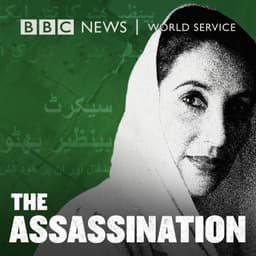
A patient narrator tests documents, witness answers, and archive material against the limits of proof, placing an assassination amid institutions and political history.
A conversational duo works through timelines, surveillance, DNA, 911 calls, and court records, including live Justice Pending episodes. It suits listeners who like reasoning left in the room.
Polished, reporterly narration moves through courtrooms, police offices, and evidence rooms, with interviews supplying much of the proof. It suits listeners drawn to precise scene-setting.
Elisa De Marco racconta ogni mercoledì crimini efferati, enigmi irrisolti e sparizioni, passando da serial killer americani e amore tossico ai grandi delitti mediatici italiani.