Topics / Law & Courts
Law & Courts Podcasts
206 shows and 20,628 episodes sit under Law & Courts.
Hear Supreme Court analysis from Advisory Opinions, legal panels from FedSoc Forums, and international-law lectures from the LCIL International Law Centre Podcast.
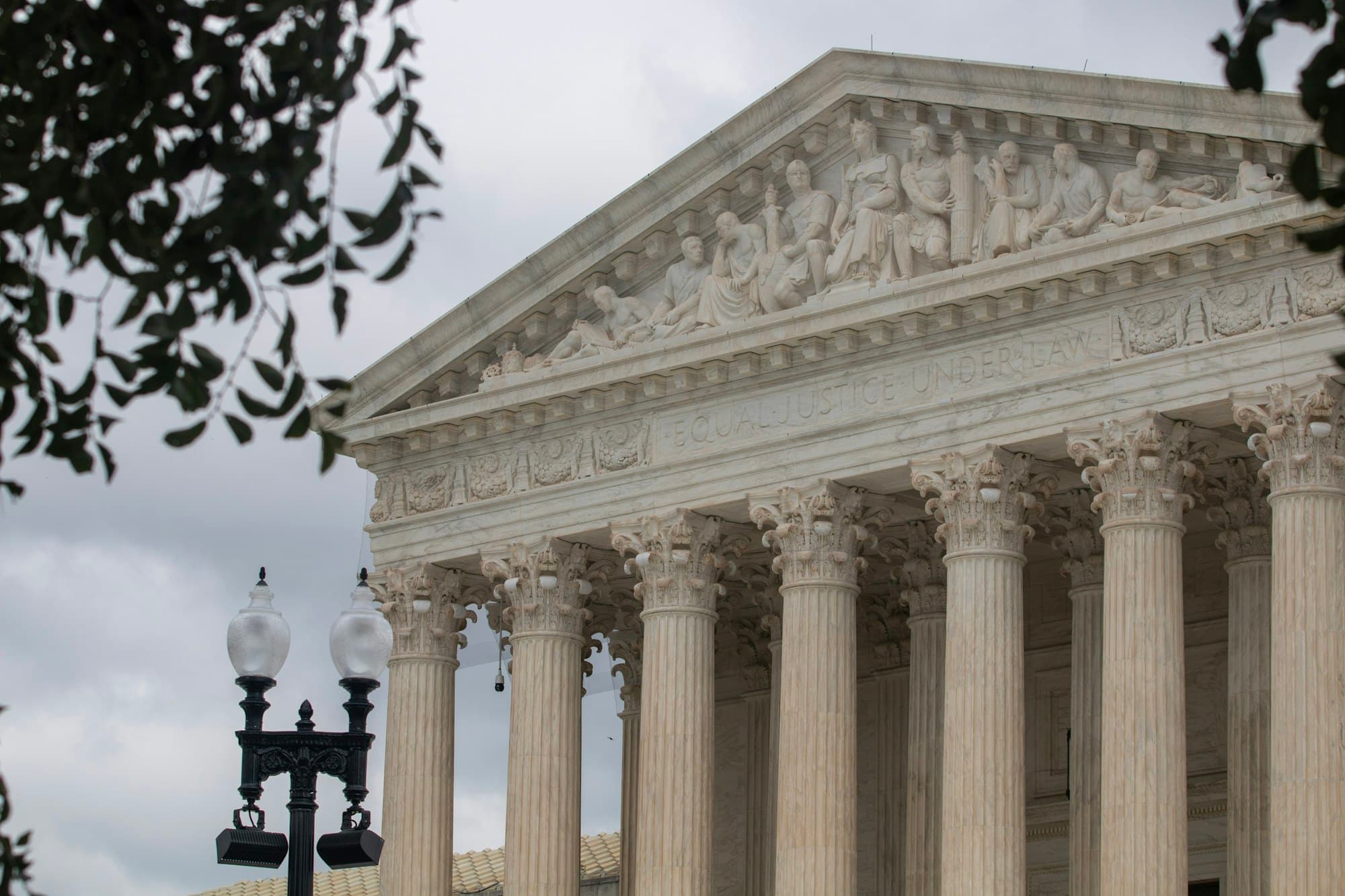
Photo: Isabella SP on Unsplash · Unsplash License
Swipe · Law & Courts only
Swipe through Law & Courts
Save time discovering your next favourite podcast by listening to just the best minute of an episode.
The law & courts slate · every cover a link
All 206 law & courts shows →



A field guide
A listener's guide to Law & Courts podcasts
Some legal podcasts drop you into an argument already in progress. Others stop to define the terms and give an expert room to build a case. Then there are recorded panels and lectures, where the formality is part of the appeal. Start with the listening posture: how much legal fluency do you bring, and how formal do you want the room to feel?
On the Law & Courts shelf, quick two-host exchanges sit beside courthouse analysis, constitutional history, and international-law lectures. Choose Public Policy when policy design matters more than a ruling, Law Enforcement when policing is the subject, and Local Government when the scale is municipal. For the wider path through public institutions, go back up to Government.
Decisions in motion
Advisory Opinions makes legal conversation feel like a live negotiation between two well-prepared colleagues. The hosts are brisk, technically fluent, and comfortable disagreeing without turning the exchange sour. Dry jokes and digressions keep the doctrine from becoming homework. Its episode list includes SCOTUS Vibe Check, Reviewing the Court’s Criminal Law | Interview: Rory Little and Orin Kerr, and Enforcing International Law in U.S. Courts. Start here if you know the vocabulary but still want somebody to walk through the argument.
The Citizen's Guide to the Supreme Court is looser and faster. Its recurring duo translates doctrine into plain English through questions, miniature hypotheticals, and the occasional joking detour. The conversation can carry intellectual weight without taking on institutional stiffness. The episode list pairs Birthright Citizenship and Skrmetti with Sex, Drugs, and Unemployment Taxes. Pick this one if formal legal audio usually sends you reaching for the speed control.
Panels with the nameplates still on
FedSoc Forums sounds like a legal forum because that is how it behaves: a moderator frames the dispute, then a panelist gets enough time to answer properly. The language is technical, the sentences are layered, and procedural posture is treated as necessary information rather than clutter. Titles such as Litigation Update: Minnesota Telecom Alliance v. FCC and Litigation Finance: Access to Justice, Lawfare, and Foreign Influence show the scale of its legal framing. It rewards listeners who would rather hear the qualifications than receive a tidy verdict.
FedSoc Events moves further toward conference audio. Introductions matter, speakers announce their structure, and arguments unfold at length. Plenary Panel 2: Justice Alito's Jurisprudence is a clean entry into its judicial focus, while Panel IV: Congress and Court Reform: Jurisdiction Stripping, Court Packing, and Beyond widens the institutional frame. There is dry wit, but precision gets the better seat. Choose it when you want the whole panel rather than the edited takeaway.
International law at lecture pace
LCIL International Law Centre Podcast has the cadence of a serious seminar. Rotating speakers define terms, distinguish competing positions, and return to a central thesis after working through examples. The tone is measured and sometimes grave, with little interest in banter. Its titles include International Police Cooperation in an Era of Rising Authoritarianism and Rubber boats: Transnational legal encounters in the Mediterranean - Prof Tanja Aalberts. This is patient, argument-led listening.
Audiovisual Library of International Law is more austere. Its rotating experts use doctrinal frames, enumeration, and exact distinctions to carry sustained lectures. Enzo Cannizzaro - The Rules of Change of General International Law (Part I) and Attila Tanzi - State of Necessity in International Law make that method plain before you press play. The show assumes attention and pays it back in specificity. It fits listeners looking for something closer to a reference lecture than a host-led conversation.
Before the ruling
Consider the Constitution moves the clock backward. Its guided conversations connect constitutional ideas with history and civic practice, using long expert answers and purposeful follow-up questions. The pace is deliberate, though the language usually remains legible to a nonspecialist. The Supreme Court's Credibility, Women and the Constitution, and Sacred Words: Jefferson, Madison, and the Language of Religious Freedom mark out its territory. Begin here when the origins of an argument interest you as much as the decision it eventually produces.
Where to start
For brisk legal conversation, try Advisory Opinions with SCOTUS Vibe Check. For a more casual route into doctrine, choose The Citizen's Guide to the Supreme Court and Birthright Citizenship and Skrmetti. FedSoc Forums and Litigation Update: Minnesota Telecom Alliance v. FCC are the on-ramp for moderated expert analysis. For international law, start with LCIL International Law Centre Podcast and Rubber boats: Transnational legal encounters in the Mediterranean - Prof Tanja Aalberts.
Featured shows below are part of the PlayNext catalog. Updated weekly.
Featured shows
8 shows, described rather than listed
Each one comes with a short write-up and the role it plays in this guide.
A brisk two-host conversation moves between Supreme Court doctrine, statutory text, criminal law, and culture-war cases. It suits listeners who like analysis with dry, casual riffs.
Host-led interviews give experts room to connect constitutional ideas with Madison, religious freedom, civic education, and self-government. It suits listeners who prefer a seminar-like pace.
Expert-led episodes trace practical policy questions through legal structure, historical background, jurisdictional boundaries, and wider stakes. It suits listeners who value a clear explanatory thread.
Rotating legal panels work through statutes, procedure, precedent, and consequences in courthouse-style discussions. It suits listeners seeking technical analysis of active litigation and institutions.
Recorded conference panels pair formal speaker introductions with extended legal arguments on Justice Alito, criminal procedure, religious liberty, immigration, and AI. It suits patient listeners.
Rotating subject experts present sustained lectures on international-law rules, countermeasures, disasters, displacement, and arbitration. It suits listeners comfortable with precise, cumulative argument.
A recurring duo turns Supreme Court doctrine into brisk, plain-language conversation, using jokes, prompts, and small hypotheticals. It suits listeners who want legal explanation without seminar formality.
Lecture-led talks organize serious arguments through examples, definitions, and clearly signposted stages. It suits listeners following international law, climate law, institutions, and legal theory.