
Topics / Investing
Investing Podcasts
834 shows and 189,254 episodes sit under Investing.
Curated guide to investing podcasts in 2026: Bloomberg flagships (Odd Lots, Masters in Business), global macro (Macro Voices, Hidden Forces), Bitcoin / crypto (The Pomp Podcast)
Photo: Logan Teffertiller on Unsplash · Unsplash License
Swipe · Investing only
Swipe through Investing
Save time discovering your next favourite podcast by listening to just the best minute of an episode.
The investing slate · every cover a link
All 834 investing shows →




A field guide
A listener's guide to Investing podcasts
Several of the most useful investing episodes of spring 2026 were about a shipping lane. On one show, the host explained why diesel and jet fuel sat at the centre of the Hormuz crisis: they move trucks, planes and farm equipment. On another, a reporter phoned around to learn what a stranded ship pays to get out. Both made it easier to see why a fuel price, a bond yield and a pension statement can move in the same week.
That is the form at its best: a mechanism traced from the news to whoever pays for it. The range runs from chart rooms to slow portfolio interviews, and from Bitcoin developers arguing over wallet privacy to German market-close bulletins. Edison Research reported in March 2026 that 58% of Americans aged 12 and older had consumed a podcast in the previous month, a figure for podcasting overall. A study published in June 2026 associated company-focused podcast discussion with reduced information asymmetry around earnings announcements. Its data cover 2008 to 2022, and its authors call the link an association.
Listeners argue about two things. One is volume: does another show help, or does it add noise? The other is method, and stock pickers and sceptics of stock picking trade recommendations in the same threads. What follows is sorted by the question you bring.
When the world moves the market
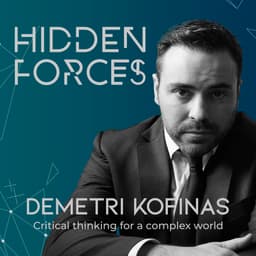
Hidden Forces gives crises room. In The Last Ship Out of Hormuz: Why the REAL Supply Shock Is About to Hit | Rory Johnston, Demetri Kofinas spends 52 minutes on the crisis. The conversation covers reserve releases, rerouted tankers and the risk of a second closure at the Bab el-Mandeb. It also covers Johnston's argument that the shock could speed electrification in Asia, as the 1970s pushed richer economies off oil. Near the end, Kofinas points listeners to a premium feed for the rest of the conversation, as he does in his Tim Wu and Cullen Roche episodes.
Macro Voices pitches the same crisis at professionals. MacroVoices #528 Luke Gromen: Hormuz Could Lead To a 1956 US Suez Moment turns on why tankers cannot simply speed up once a strait reopens. A later segment sketches a two-legged options position on TLT. The show's disclaimer says none of this is investment advice, and its publisher notes funding from Fourth Turning Capital Management. Keep both in mind when a trade arrives.
Odd Lots is drier and funnier. Tracy Alloway and Joe Weisenthal met the guest of Why NASA Hired a Chief Economist at the show's 10-year anniversary party. He explains why NASA's budget is an expenditure: its economic impact can be measured, but a direct return cannot be calculated as for a private sector investment. On Masters in Business, near the end of At The Money: Diversifying with Managed Futures ETFs, Barry Ritholtz says a diversifier is "supposed to be an insurance product." He warns against owning 20 or 30% of one. The Economics guide and the Finance guide go further.
Economics you can picture

Planet Money builds mechanisms from scenes. In How to get through the Strait of Hormuz, a shipment of books is stranded after an attack. Nick Fountain calls a well-connected contact to learn how passage permission works. The tolls could reach $2 million each time for the largest tankers, and the contact's friend was told to pay in crypto within five seconds.

Business Daily, from the BBC, is more practical. In Are weight-loss drugs reshaping business?, a GLP-1 user explains that 100 grams of protein a day means more than four chicken breasts. That, the guest argues, will push up prices per gram for protein-fortified food. In The self-taught coder building a drone empire, Bobby Healy says his flights make money, but 180 salaries keep the company short of profit. The Entrepreneurship guide picks up from there.
Owning things for a long time

The Intrinsic Value Podcast - The Investor’s Podcast Network is built around breaking down a business and estimating its value, and disagreement is the draw. In TIVP029: Roku (ROKU): Forgotten Streaming Giant w/ Shawn O’Malley & Daniel Mahncke, O'Malley calls his case less a firm pitch than something to talk through. One host admits that the crowd of bullish investors is what scares him most. That candour about crowded ideas is more useful than a price target.

Hidden Forces belongs here too. In How to Build the Perfect Portfolio | Cullen Roche, the advisor starts from time horizons and mortality and warns against "portfolio one-night stands." Focused Compounding reads closely in Ep 476. Greg Abel's First Berkshire Hathaway Shareholder Letter, lingering on Berkshire's Japanese trading-house stakes.
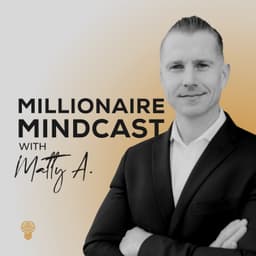
Private credit shows how far conclusions can diverge. The guest of Investing Experts' Blue Owl Capital: Don't believe the (negative) hype calls the industry's bad press fear-mongering and the funds discussed conservatively levered. Millionaire Mindcast's The 1.7 Trillion Dollar Bubble That Could Rock The Economy And Nobody Is Talking About | Wise Investor Segment treats the same firm's halted redemptions as a warning. Hear both before trusting either. The Value Investing page and the Personal Finance guide continue from here.
The chart room
Trading shows are about rules under pressure. Investing with IBD is methodical. Ep. 368 How To Find Outperformance In A Volatile Market walks through Asbury Research's model, which combines a handful of indicators so that no single one decides. In How To Cut Losses, Stay Consistent And Manage Your Trading Psychology, a guest introduced with triple-digit championship returns puts cutting losses ahead of finding hot stocks. Competition results are no forecast for anyone listening.
Chat With Traders' $1,900 Small Cap Trader Who Hit $2.9 Mil in Profits runs 105 minutes. The guest calls luck "when preparation meets opportunity" and tells beginners to master position sizing and risk management before blaming their mindset. World Record with Process, Patience, and Prop Firms is about sizing down during losing streaks, and it carries a sponsor read for a firm that funds traders. The Stock Trading & Options page and the Stock Market Analysis page sort this field further.
Bitcoin, from price to plumbing
On The Pomp Podcast, Anthony Pompliano's guest in How Bitcoin Millionaires Use Their BTC Without Selling It | Shehzan Maredia says more than 90% of Lava's users borrow against their Bitcoin. The same guest warns of "a quiet gambling epidemic" in finance. Episodes carry ads for crypto-backed loans and Bitcoin retirement accounts, so weigh the enthusiasm against the sponsorship.
Citadel Dispatch sits at the other pole. Its host says, "I don't have ads or sponsors that require me to do three shows a week." CD199: CRAIG RAW - SILENT PAYMENTS AND SPARROW WALLET spends 72 minutes on private payments and hardware wallets, and it assumes real interest in the trade-offs.
In German, BTC-ECHO | Bitcoin & Krypto Podcasts covers a 23% fall in the Aave token after a hack in Invest #206 | DeFi-Hack bringt Ethereum unter Druck – wie groß ist die Gefahr? The hosts draw a lesson in diversification. The Cryptocurrency page goes deeper.
The daily desk, in other languages

Daily bulletins answer a narrower question: what changed today? In Börsenradio Schlussbericht Do. 26.03.2026 - Krieg drückt Märkte, Öl treibt Inflation, Börsenradio to go carries a warning: when markets are jolted by White House posts, investors should not stake money they need for their next holiday.

Alles auf Aktien – Die täglichen Finanzen-News slows down for Die vergessene Börsenchance – eine Masterclass für Eure Rente, 89 minutes on workplace pensions. How useful it is depends on where you live.

Moving Markets, from Julius Baer, features a guest making a clear case for short-dated bonds in The View Beyond: Why the short end looks sweet, while acknowledging a modest increase in volatility. The episode states that its content is marketing material, not independent research.
The Real Estate guide and the Business & Finance category guide map the neighbouring ground.
Where to start
- If the headlines feel opaque: Planet Money, How to get through the Strait of Hormuz.
- For a patient conversation about your own portfolio: Hidden Forces, How to Build the Perfect Portfolio | Cullen Roche. The free portion covers time horizons and hidden costs. The strategy deep dive sits on the premium feed.
- To hear two hosts disagree: The Intrinsic Value Podcast - The Investor’s Podcast Network, TIVP029: Roku (ROKU): Forgotten Streaming Giant w/ Shawn O’Malley & Daniel Mahncke.
- Before placing a first trade: Chat With Traders, World Record with Process, Patience, and Prop Firms, about knowing when to size down.
- If Bitcoin's plumbing interests you more than its price: Citadel Dispatch, CD199: CRAIG RAW - SILENT PAYMENTS AND SPARROW WALLET.
None of these is a recommendation to buy anything. Each is a way to hear a financial argument clearly enough to test it yourself.
Featured shows below are part of the PlayNext catalog. Updated weekly.
Featured shows
8 shows, described rather than listed
Each one comes with a short write-up and the role it plays in this guide.
Bloomberg's Joe Weisenthal and Tracy Alloway. Academic-economics-meets-markets, book conversations, geopolitics-as-markets. The slate's clearest benchmark for the format.
Barry Ritholtz's long-form interview show with major-fund and Wall-Street figures. Recurring *At The Money* segments are tighter; main interviews can run two hours.
Erik Townsend's global-macro show for serious-trader audience. Guest-driven, dense, oil-and-energy-weighted. Interviews assume listener fluency in macro.
Demetri Kofinas's macro-and-geopolitics show. Academics, journalists, ex-policy figures alongside markets people. Framing-heavy rather than tactical-trading-take.
Anthony Pompliano's Bitcoin-and-crypto interview show. Crypto-native figures plus traditional Wall Street voices crossing into the asset class.
Long-form interviews with active traders across equities, futures, crypto, and prediction markets. *How they actually make money* the show's editorial center.
Investor's Business Daily's technical-analysis-driven equity-trading show. Carries IBD's CAN SLIM methodology and the broader technical-analysis tradition.
Short-form contrarian-retail-trader perspective. Skeptical of mainstream technical indicators and the 401k industry.
Where to start
5 routes in, one per reader
*Brad Setser on the War in Iran and the Future of the US Dollar* is the entry. Pair with *Masters in Business*'s *Assessing Asset Volatility and Iran War Threats With BlackRock's Mike Pyle*.
*Luke Gromen: Hormuz Could Lead To a 1956 US Suez Moment* is the entry. Dense; assumes background.
*The Last Ship Out of Hormuz: Why the REAL Supply Shock Is About to Hit | Rory Johnston* is the entry. Broader framing than *Macro Voices*.
*Wall Street Is ALL-IN On Bitcoin | Anthony & John Pompliano* is the entry.
*$1,900 Small Cap Trader Who Hit $2.9 Mil in Profits* is the entry. Pair with *Investing with IBD*'s *How To Find Outperformance In A Volatile Market* for technical-analysis methodology.
Glossary
Terms worth knowing before you listen
Sub-genre of investing podcasts produced by or for Bloomberg-adjacent audiences. Academic-economics-meets-markets framing, long-form interviews, no-shortcut explanations. *Odd Lots* and *Masters in Business* are the slate's exemplars.
Sub-genre covering global financial markets through a macroeconomic and geopolitical lens — currencies, commodities, sovereign debt. Assumes trader-level fluency. *Macro Voices* is the slate's clearest example; *Hidden Forces* sits adjacent with broader framing.
The 2026 Strait of Hormuz event generated a concentrated coverage cycle across macro-investing podcasts. April 2026 episodes on this slate (*MacroVoices #528*, *Hidden Forces*' *Last Ship Out of Hormuz*) sit in that cycle.
Investor's Business Daily's growth-stock screening methodology (Current earnings, Annual earnings, New product, Supply/demand, Leader, Institutional, Market direction). *Investing with IBD* is the slate's primary CAN SLIM-aligned show.
Sub-genre that brings Wall Street figures into Bitcoin and crypto conversations as the asset class has become more institutionalized. *The Pomp Podcast* is the slate's clearest example; format relies on the host's credibility with both sides.