Topics / Economics
Economics Podcasts
82 shows and 19,018 episodes sit under Economics.
The best economics podcasts for 2026: central banking, monetary policy, UK growth, housing stress, energy markets, and alternative economic design
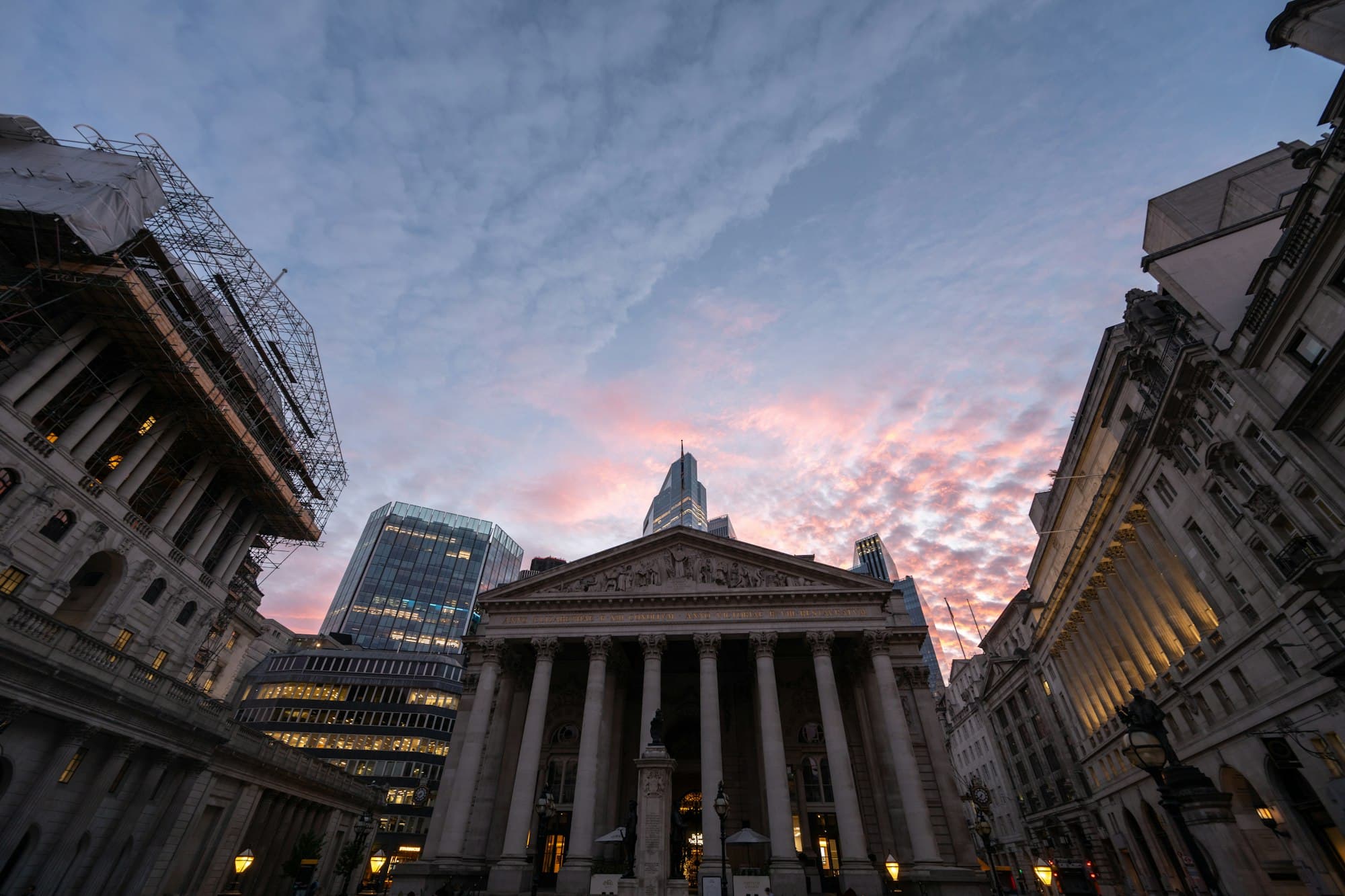
Photo: SOHAM BANERJEE on Unsplash · Unsplash License
Swipe · Economics only
Swipe through Economics
Save time discovering your next favourite podcast by listening to just the best minute of an episode.
The economics slate · every cover a link
All 82 economics shows →









Your guide
Some great Economics podcasts to get to know
A heavy tow truck priced at $1.5 million to $1.8 million. A pair of giant pandas that costs an American zoo $1 million a year, before the real expense of keeping them begins. A cap of 50,000 rubles on cash withdrawals from flagged Russian bank accounts. The best economics podcasts start with a number like that and follow it until it explains a decision: who pays, who profits, who carries the cost. This guide sorts the field by the question you bring to it and ends with a first episode for each kind of listener.
The range runs from reported shorts about one trade to economists who date-stamp their recordings, a government inquiry read aloud, Turkish and German market talk, and Bitcoin conversations that treat each headline as a monetary event. The arguments are mostly about trust. Edison Research's March 2026 figures put monthly podcast consumption at 58% of Americans aged 12 and over, a figure for podcasting in general. In one September 2026 listener thread, some people missed deeper exploration of subjects while others valued hearing views they disagree with. That tension runs through this page: how hard a host presses, and whose interests sit behind the microphone.
Small things, real markets

Zachary Crockett's The Economics of Everyday Things treats an ordinary object as a market with a hidden ledger. In 67. Tow Trucks, an operator recalls towing for an apartment complex with 182 apartments and 65 parking spaces, rented to college students misled about parking. "I didn't feel like that was morally right, so I pulled my contract from that complex," he says, and an incentive problem becomes a person making a choice.
70. Prison Labor is the sharper piece. In 21 minutes it explains why the arrangement suits governments and companies, with cheaper labor and tax credits for hiring work-release prisoners. Then it turns to the people doing the work, some earning 40 cents to a dollar a day without workplace safety rules or workers' comp.

Tech Talk brings similar curiosity to MSP370. The Superfan Economy, noting that FIFA took 15% from both buyer and seller on marked-up resale tickets. For more shows that take apart a single trade, try the Industry Analysis page.
Explainers that check the arithmetic
Works in Progress Podcast tests claims against evidence. How to spot a monopoly: Measuring competition is an essay by Brian Ulbricht, read by Stuart Ritchie. It argues that high markups and concentration can signal a market working well. Its evidence includes Colombia, which cut tariffs on foreign cars from 200% to approximately 38% between 1990 and 1992. Models on sale went from 26 in 1991 to 71 in 1992, and 44 of them were imports.
The economics of the baby bust with Jesús Fernández-Villaverde is looser at 83 minutes, but it holds a lovely moment. He recalls dividing Japan's GDP by its population aged 15 to 64 during a seminar, and Japan suddenly no longer looked worse than Germany, France or Italy. He also claims that birth-rate payments mostly reach babies who would have been born anyway. That is an argument to weigh, not a settled finding.

Reality Proves Possibility- Humanity can do Better than this argues by example. Helmy Abouleish tells host Michael Pearson about Sekem's desert beginnings, when two trucks arrived, one carrying a tractor and the other a piano. The questions admire more than they test. The Sustainability page continues the theme.
Macro on deadline

Explainers slow things down; briefings work against the clock. Moody’s Talks - Global Economy Unwrapped is led by Gaurav Ganguly of Moody's Analytics. It stamps A Tense Situation in the Middle East with "We are recording today on the 3rd of March," because events are moving fast.
Tariff Trouble and the Dollar Dilemma is better still. Early on, the panel admits to "a million questions and very few answers." It then lays out the Supreme Court ruling and the 10% flat tariff limited to 150 days, and lets panelists disagree. One insists the dollar will not lose reserve status anytime soon; another sketches scenarios in which currencies lurch. Hearing forecasters label their uncertainty is the reward. The cost is that such episodes date quickly.
Mesele Ekonomi does similar work in Turkish and ties politics to the national balance sheet. Son 48 Saat! Savaşta Kritik Viraj | Faiz Artacak Mı? Durgunluk Derinleşir Mi? | Barış Soydan walks through Trump's April 6 deadline to Iran and its extensions. It covers gold falling to 4100 dollars and fears of oil at 150-200 dollars, and asks what Turkey's central bank will do on April 22.
The record, read aloud
Financial Crisis Inquiry Report goes back to the 2007-2009 collapse in numbered episodes and is strongest when testimony meets the record. In 084 - Ch 14 Citigroup That would not in any way have excited my attention, Prince, then Citigroup's chief executive, explains why a hypothetical one-in-a-billion risk on $40 billion of AAA paper would not have been useful information. The report replies that a AAA tranche of a CDO had a one-in-ten chance of downgrade within five years.
085 - Ch 14 AIG's dispute with Goldman There could never be losses follows a "negative basis adjustment" that cut a loss estimate from Goldman's $5.1 billion to about $1.5 billion. Later in the series, 164 - Financial Crisis Inquiry Commission - Dissenting Statement - Intro blames government housing policy and calls the majority's report "a just-so story."

Explaining History's Russia's post communist shock therapy 1991-3 takes a similarly long view. It argues that a military-industrial complex of around a third of GDP made Poland a poor model for Russia.
Markets, conviction and who is selling
Everything below is the speakers' view, and none of it is guidance.

Inside Wirtschaft - Der Podcast mit Manuel Koch | Börse und Wirtschaft im Blick shows why the speaker's stake matters. In one conversation, Dirk Müller says there is no single right way into stocks, then praises his own Cashkurs Trendinvest, a stake worth keeping in mind. When a calculated gold price of 300,000-plus per ounce comes up in another episode, recorded at a gold house in Würzburg, the dealer calls it a figure seen in a vacuum. That episode is #1485 Inside Wirtschaft - Tresor Talk mit Tino Leukhardt/ Rolf B. Pieper: „EU verhindert Wegzug von Vermögenswerten".

BTC Sessions favours big theses. In The Real War Isn’t in Iran — It’s in the US Treasury Market | Luke Gromen & Lyn Alden, the host tests talk of $200 oil by reading futures aloud: 98 for June, 89 for July. Compare that with Trump’s Actions Never Made Sense - Until Now | Lepard & Dixon. There, a guest presents the CIA's murder of Kennedy as settled fact and the talk moves on.

On Bitcoin Audible, Guy Swann mentions his affiliate codes before a reading in Read_937 - When the Withdraws Start [FFR 115], a disclosure worth hearing. The Investing, Finance and Personal Finance pages go further.
Trade, law and crossing borders
The Negotiation interviews people selling into Asian markets. Jacob Cooke on Alibaba's AI Bet, AI in China, China E-Commerce Data, and the Canada-China Reset reports China's pet market surging to 12.8 billion dollars, with pets riding in baby strollers around town. Weigh the frame: Cooke presents WPIC's own data report, and a closing message recommends WPIC as a partner. The E-Commerce page continues from here.

For the legal side, Audiovisual Library of International Law offers Penelope Ridings - Annulment of arbitral awards under the ICSID Convention, which explains why annulment is a narrow remedy, distinct from an appeal. See the Legal page for more.
Where to start
- If the news feels like noise: Moody’s Talks - Global Economy Unwrapped, Tariff Trouble and the Dollar Dilemma, for economists disagreeing out loud.
- For a short, humane story: The Economics of Everyday Things, 70. Prison Labor.
- If you like an argument tested: Works in Progress Podcast, The economics of the baby bust with Jesús Fernández-Villaverde.
- For the crash, from the inside: Financial Crisis Inquiry Report, 084 - Ch 14 Citigroup That would not in any way have excited my attention, then the AIG episode that follows it.
- If you want conviction with a check: BTC Sessions, The Real War Isn’t in Iran — It’s in the US Treasury Market | Luke Gromen & Lyn Alden.
Whichever you choose, listen for the moment someone puts a number on the table, and notice who checks it.
Featured shows below are part of the PlayNext catalog. Updated weekly.
Recommended clips
Economics moments to hear first
The highest-scoring 60-second moments anywhere in economics, one per show.
Drawn from 634 playable clips across 48 shows.
New on PlayNext
Just added to Economics
The newest economics clips in the library, one per show — ordered by when the clip was made, not when the episode came out.
1 clips, one per show, added 2026-04-14.
Featured shows
5 shows, described rather than listed
A short write-up for each, plus the job it does in this guide.
The clearest entry point for central banking and monetary theory in this hub. Covers price-level anchoring, dollar dominance, Treasury plumbing, and the Fed's operating framework in depth.
Challenges mainstream assumptions on interest rates, sovereign money, and bond markets. Pairs well with Macro Musings for listeners who want both sides of the monetary-policy debate.
Britain-focused policy analysis covering productivity, growth, energy, and regulation. Frames economic argument rather than neutral textbook survey; useful for comparing UK and US trajectories.
Treats housing, credit, and financial markets as one stressed system. Blunt episode titles signal a feed for listeners who want risk, not reassurance.
Georgist and institutional economics — land value, alternative currencies, UBI, and inequality. The most theory-forward show in this hub.
Where to start
5 routes in, one per reader
Start with "Kris Mitchener on What Actually Anchors the Price Level" then follow with "Skanda Amarnath on the Future of the Federal Reserve and its Framework" for institutional depth.
"Britain Is Poorer Than Every US State" and "Why Is Britain Taking the Biggest Growth Hit in the G20?" give the sharpest framing on UK economic underperformance.
"Is Housing Toast? With Tarric Brooker" and "Household Financial Stress BEFORE The Storm..." treat property, banks, and credit as a single risk system.
"Global outlook darkens" and "The weak USD is driving important realignments" are compact dispatches that track pressure across indicators without padding.
"EP 1.1 After Capitalism: Designing Economic Futures with Andy Hines" and "EP 2.2 Stan Deetz: Systems Design to Slow Down Capitalism" approach economics as a design problem.
Glossary
Words hosts use without explaining
A monetary framework where the central bank commits to a path for the overall price level rather than just the current inflation rate, making up for past misses instead of letting them pass.
A proposed reform in which only the central bank can create money, removing commercial banks' ability to expand the money supply through lending.
An economic philosophy arguing that land value — but not the fruits of labour or capital — should be taxed, on the grounds that land value is socially created rather than individually produced.
A condition in which a government's financing needs force the central bank to monetise debt or keep rates lower than price stability requires, effectively subordinating monetary policy to fiscal pressure.
The settlement, repo, and dealer infrastructure that keeps the US government bond market liquid; disruptions here can transmit rapidly into broader financial conditions.