Topics / British History
British History Podcasts
118 shows and 13,796 episodes sit under British History.
Explore British history through HistoryExtra, Rex Factor and The English Heritage Podcast, with expert interviews, lively debate and stories rooted in place.
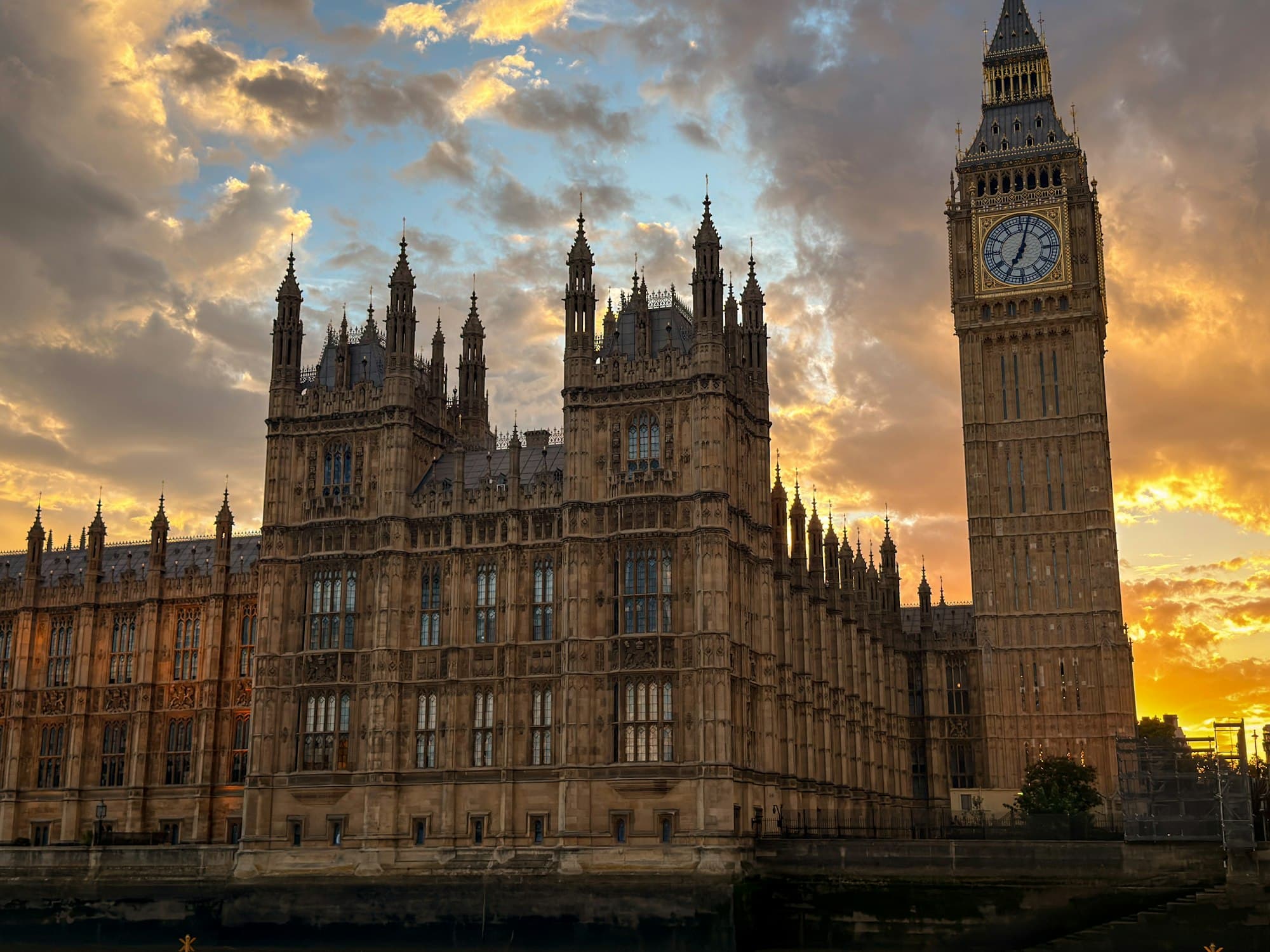
Photo: Nataliia Kvitovska on Unsplash · Unsplash License
Swipe · British History only
Swipe through British History
Save time discovering your next favourite podcast by listening to just the best minute of an episode.
The british history slate · every cover a link
All 118 british history shows →





The guide
What you'll hear on British History podcasts
Why would a king seal a peace treaty on the first anniversary of his brother's death? In The Price of Peace, The British History Podcast stops over that choice. Jamie points out that the parties had been in Winchester since July 31st, so the ceremony on August 2nd "wasn't an accident." A date becomes evidence, and evidence becomes an argument about how power talks. That is the best thing British history does in audio: it puts the record in front of you and then asks what it was trying to say.
The form is wide. One show here is hundreds of episodes deep into a single chronology. Another scores monarchs like contestants. Others hand the microphone to a specialist, or start from a chocolate tin. They suit different appetites, and the choice matters more than the era.
They also carry live arguments. In December 2025 one history podcaster published a reflection favouring structural explanation over stories centred on exceptional individuals, and objecting to turning suffering into entertainment. In September 2026 the Irish Times columnist Finn McRedmond worried that enjoyable listening can leave a shallow impression of knowledge and cannot replace reading, while concluding that learning some history from podcasts is still good. That same month, a Reddit request for recommendations split between listeners wanting methodical chronology and those prizing entertaining hosts. The shows below answer both camps.
The long chronicle
The British History Podcast tells Britain's story in order, and its current stretch sits in the Anglo-Norman world of Henry, Duke Robert and the archbishop Anselm. Episode 498, Power and Predictability (47 minutes), shows the method. Jamie establishes that Belem held 34 castles in Normandy, then steps out of the narrative to argue that power depends on subordinates behaving predictably: "Because at the end of the day, he really was just a guy." It is political theory delivered over a rampaging baron, and it works because it explains why one man's unpredictability was so dangerous.
He is candid about his sources. When his chronicler "doesn't give us a blow-by-blow account," he says so, and labels his reading of the duke's inactivity as an assumption. The cost is tone and commitment. The humour is broad, sometimes profane, and this is a serial: dropping into episode 498 means arriving mid-quarrel. In that episode Jamie says the show is ad-free thanks to member support.
Rex Factor covers some of the same ground with a scorecard. It reviews the kings and queens of England and Scotland, and its fourth series turns to "nearly monarchs," including a recent episode on Robert Curthose. Series 4 Introduction lays out the plan and promises what-if scenarios. The hosts admit that Richard III's young son Edward of Middleham might get an interview episode instead of a review. Later in that episode, a square-root formula for longevity reshuffles the all-time table, which previously had Edward I fifth on 77.5 and Robert the Bruce fourth on 80.
Under the jokes there is real attention to the record. In Emily Murdoch Perkins - The Queens Who Could Have Been (69 minutes), the conversation notes that contemporary lists of William the Conqueror's children disagree on birth order and mostly omit the daughters. It also observes that most writing about early medieval queens comes from men, often clergy. Listeners who resist in-jokes, Patreon chatter and the listener mail in Messages & Previews 11 may find the pace slack. For more on statecraft and succession, the Political History page goes further.
Specialists at the table
Where the chronicle shows hand you one narrator's judgment, the interview shows let you hear a scholar argue. In A new take on the battle of Hastings (33 minutes) from HistoryExtra podcast, David Musgrove questions Professor Tom Licence of the University of East Anglia about his theory of 1066. Licence says that no source in the original Latin and Old English mentions marching or riding south after Stamford Bridge, although a couple of translations inserted those words. He reads Harold's shield wall on Senlac as a containment operation within a larger pincer plan. Musgrove presses him on how a fleet fits the surprise attack on Hardrada, which keeps the theory honest. Rex Factor's Tom Licence on 1066 covers the same year, and the Military History page continues the thread.
HistoryExtra ranges well beyond Britain, so British listeners should choose by title. Mrs Beeton: life of the week (37 minutes) has Emily Griffiths talking with Catherine Hughes, who explains that Isabella Beeton wrote her famous book at 24, in a borrowed voice of matronly authority, and was dead by 28. Recent titles include How Henry VII seized – and kept – the crown, Have we overlooked England's local histories? and The forgotten slave traders who shaped Britain.
Travels Through Time asks each guest which year they would visit, then walks through it in scenes. Peter Moore's [From the Archive] Philip Stephens: Britain Alone (1962) traces Britain's search for a role after Suez. It covers Macmillan's talk of "interdependence," de Gaulle's suspicion that Britain was an American Trojan horse, and a nuclear deterrent placed under NATO command with a clause for taking it back in extreme national emergency. Near the end, Moore reflects on hearing the conversation again five years on. Pair Sean Cunningham: King Henry VII and a Year of Peril (1497) with HistoryExtra's Henry VII episode for two angles on one reign.
History you can stand in
The English Heritage Podcast begins from something you can picture. In Northumberland: castles and the borderlands of power, Amy Matthews says "we, as always, start with an object." The episode explains how, in 1159, Henry II made Malcolm IV give up Carlisle and Northumbria, when the Solway-to-Tweed line began to be thought of as the border. Matthews asks whether locals felt Scottish or English, comparing it to her own Dagenham. The reply: their first answer would probably be "I'm Northumbrian." Memories of flowers: a country house and its community draws on recorded recollections from Brodsworth Hall, including a man who put bulbs in a trough beneath a big mirror each morning. The bittersweet history of chocolate moves from a tin marked "South Africa 1900" to adulteration with brick dust and iron filings. Matthews's chatty asides are part of the appeal.
Irreplaceable: A History of England in 100 Places, a Historic England series from 2018, presented by Susanna Lipscomb, builds a list of places from public nominations. Peterloo, Cable Street and Olaudah Equiano sets the gathering in context. It describes a pro-democracy rally of 60,000 when Manchester had no MPs and Old Sarum had two for 11 people. For Cable Street, it keeps the qualifier on "modern claims, which are hard to verify" of up to 250,000. Nuclear Physics in Manchester and the Bristol Bus Boycott recounts how Guy Bailey's job interview was withdrawn once he said he was West Indian, and how organisers built a boycott around it. These episodes are short. The Historical Events page is the natural next stop.
Shakespeare's England, close up
That Shakespeare Life, hosted by Cassidy Cash, uses Shakespeare as a way into ordinary early modern life. Easter in Shakespeare's England: Faith, Feasting, and a New Doublet (58 minutes) considers Mercutio's new doublet. It reaches Elizabeth washing the feet of 39 poor women in 1572, "if I've got this right," the guest adds, feet pre-washed by court officials. The guest also explains why popular customs are hard to trace: folklorists only recorded them systematically from the mid-to-late 18th century, and diaries from modest households are scarce. In Courts, Rackets, Balls, and Rules: The Game of Tennis in the 16th Century, the guest's tentative view of the colour of a period tennis ball rests on an object in the London Museum. Expect commercial breaks in the feed.
Where to start
- If you want one argument, well made: HistoryExtra podcast, A new take on the battle of Hastings. It offers a new theory and an interviewer who tests it.
- For a long commitment: The British History Podcast, Power and Predictability. Use it to test Jamie's voice, then go back to the beginning, because order matters.
- If you like a verdict: Rex Factor, Series 4 Introduction. It explains the nearly-monarchs idea and the scoring before the reviews begin.
- If you like a place to picture: The English Heritage Podcast, Northumberland: castles and the borderlands of power.
- For protest and reform: Irreplaceable: A History of England in 100 Places, Peterloo, Cable Street and Olaudah Equiano.
Whichever you choose, listen for the moment a host admits what the sources cannot say. The History page maps the wider field.
Featured shows below are part of the PlayNext catalog. Updated weekly.
Featured shows
8 shows, described rather than listed
Each one comes with a short write-up and the role it plays in this guide.
A brisk solo narrative makes dense medieval politics feel immediate through casual phrasing, dry jokes and sharp asides. It suits listeners who want historical detail without a formal lecture.
Concise questions give historians room for measured explanation, spanning the Odyssey, Elizabeth I, the Bayeux Tapestry and 1966. It suits curious listeners who like expert-led variety.
Claire Ridgway tests familiar Tudor claims about Henry VIII, Anne Boleyn and Anne of Cleves, then connects motive with politics and religion. It suits listeners who value careful context over easy diagnosis.
Friendly expert conversations begin with something tangible, then widen from castles, country houses, chocolate or manuscripts into their history. It suits listeners who enjoy the past through places and objects.
Story-first episodes build a historical case through scenes, quotations and explicit signposts, with series on Shakespeare's Groundlings and the Wars of the Roses. It suits listeners who enjoy sustained argument.
Two historically literate friends turn monarchy into an ongoing argument, game and source of jokes, moving from Offa and Athelstan to disputed queens. It suits listeners who enjoy detail with comic detours.
A polished setup invites a guest to guide listeners into one year and its people, from Henry VII in 1497 to Handel in 1742 and Britain in 1962. It suits those who prefer patient, scene-rich conversation.
Presenter narration and expert field segments tell England's history through places, clearing up misconceptions before explaining each site's context. It suits listeners who like documentary storytelling grounded on location.