Topics / AI & ML Engineering
AI & ML Engineering Podcasts
5 shows and 2,098 episodes sit under AI & ML Engineering.
The best podcasts on AI and ML engineering in 2026: agent behavior, LLM evaluation, inference cost, ML mismatch, Copilot tooling, and production AI systems
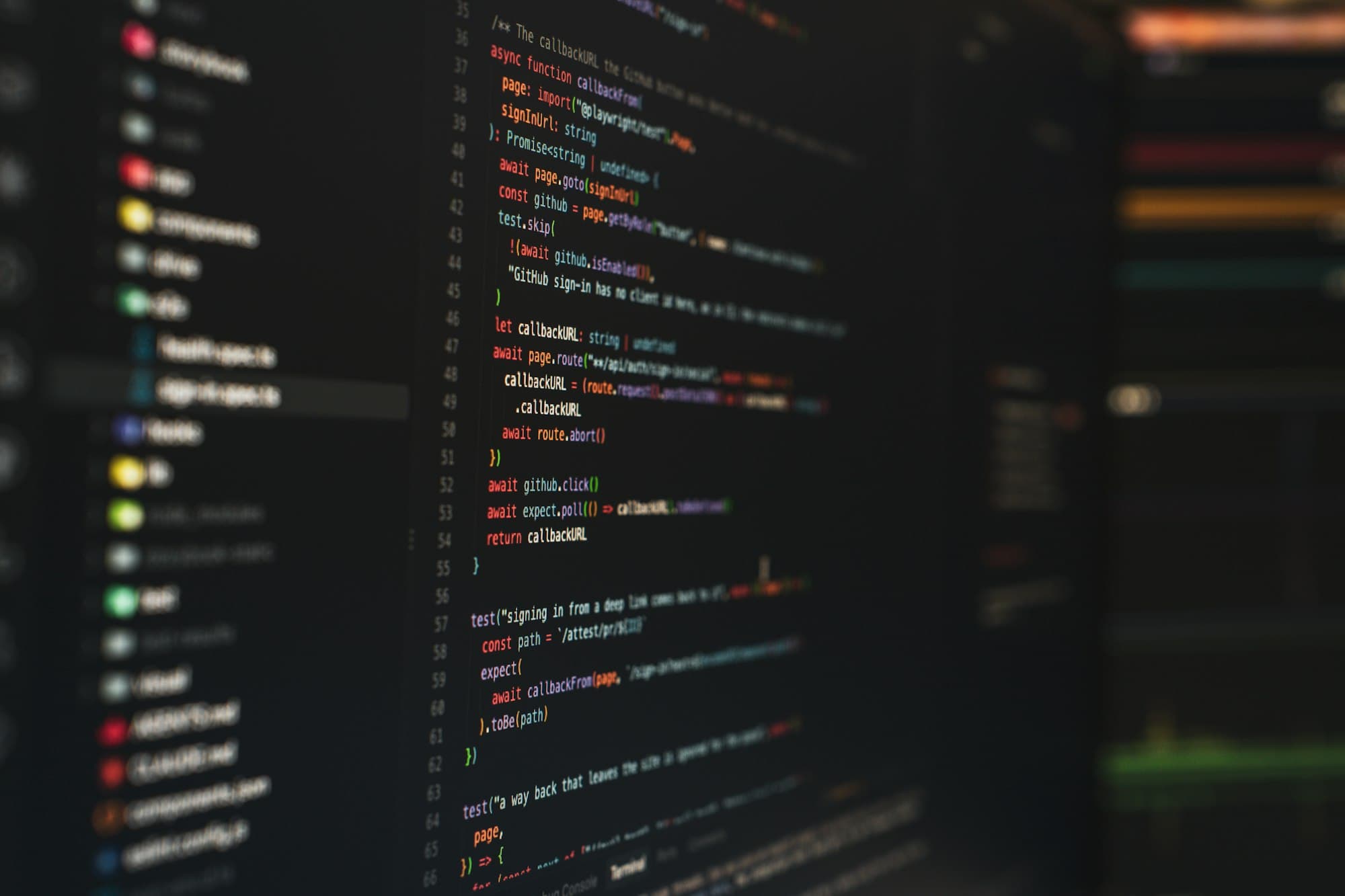
Photo: Lazar Stankovic on Unsplash · Unsplash License
Swipe · AI & ML Engineering only
Swipe through AI & ML Engineering
Save time discovering your next favourite podcast by listening to just the best minute of an episode.
The ai & ml engineering slate · every cover a link
All 5 ai & ml engineering shows →

Next to this on the shelf
Pick a subtopic
Your guide
Picking your next AI & ML Engineering podcast
The useful conversations begin after the demo, when someone has to decide what belongs in production, what deserves review, and who will maintain the thing six months later. In audio, those choices become easier to follow because experienced engineers can test one another’s assumptions in real time.
Here, the strongest shows stay close to the work. They move between agent-assisted development, model reliability, open-source maintenance, and the organizational machinery around all three.
Close to the code
Talk Python To Me has the warmest, quickest rhythm of the group. Its long-form interviews leave room for technical explanation, while the host keeps translating jargon into the language of a working Python developer. The result feels collegial rather than staged.
For a concrete look at developers working alongside agents, try Marimo Pair - A Canvas for Agent + Developers Collaboration. AI Contributions and Maintainer Load in Open Source shifts attention to the people responsible for reviewing and sustaining shared software. The show also makes room for questions of trust in Trustworthy AI in Healthcare and Longevity. These are distinct engineering situations, and Talk Python To Me is good at letting each one breathe without losing the practical thread.
Agents meet the development process
The Stack Overflow Podcast sounds like a technical design review with better pacing. Guests can range across architecture and tradeoffs, but the host regularly pauses to restate the argument and make sure the listener still has a handle on it.
Its episode titles trace several pressure points around agentic software. Building an agentic SDLC with a QA engineering mindset puts quality assurance directly into the development loop. Inside LinkedIn's cognitive memory agent for agentic personalization points toward memory and personalization, while You need reliable AI context for your site reliability connects AI context with operational reliability. For the human side of the transition, From PHP to team lead of agents: rethinking judgment, review, and data with Google's Andi Gutmans (Part 1) foregrounds review and engineering judgment. Start here if you want AI discussed in the vocabulary of teams already shipping software.
What survives inside an organization
Thoughtworks Technology Podcast takes a wider systems view. Its rotating conversations are measured, practical, and alert to what happens when a promising technique meets existing platforms, risk controls, budgets, and ownership boundaries.
We need to talk about vibe coding is the sharpest entry point for AI-assisted programming. Accelerating mainframe modernization using generative AI places the technology inside a very different engineering environment, one where legacy constraints cannot be waved away. Then MCP and SRE: Why the future of IT operations is agent-driven carries the discussion into operations. The show is especially useful when the interesting question is no longer whether a tool works, but how an organization absorbs it responsibly.
Move up to Software Engineering to explore the broader landscape. DevOps & Cloud stays closer to infrastructure, deployment, and operations; Engineering Leadership follows team design and technical decision-making; Languages & Craft concentrates on programming practice and the tools developers use to shape code. This page sits where machine-learning systems and agentic tools enter that engineering world.
Where to start
Choose Marimo Pair - A Canvas for Agent + Developers Collaboration for a conversational, developer-level introduction. Pick Building an agentic SDLC with a QA engineering mindset when reliability and review matter most. For the organizational view, begin with We need to talk about vibe coding, then follow it with MCP and SRE: Why the future of IT operations is agent-driven.
Featured shows below are part of the PlayNext catalog. Updated weekly.
Featured shows
5 shows, described rather than listed
Each one comes with a short write-up and the role it plays in this guide.
Long-form technical interviews on agent behavior, ML acceleration, LLM infrastructure, and AI in production — the deepest archive in this set.
Practical, enterprise-aware conversations on how AI changes engineering teams, operating models, and context engineering.
Warm, interview-driven, and concrete — the natural home for LLM app development, PyRIT, Gradio, and Python AI tooling.
Working developer's show that keeps returning to practical AI questions: evaluation, testing, LLM frameworks, and Copilot workflows.
Sober, institution-grade coverage of ML mismatch, LLM evaluation for security tasks, and AI trustworthiness.
Where to start
4 routes in, one per reader
'Python apps with LLM building blocks' is a concrete starting point for putting LLM pieces into a working application.
'Mastering LLM Prompting in the Real World by Macey Baker' and 'Building an AI Agent in 100 Lines of Code | Yaniv Aknin' are practical and scoped.
'Optimizing Agent Behavior in Production with Gideon Mendels' covers evaluation and production behavior, not just architecture.
'Building at the intersection of machine learning and software engineering' and 'What we're talking about when we talk about context engineering' stay close to teams and operating models.
Glossary
Words hosts use without explaining
The process of measuring whether a large language model produces correct, safe, or useful outputs for a given task — a critical but unsolved engineering problem as models move into production.
An LLM execution pattern where the model reasons, takes an action, observes a result, and repeats — the core structure behind autonomous AI agents and copilots.
The compute and API expense of running a model per query; a dominant factor in whether an AI feature is viable at scale.
The gap between what a machine learning system was trained to do and what it is asked to do in production — a common root cause of reliability failures.
Adversarial testing of language models to find failure modes, unsafe outputs, or exploitable behaviors before deployment.
Developer slang for writing code with heavy AI assistance, often moving fast without fully understanding the output — a productivity gain and a technical debt risk.