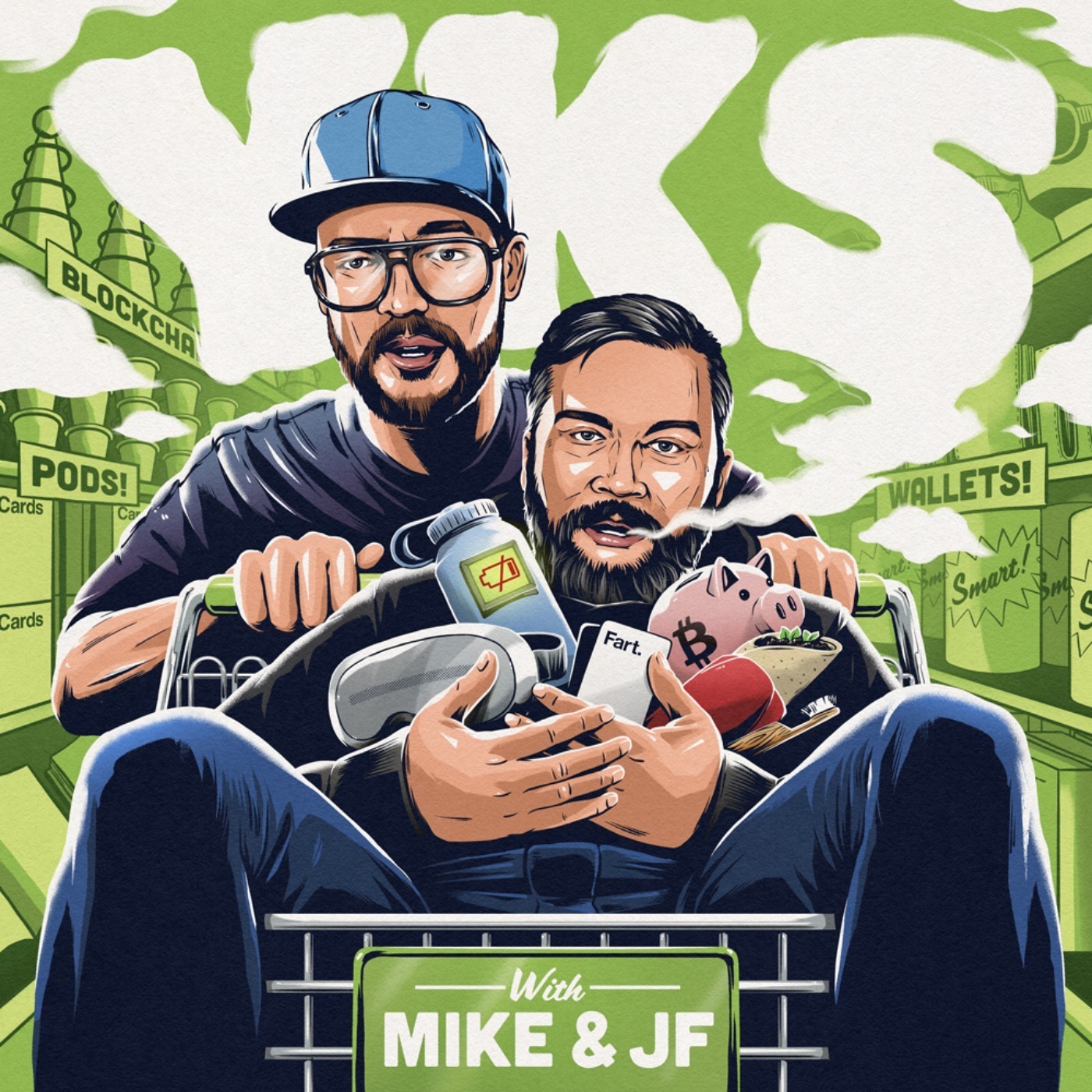
Your Kickstarter Sucks began as a crowdfunding autopsy and has become something looser and stranger. Mike Hale and Jesse Farrar still nod at the premise — dumb products, doomed pitches — but the real engine is the voicemail line. Every episode opens cold on a caller. One describes a father fish-hooked by a garage-door spring, passing out mid-air, then calling his wife instead of an ambulance. One reports a milestone: buying a first home, and separately, witnessing something appalling behind an Aldi. One asks what near-death revelation prompted them to start a podcast at all. None of these get a real answer. What they get is a demolition. The two fixate on some incidental detail — how many legs an aunt has, whether a walking handle beats gripping a companion's arm, whether a name is one letter from a filthier name — and then argue that detail into the ground with total commitment. The rhythm is compressed and interruption-heavy. A setup half-lands, gets corrected, gets worse, and then something else arrives before anyone resolves the first thing. Producer Dan sits in the crossfire. A caller once floated a joke at his expense and he spent the rest of the episode wearing it, offering a medical explanation nobody accepted. That is roughly how the show handles everything. Subject matter drifts wide: a movie that bombed and whether Lady Gaga or Maggie Gyllenhaal was in it, a returning season of a reality show about compulsions, homeowners' association rules about cats, Arc'teryx jackets and mild geopolitical bravado, a humiliating medical appointment involving a paper bag. Even sponsor reads get metabolized into the comedy rather than performed cleanly. Nothing is sacred and nothing is sincere for long. The tone is dry by default, with detours into mock outrage, feigned expertise, and genuine warmth between the two that surfaces mostly as abuse. There is no guest chair, no research segment, no arc. There is also no polish, which is the appeal: this sounds like a conversation that would happen with or without recording equipment. Language is unfiltered throughout, and the show has an obvious tolerance for bodily comedy that will lose some listeners in the first minute and win others permanently. With more than 450 episodes behind it, the show has a settled internal logic and a caller base that clearly knows the assignment. Newcomers can start anywhere. The voicemail will make no sense either way.