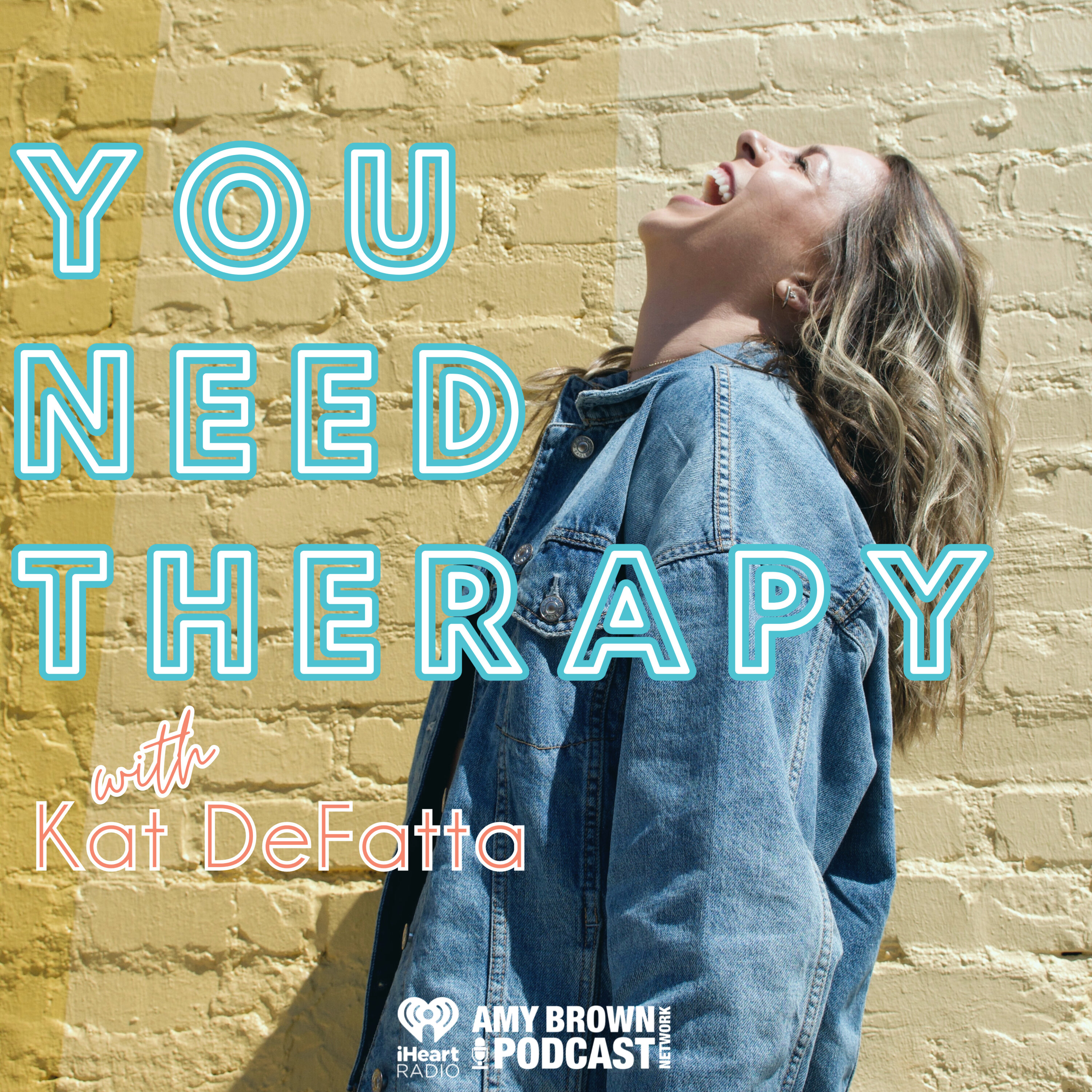
Kat opens each episode the same way. She is a human first, she says, and a licensed therapist second. That ordering is the whole editorial stance of You Need Therapy. The show exists because of a specific problem she names in conversation: she works in private practice, does not take insurance, and keeps a sliding scale for only a limited number of clients. That leaves a lot of people outside the room. So the conversations she would otherwise have with a client, or in her own head, get made public instead. The format alternates. Guest episodes stretch long and sometimes split in two, as with the pair of conversations with JP Saxe about love and closure, or the dating-after-divorce episode with Amy Brown. Solo episodes take a smaller starting point. One begins with not wanting ants in the kitchen and ends up somewhere useful about why motivation follows importance rather than willpower. The voice is measured and unhurried. Listeners are told what a conversation is about and why it matters before it starts, which makes even the heavier material feel navigable. Sentences run long and circle back. A point gets made, then made again with different words, which reads less like padding than like someone making sure it landed. One of the show's more durable ideas is the split between discomfort and danger. Stepping outside the lines a culture drew can feel worse and be safer at the same time, and the host argues people routinely confuse the two. There is loss in that move, and loss is uncomfortable, and that is allowed to be true without being fixed. Another running thread is what people signal without meaning to. If someone accepts inconsistent contact, they may be teaching the other person that inconsistency is fine. The conversation does not stop at blame in either direction. It sits with the possibility that a person simply does not know how you want to be treated. Attachment theory comes up as something that used to be therapist-only vocabulary and now circulates more widely, which the show treats as progress worth extending. Practical topics get the same care as the psychological ones, including gift-giving overwhelm and boundaries held with positive intent. A standing disclaimer runs early: the podcast is not a replacement or substitute for actual treatment. Sponsor reads and network promos sit at the edges of episodes and are easy to spot. What holds it together is the sense of a guide who would rather a listener feel oriented than impressed.