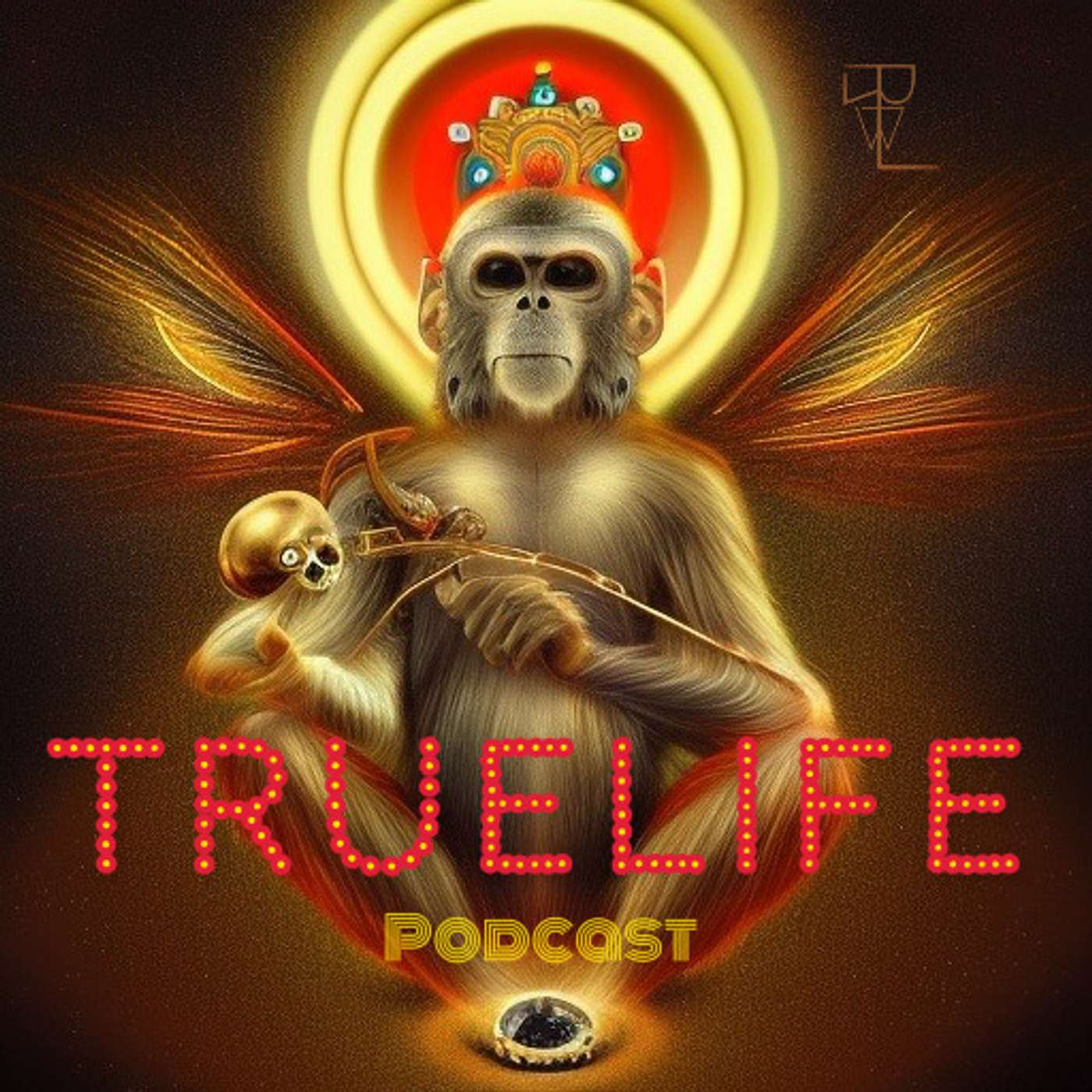
TrueLife treats consciousness as a place where chemistry, dread, comedy, and revelation keep interrupting one another. Its recent run is full of fictional compounds with elaborate names and mechanisms: KATAPT, THALASSINE-7, DIGNIN, Lexicon 7, and Psi-Collapse. Those inventions are not just worldbuilding props. They give the show a way to stage altered perception with technical vocabulary, bodily consequence, and emotional pressure all running at once. One episode begins with an unintended overdose in a kitchen and turns toward panic, comparison, money, and the habit of looking away. Another frames a hypothetical oceanic compound around a rip current, a daughter on someone's back, and the body's decision to continue. The casino stories change the setting but keep the same nervous-system charge. Suit 488 moves through parking lots, employee corridors, soft count rooms, machines, cameras, uniforms, and the strange daylight after a night shift. Money becomes smell, weight, residue. Prayer beads on a casino floor become a small object with more gravity than the room around it. TrueLife is often extravagant, but it is not loose. It builds scenes out of repeated details: timestamps, machines, rooms, bodies, surfaces, tasks, and the exact second when ordinary control fails. The show can be funny in the middle of abstraction. It can also be severe. Mirrors talk, bathroom floors become quantum jokes, and clinical terms bump against family fear, institutional processing, and the private arithmetic of shame. The voice is direct, ritualistic, and rhythm-heavy, with short lines cutting through long visionary passages. It does not present a clean boundary between real mechanism and invented mythology. That tension is the point. TrueLife gives a listener fictional drugs, casino mysticism, and altered-state monologues, then keeps returning to one question: what remains when the protective story drops?