A season-two farewell that links digital health to lived experience and a next-season reset.
Voice of Law closes season two by turning a thank-you into a useful question: what pulls people into digital health, and what keeps them there.
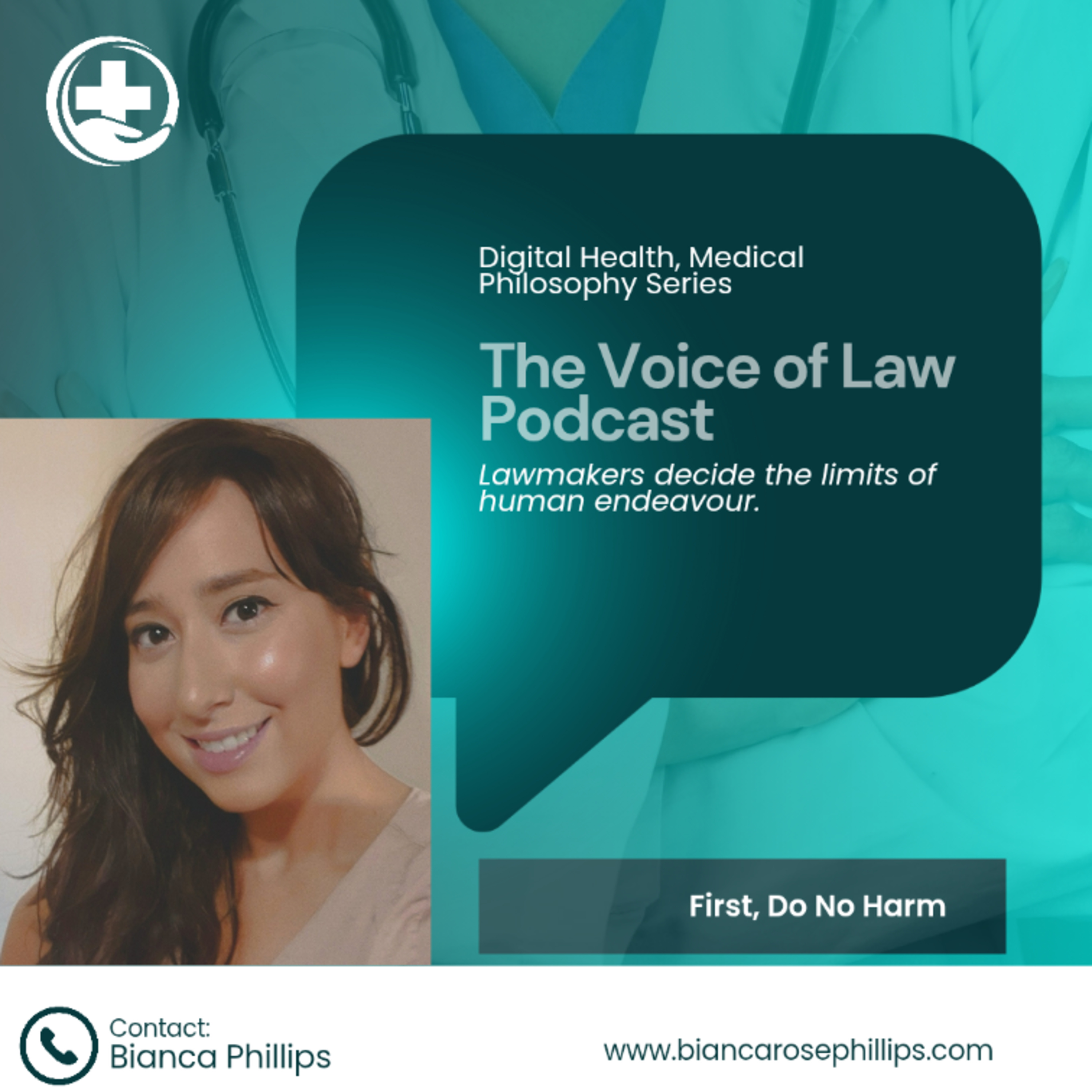
Bianca Phillips
55 episodes listed below
Digital health, argued with legal care.
The Voice of Law Podcast treats digital health as a legal, ethical, and cultural project, not just a technology trend. Episodes move between solo reflections on curiosity, speed, and purpose and interviews about medicine, AI, power, and lawmaking.
PRESS PLAY
The Voice of Law Podcast approaches digital health as a field that needs sharper thinking before it needs louder hype. The show’s center of gravity is law, but its reach is wider than statutes and compliance. Episodes move through medicine, philosophy, AI governance, professional culture, public consultation, and the everyday habits that shape institutional change. Bianca Rose Phillips is named in its episodes as the host, and the series often carries the cadence of a lecture refined into a personal essay. It asks practical questions. What should digital health actually achieve? How fast can healthcare safely move? What kind of curiosity should organisations encourage in their staff, students, and colleagues? The show is especially interested in responsibility: the responsibility of lawmakers to support claims with evidence, of health innovators to protect patients while moving quickly, and of professionals to understand the power structures around clinical knowledge. Solo episodes can be reflective, drawing on family health experiences, schooling, mentorship, and career choices to explain why digital health matters. Interview episodes bring in named figures for conversations about medicine, AI, expertise, and change. The register is serious without being sterile. It can pause over a phrase like purpose, curiosity, or speed and treat it as a working tool for the field. Legal listeners will find discussion of lawmaking, interpretation, and evidence. Healthcare and technology listeners will find attention to implementation culture, patient and provider experience, and the limits of simplistic innovation slogans. The show’s best fit is an audience comfortable with reflective argument and cross-disciplinary thinking. It does not reduce digital health to product launches. It treats the revolution as a long civic project, where better technology only matters if the reasoning, safeguards, and social benefit are strong enough to carry it.
Made for: For lawyers, policymakers, clinicians, health technology builders, researchers, and students who want a careful framework for digital health change. It also suits listeners drawn to the philosophy and ethics behind AI, medicine, and healthcare reform.
What sets it apart: The show connects digital health law to lived motivation, legal interpretation, medical philosophy, and organisational culture. Its signature move is turning broad innovation language into questions about purpose, evidence, accountability, and safe speed.
Join this Aussie as she explores The Digital Health Revolution. Bianca is a lawyer & lecturer with research expertise in medical and digital health law. She writes about The Law Making of the Digital Health Revolution, and she is building a Digital Health School of Thought founded on eight core pillars - Accountability, Law & Human Rights, Societal Benefit, Clinical Benefit, Harm Reduction, Risk Reduction, Business Case and Public Consultation. She has presented in Australia and the USA including at the VOH Summit at Harvard Medical School. *Info is general. Seek professional advice.*
The stethoscope meets the statute book, and your smart speaker suddenly needs counsel.
Press play if you want
Short reviews from the PlayNext desk, based on the episodes we processed.
A season-two farewell that links digital health to lived experience and a next-season reset.
Voice of Law closes season two by turning a thank-you into a useful question: what pulls people into digital health, and what keeps them there.
Digital health beyond the hype cycle.

Host Jack Rhysider narrates true hacking, breach, and privacy stories from the people involved.

David Pierce and Verge staffers cover AI industry news, gadgets, and tech policy weekly.

Long-form interviews on AI coding agents, infrastructure, and security, plus a recurring SED News roundup.
Founders and engineers on AI coding agents like Claude Code, and supply chain security.

Medicine displays patients' X-rays from the patient's perspective, making left-right orientation an ethical rule.
A Cambridge hospital search in Cambodia turns into a case for telemedicine, language access, and urgent care.
The host discusses AI personhood status and potential public submissions on defining personhood for AI in a hypothetical government consultation.
Dr.
Bianca Phillips, a Melbourne lawyer specializing in medical and digital law, discusses voice technology in healthcare with Taylor Brana on The Happy Doc Podcast.