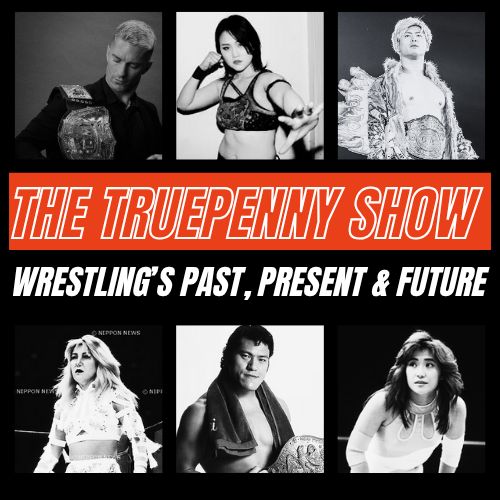
The Truepenny Show is a broad wrestling feed with a particular talent for turning match talk into context. It is not built around hot takes alone. The show is more interested in how wrestling works: why a heel annoys without exhausting the audience, why a tournament result matters, how a wrestler uses family history, or what a promotion’s economy and scene did to its style. Recent episodes move across TJPW, New Japan Cup 2026, Fit Finlay’s European career, Osaka Pro Wrestling in 2004, and a Wrestling Rewind look at WWE In Your House 13. That range is the point. A quick results-only episode can sit beside a long historical study, and both are treated as part of the same wrestling ecosystem. James True Penny often sets the frame, supplies history, and steers the discussion back toward the match. Christy gives the New Japan coverage much of its lively counterweight, bringing reaction, questions, and enough pushback to keep the analysis from becoming a lecture. Guests and companion-show voices broaden the feed without making it feel anonymous. The tone is informal, sometimes openly improvised. It can wander into a music aside, a scheduling complaint, or a joke about the practical burden of watching too much wrestling. Then the conversation snaps back to a headbutt, a faction beat, a referee’s role, or a choice in character work. The show’s vocabulary assumes some wrestling fluency, but it usually explains its terms through examples rather than gatekeeping. It is strongest when comparing styles and eras. Fit Finlay becomes a way to talk about toughness, control, cheating, hair-pulling, and the referee as a secondary opponent. New Japan Cup episodes become arguments about youth movements, faction identity, nepotism in wrestling storytelling, and the difference between annoyance that draws heat and annoyance that flattens a match. The Japanese-history episodes are especially useful for listeners trying to understand how promotions rose, shrank, fractured, and survived. The humor is dry and sometimes irreverent. The analysis is usually more generous than cynical, even when the hosts are annoyed. It is a show for fans who like wrestling as performance, business, lineage, and argument all at once. Its defining pleasure is hearing knowledgeable people think out loud until the shape of a match becomes clearer.