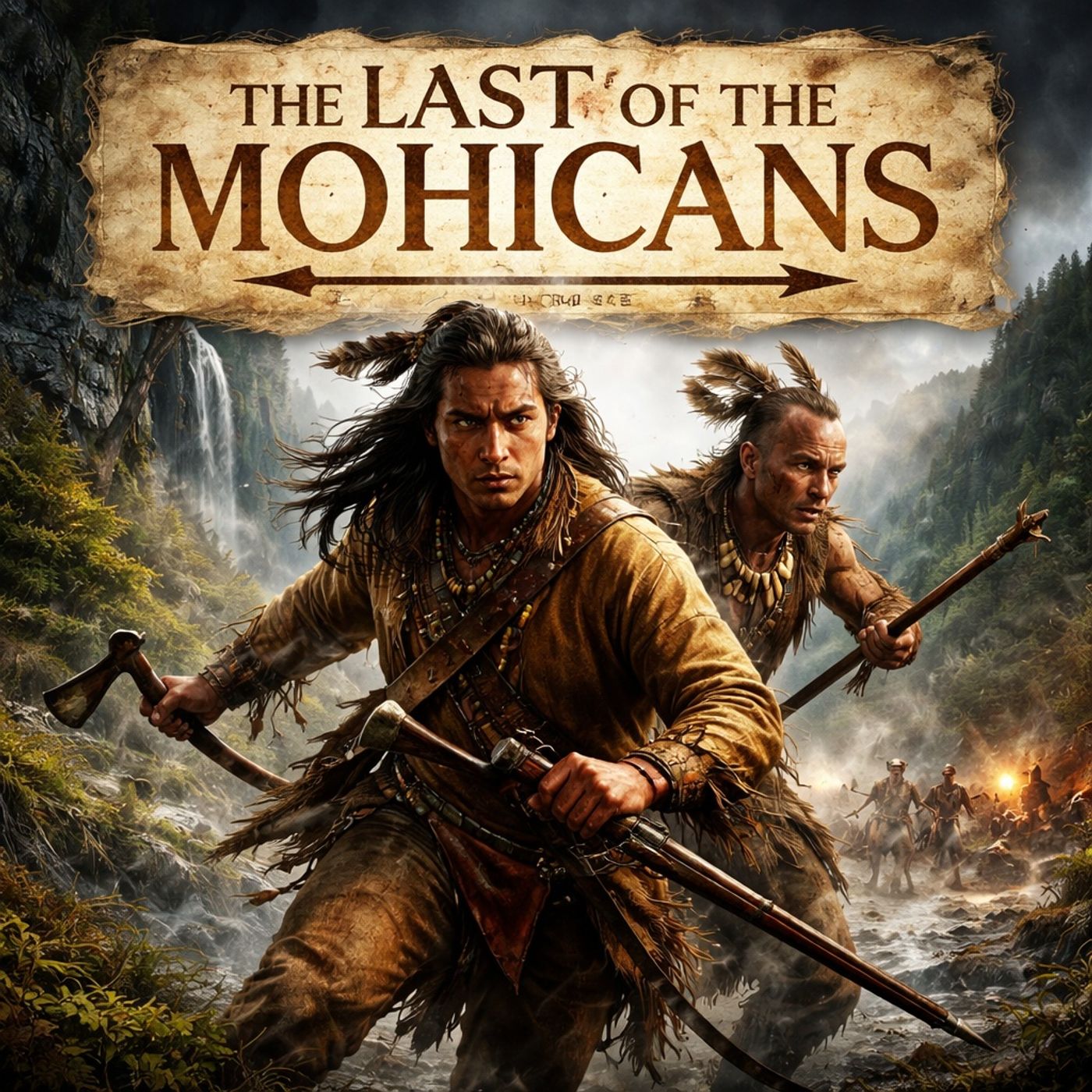
The Last Of The Mohicans is a serialized audio presentation of James Fenimore Cooper's 1757 frontier narrative. It is built for patience. The recent episodes follow the story into its late, most severe passages, where wilderness travel gives way to councils, stratagems, captivity, battle, and funeral mourning. The forest is never merely background. It is read as a field of signs: bent trails, watched streams, dropped sounds, hidden weapons, distant combat, and the charged stillness before violence breaks. Hawkeye appears as a scout of caution and practical judgment. Uncas stands at the center of the political and tragic movement, moving from captive scrutiny to recognized authority and, finally, to elegiac remembrance. Cora and Alice remain bound to the story's peril, with Cora's captivity and Alice's vulnerability shaping the calculations of both allies and enemies. Magua, also rendered in the excerpts as Mokwa or Mogwa, works through persuasion, gifts, delay, and intimidation, pressing advantage inside codes of hospitality and war. Tamanund gives the closing chapters their solemn public frame. The result is adventure told in an older key: formal, descriptive, and often ceremonial. Action arrives, but it is usually preceded by long scrutiny. A battle plan may turn on the timing of a signal, the recovery of a rifle, or the behavior of men around trees. A death scene may widen into national mourning. The show does not soften the source's period assumptions. Its depictions of Indigenous peoples, frontier warfare, colonial power, and racial identity belong to the period and can be starkly uncomfortable. That context is part of the listening experience. For the right audience, the appeal lies in hearing the narrative's full density rather than a modernized digest. It preserves the slow pressure of the prose, the grave sweep of the landscape, and the tragic cadence of a classic adventure reaching its end.