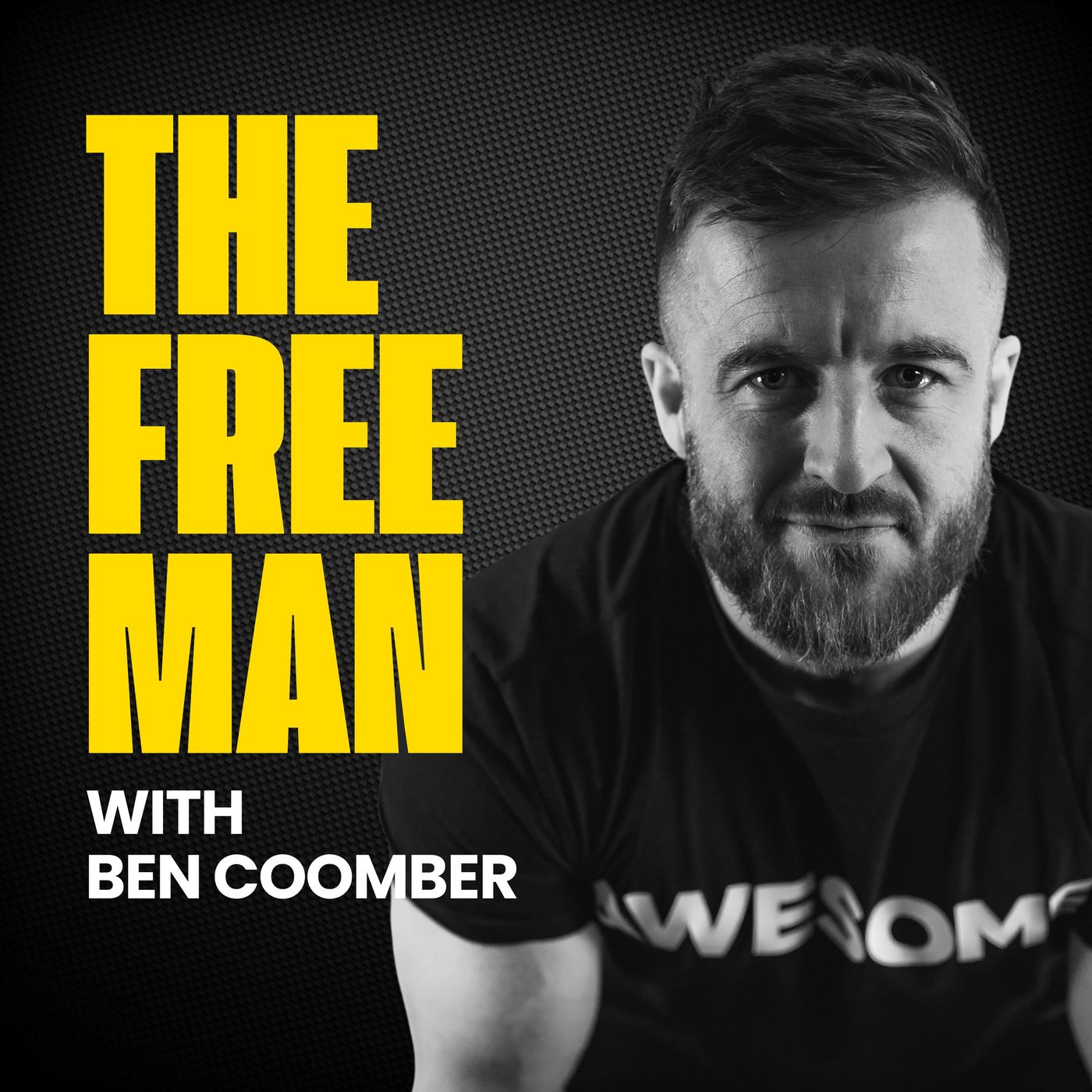
The Free Man is a performance and personal-development show with a strong health-and-fitness spine. Its episodes keep coming back to a deceptively simple problem: people often know what they want to change, but their lives, beliefs, bodies, and environments make that change harder than expected. The show treats that friction seriously. It talks about self-sabotage as something shaped by upbringing, behavior, belief systems, and daily surroundings. It treats back pain as both a personal journey and a coaching problem, especially for people dealing with injury, rehab, and chronic pain. It also spends time on the mindset behind body composition, running goals, fat loss, and confidence. The tone is informal and direct. It can move quickly from a joke about a T-shirt to a careful explanation of why consistency matters more than a perfect plan. Guests often arrive with lived experience as well as professional context. Troy Martin discusses personal training, nutrition coaching, functional training, and pain or injury work. Natalie Butler brings personal development coaching and her own experience of self-sabotage. John Clark’s conversation runs through business ownership, gym ownership, rugby, jiu-jitsu, strongman, and charity challenges. Brian Keane’s episode pushes past labels like laziness and motivation to examine what is really blocking action. Keynote-style material adds a business-performance angle, linking energy, clarity, food quality, meal balance, movement, supplements, and the demands placed on the body each day. The show is not soft-focus wellness. It is more interested in agency, discipline, reset points, and the confidence that can carry from training into work and relationships. Listeners should expect candid stories, coaching language, and practical frameworks rather than detached theory. At its best, The Free Man makes personal change feel less like a slogan and more like a set of repeatable decisions made under real pressure.