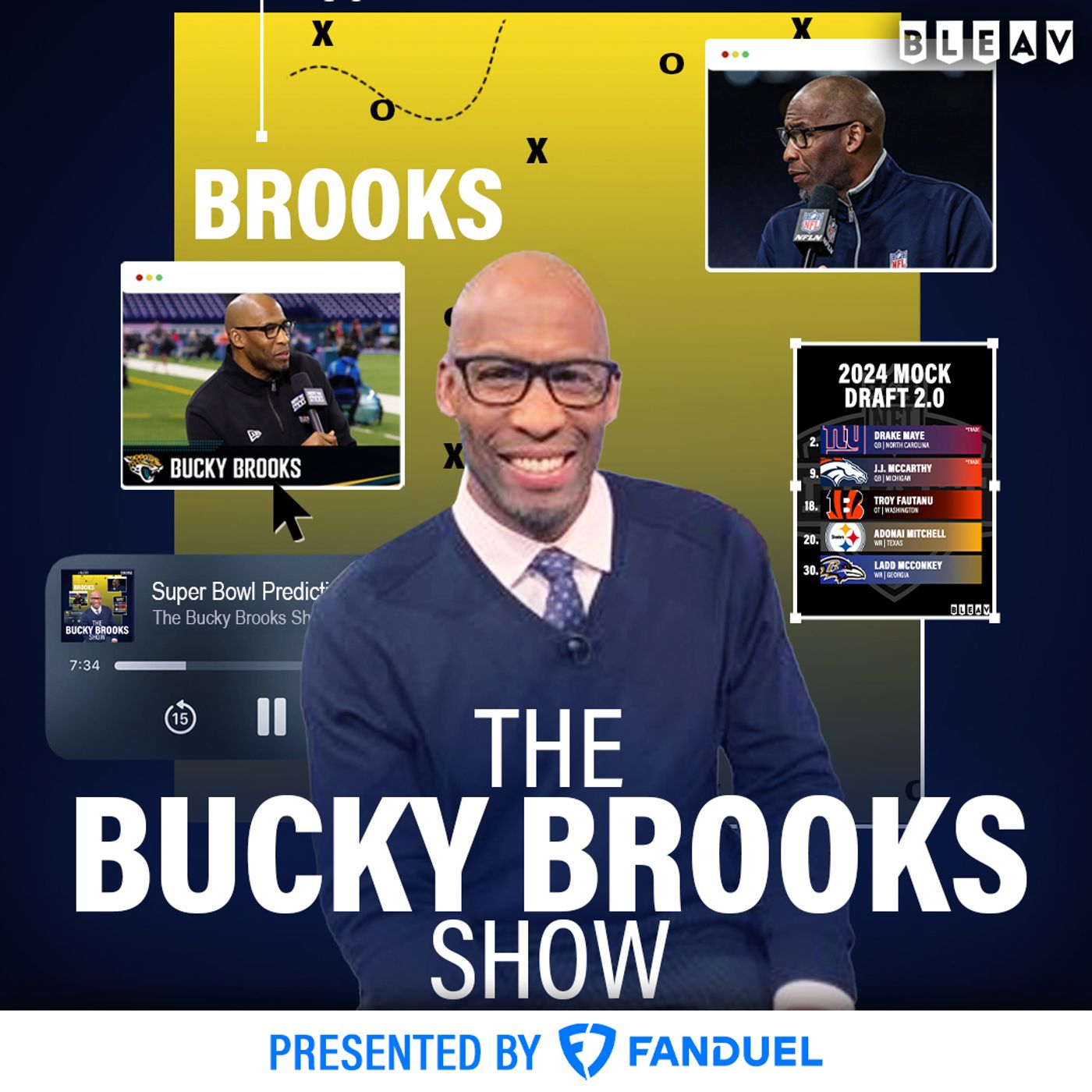
The Bucky Brooks Show is built for football evaluation, not surface-level reaction. It starts with the week’s NFL premise and keeps asking what it means on the field. A pro day is not just a throwing session. It becomes evidence for how a quarterback might lead a franchise, handle pressure, and meet the standard attached to a high pick. A trade is not only a transaction. It becomes a question about money, role, roster direction, and what kind of player a team is choosing to build around. Bucky Brooks works in a brisk, conversational rhythm, but the show’s authority comes from comparison and context. The episodes return often to draft boards, front-office timing, top-30 visits, mock draft fits, and the difference between a good player and the right player for a specific team. Quarterbacks get particular scrutiny. Fernando Mendoza’s pro day, toughness, and franchise outlook are treated as practical football questions rather than abstract buzz. The show also spends real time on roster cores, with the Jaguars used as a case study in identifying the right locker-room pieces and locking them in. Receiver value is another recurring thread, especially as college pass catchers and expensive veterans force teams to reconsider spending habits. Conversations are used for perspective rather than decoration. Phil Simms adds quarterback memory, coaching stories, and views on toughness. Joe DeLeone helps test assumptions about the wide receiver class and what teams should expect from prospects. Cross-show appearances widen the frame to the Bengals, Ducks prospects, Vikings fits, and other team-specific angles. The tone can be blunt, warm, or excited, but it rarely drifts into generic sports shouting. It suits listeners who enjoy scouting language, roster causality, and the small football details that change a headline’s meaning.