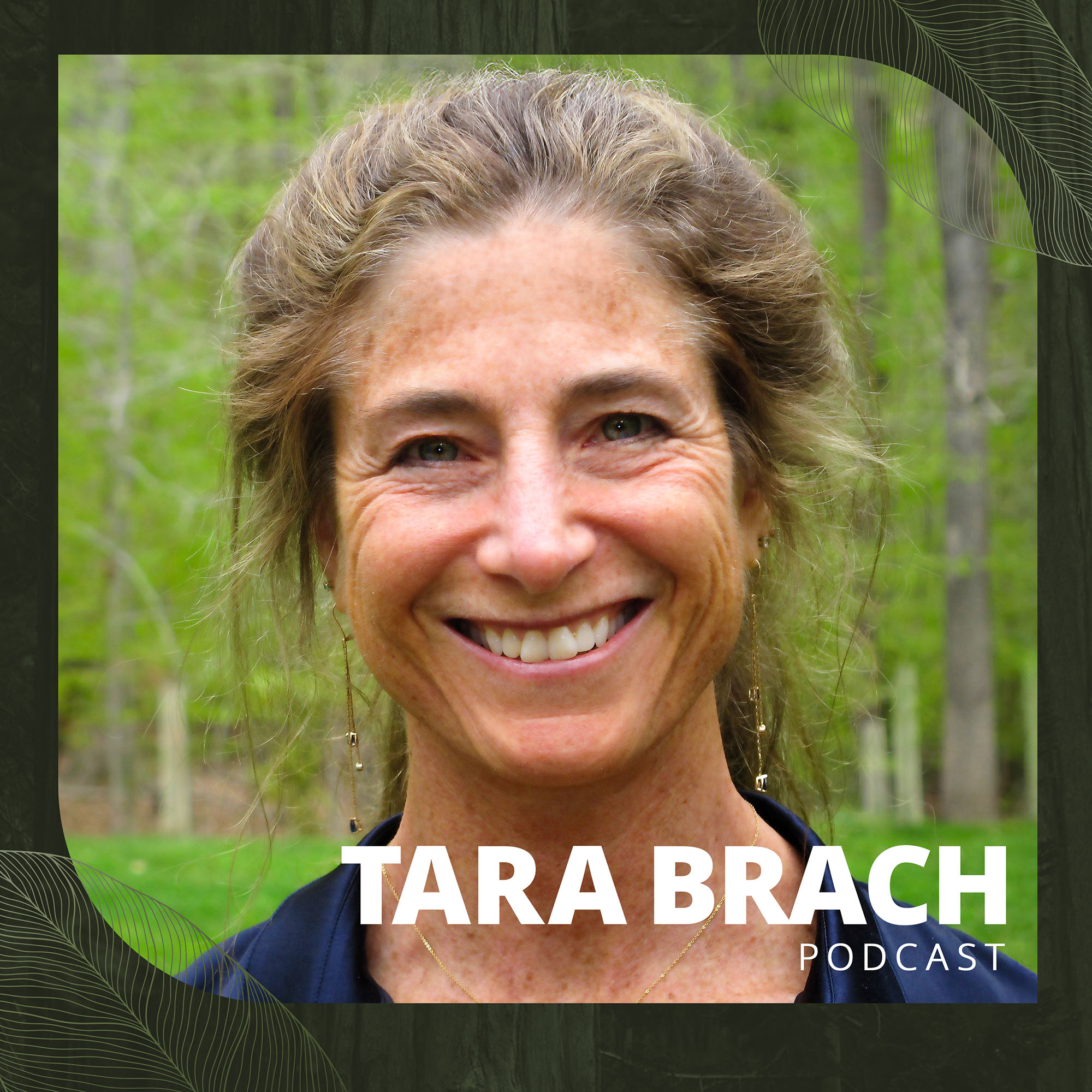
Tara Brach is built around the slow work of coming back to the heart. The show blends Buddhist teaching, guided meditation, and psychologically aware reflection, usually in a tone that is intimate, careful, and quietly insistent. Many episodes are direct practices. They begin with breath, posture, and bodily ease, then move through the face, throat, heart, belly, pelvic region, hands, and feet as places where awareness can soften and widen. The language often returns to listening, smiling, relaxing back, and making room for whatever is present. That repetition is part of the method. It gives the listener time to feel the instruction rather than merely agree with it. The teaching episodes work similarly, but through story. A talk on the awake heart starts with an image of care and healing, then moves toward loneliness, grief, fear, humanity, and the longing to love without holding back. Conversations extend the practice into ordinary difficulty. With Devon and Nico Hase, the show considers partnership, conflict styles, rupture, apology, and the possibility of loving people as they are. With Mohsen Madawi, it turns toward activism, displacement, violence, trauma, polarization, and the question of how justice work can remain rooted in love. The show can be tender. It can also be grave. Its seriousness comes from suffering being treated as real, not as a problem to polish away with spiritual language. At its best, the podcast turns abstract compassion into a sequence of inward checks: What is tight? What wants care? What can be included now? The result is less like a lecture and more like a sustained practice space. It suits listeners who want meditation to touch relationships, social pain, and daily emotional life without losing its contemplative center.