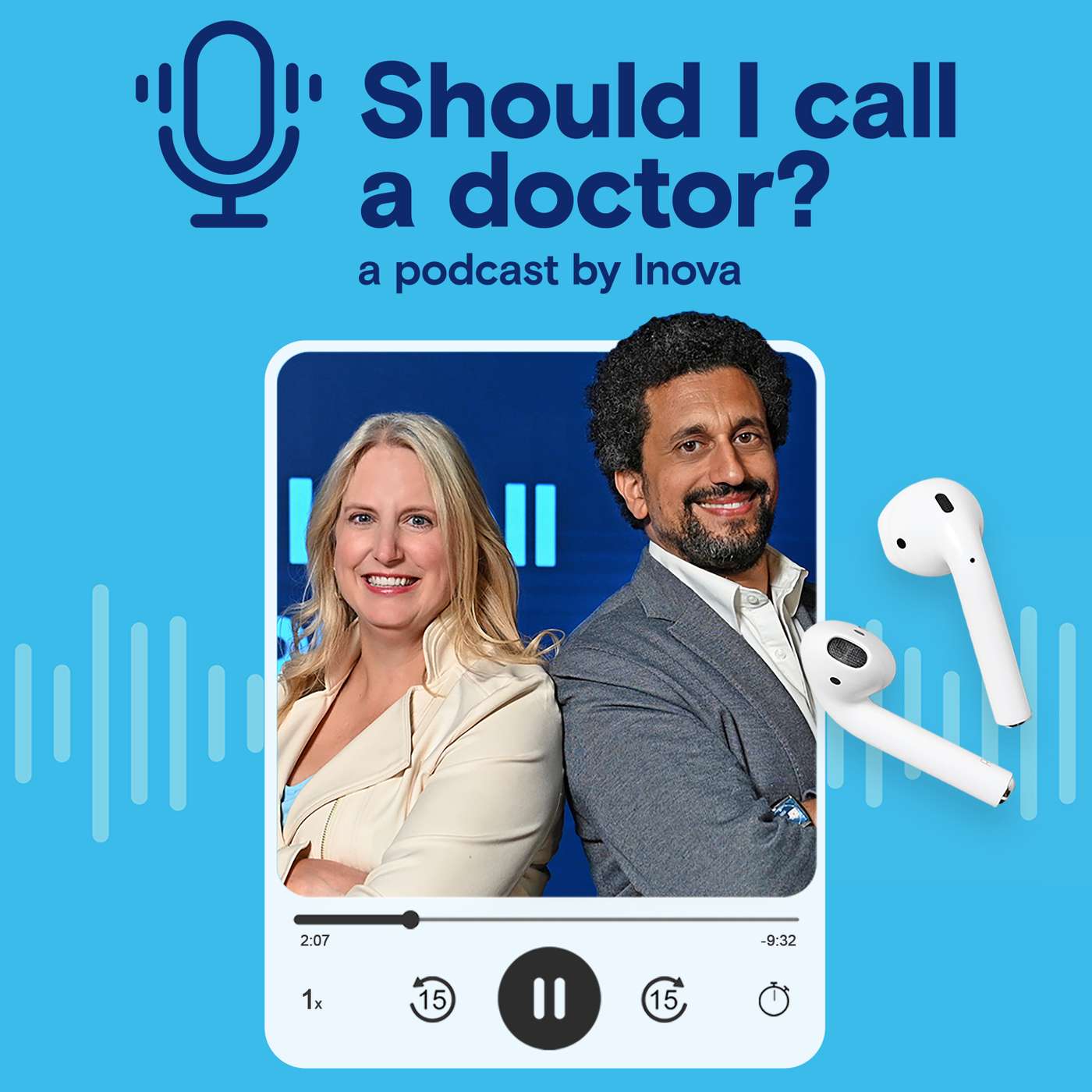
Should I Call a Doctor? is built for the space between worry and an appointment. The show takes everyday health uncertainty seriously without turning it into drama. Dr. Samuel Gowley offers a clinician's perspective from internal medicine, while Tracy Schroeder asks the kinds of questions that tend to linger after a search result or a family conversation. The format is simple and useful. Each episode in its episodes brings in a named Inova specialist or program leader and lets the topic widen from the obvious concern to the details that change care. A menopause conversation becomes a look at sleep, mood, palpitations, hormone therapy, non-hormonal medicines, lifestyle changes, and certification. A child and teen mental health episode starts with public concern, then narrows toward function, anxiety, depression, parent blind spots, and access to care. Sleep is treated as a basic biological need with physical and cognitive consequences. Dementia is explained through independence, memory, thinking, movement, family impact, and the difference between Alzheimer's disease and broader cognitive decline. Cancer episodes focus on early detection, risk-based screening, lung nodules, breast cancer guidelines, family history, genetic testing, mobile screening, and life after diagnosis. Digestive health gets the same careful treatment, from reflux and irritable bowel syndrome to colonoscopy, stool tests, risk factors, and when symptoms deserve a gastroenterologist. The show's strength is its refusal to pretend one answer fits every patient. It keeps returning to context. Age matters. Family history matters. Symptoms matter. Lifestyle matters too. The mood is professional and humane, with enough specificity to be useful and enough restraint to avoid false certainty. It is best for listeners who want to understand what clinicians are thinking before deciding what to do next.