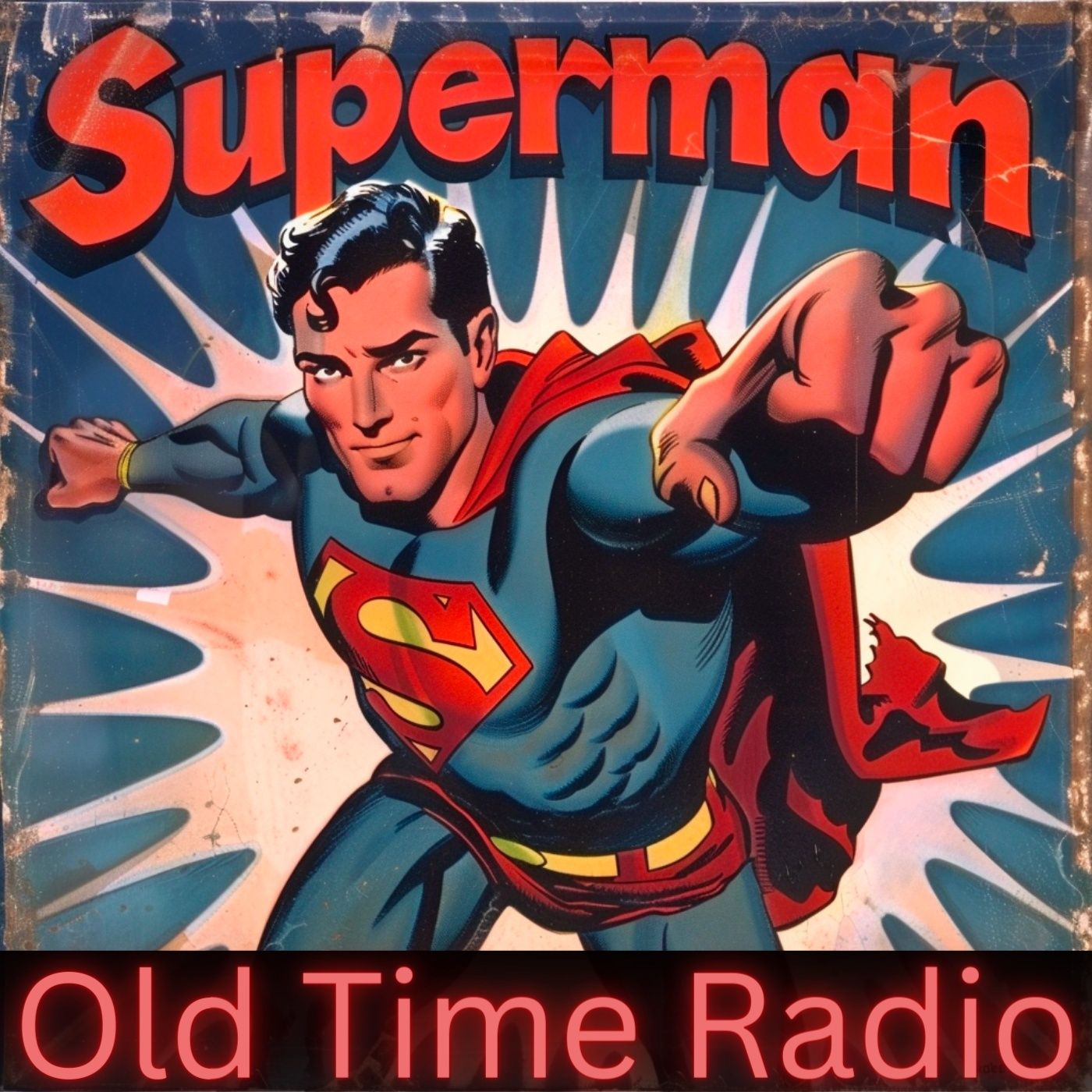
Old Time Radio Superman is a large run of classic Superman radio drama presented as serialized fiction. The show is built around momentum. The excerpts keep returning to the same reliable engine: Clark Kent hears trouble, the Daily Planet presses for answers, and Superman becomes the hidden answer to a problem ordinary people cannot solve. That problem may be a mechanical monster loose in a frightened city. It may be a train threatened near Schooner Canyon Lake. It may be a burning Sterling Tower, a hospital patient, a stolen costume, or an atomic beam aimed at the Daily Planet building. The stories speak in broad, declarative radio language. Danger arrives loudly. Villains announce pressure. Editors bark for facts. Reporters stall, bluff, or sprint toward the next lead. The result is not a modern superhero conversation piece; it is action melodrama with a newsroom heartbeat. Mr. White's impatience, Lois Lane in peril, Inspector Henderson's involvement, and Clark Kent's careful exits all help define the shape of the drama. Excerpts also show the serial's fondness for named antagonists and henchmen, including the Wolf, Keno, the Mask, Nick Morelli, Deneen, and Pemberton. The stakes are clean and immediate: save the train, stop the fire, find the monster, protect the person in danger, keep Superman's identity from falling into criminal hands. Short comic exchanges sit beside cliffhanger peril. A nervous editor can make a scene funny without lowering the danger. The announcer's recaps and closing prompts give the episodes a strong broadcast frame, often pushing the listener toward the next installment with unanswered questions. Some recordings include contemporary ad material around the original drama, which can make the presentation feel like an archival program inside a modern podcast feed. The center still holds: Superman as a radio hero, Clark Kent as a Daily Planet reporter, and suspense delivered through voices, timing, and sound-stage imagination. It suits listeners looking for superhero storytelling before cinematic scale became the default. It also suits anyone curious about how comic-book action worked when the picture had to be built entirely in the ear.