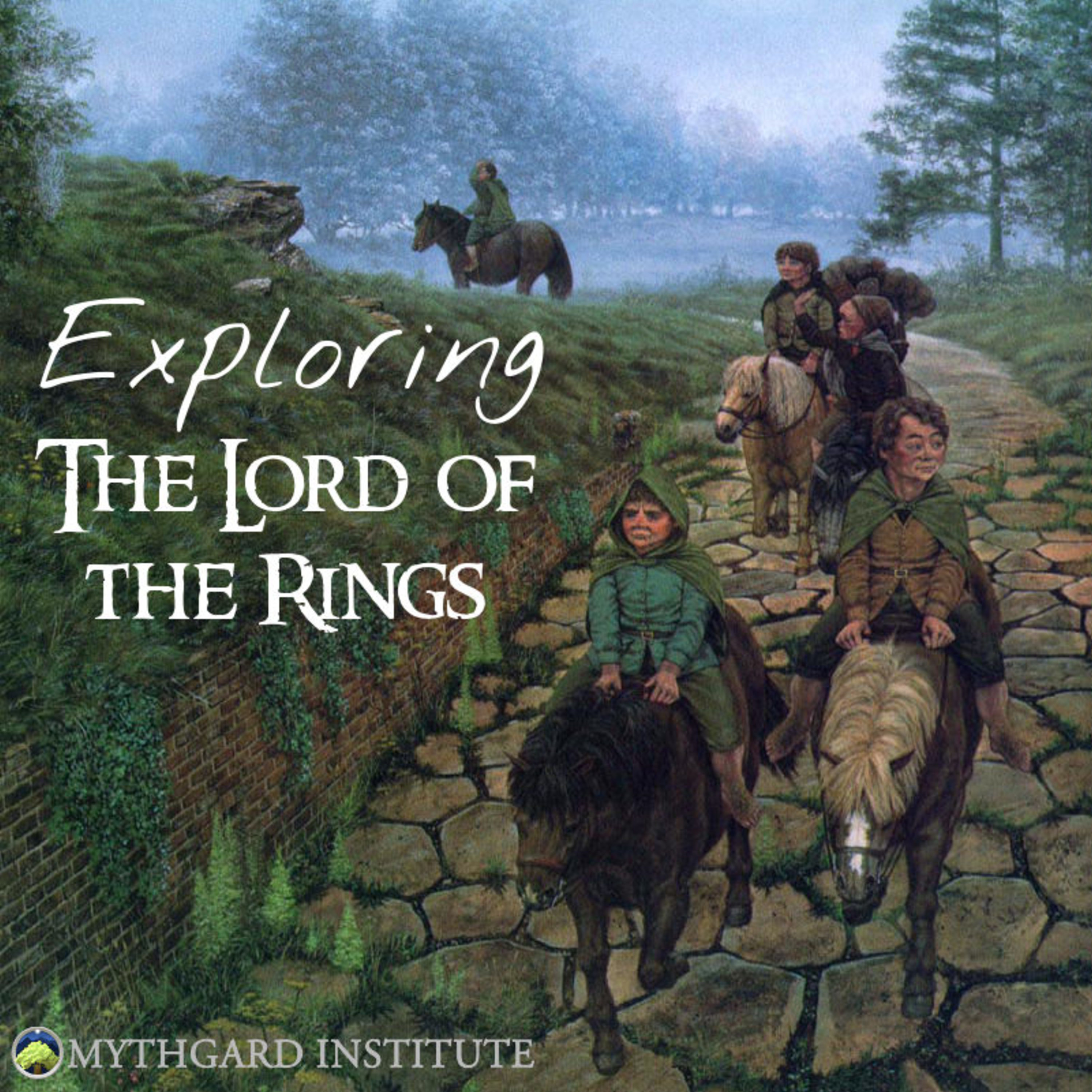
Mythgard's Exploring The Lord of the Rings is a deeply patient act of literary attention. It advances through Tolkien's book at a pace that makes room for nearly every hinge in the prose. Recent sessions hover around the Bridge of Khazad-dûm, Gandalf's stand, Boromir's horn, Aragorn's leadership, and the first steps toward Lothlórien. The show is not trying to summarize the plot. It is trying to notice how the plot is made. A word like "last" becomes a problem of time, command, and retrospective meaning. A description of echoes under stone becomes a study in sentence length, sound, and force. The Balrog material opens questions about visual imagination, demon imagery, wings, and the way later readers carry assumptions back into the text. Even small matters of position on the bridge can become important, because spatial logic shapes what courage, retreat, and protection mean in the scene. The tone is scholarly, but not sterile. Live chat comments, running jokes, and community updates keep the sessions from feeling like detached lectures. There are announcements about BlackBerry, Signum discussion sections, Osmoot, Kiwimoot, and other shared gatherings around Tolkien study. The show often begins with administrative life before settling into the text. Once it settles, it can stay with a single passage for a long time. That patience is the point. The reading treats Tolkien's prose as something layered: narrative action, language, visual design, rhythm, grief, humor, and fandom memory all at once. It is especially attentive to the movement from darkness into sunlight after Moria and to the emotional weight carried by Gimli, Aragorn, Boromir, Gandalf, and the hobbits. Lothlórien appears not as a quick destination, but as a major new field of reading, with poetry already looming ahead. The show also has a distinctive affection for maps, structures, and game-world field trips, including attempts to make sense of aqueducts and dwarven waterworks. Its scale can sound comic; projections of many more years become part of the charm. For the right listener, that slowness is not a delay. It is the method that lets wonder, grief, grammar, and Middle-earth itself come fully into view.