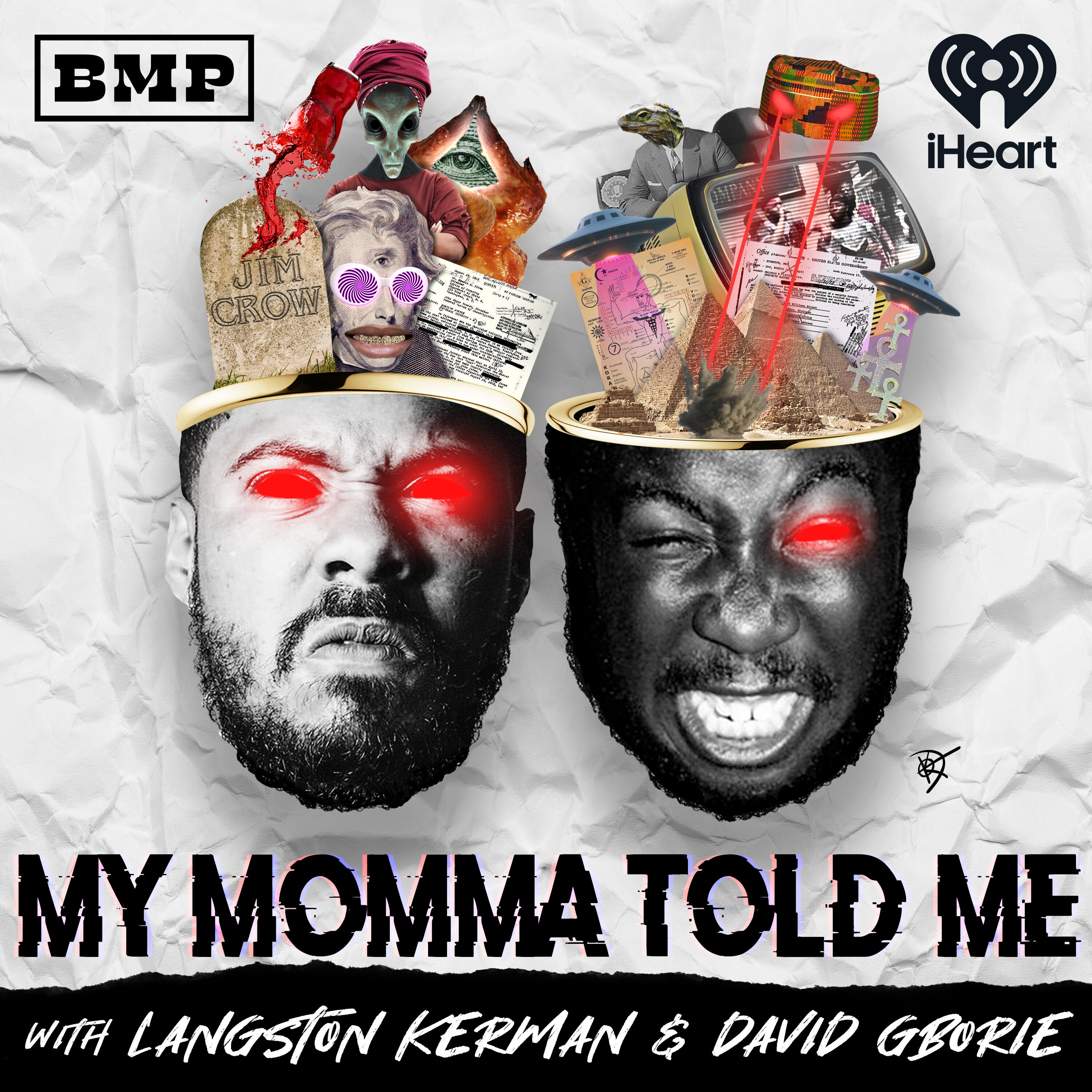
My Momma Told Me is built for the moment when a ridiculous theory gets just enough oxygen to become a full conversation. It moves fast. Langston and David Boring take premises that sound like lore, group-chat bait, or family warning labels and treat them like courtroom evidence for as long as the joke can survive. The show is not trying to clean up conspiracy talk into something respectable. It wants the mess. Flu shots become tracking-chip paranoia. Home remedies become a whole alternative-health cabinet. Celebrity cloning and the Mandela Effect sit comfortably beside arguments about Joe Budden, Drake, Love and Hip Hop, social media backlash, and whether the youngest child gets special treatment. The comedy comes from pressure. Someone makes a claim, someone else doubts it, then the room starts building a taller version of the same idea. Guests such as Tristen J. Winger and Tacarra Williams are brought into that current rather than placed behind a formal interview desk. The result feels communal, improvised, and slightly unstable in the useful way. It is a show about conspiracies, but just as often it becomes a show about how people defend what they were told, what they half-remember, and what they heard from somebody who sounded convincing. The rhythm is conversational and crowded. Points overlap. Jokes turn into theories, and theories turn into stories about health, family, music, fame, and internet behavior. The tone can be blunt, adult, and chaotic, but it rarely feels cold. Its best episodes have the mood of smart comics arguing over nonsense because the nonsense reveals something real about taste, fear, pride, memory, and culture. My Momma Told Me suits listeners who like comedy with bite, Black cultural reference points, and a willingness to follow a wild premise until it either cracks open or gets even funnier.