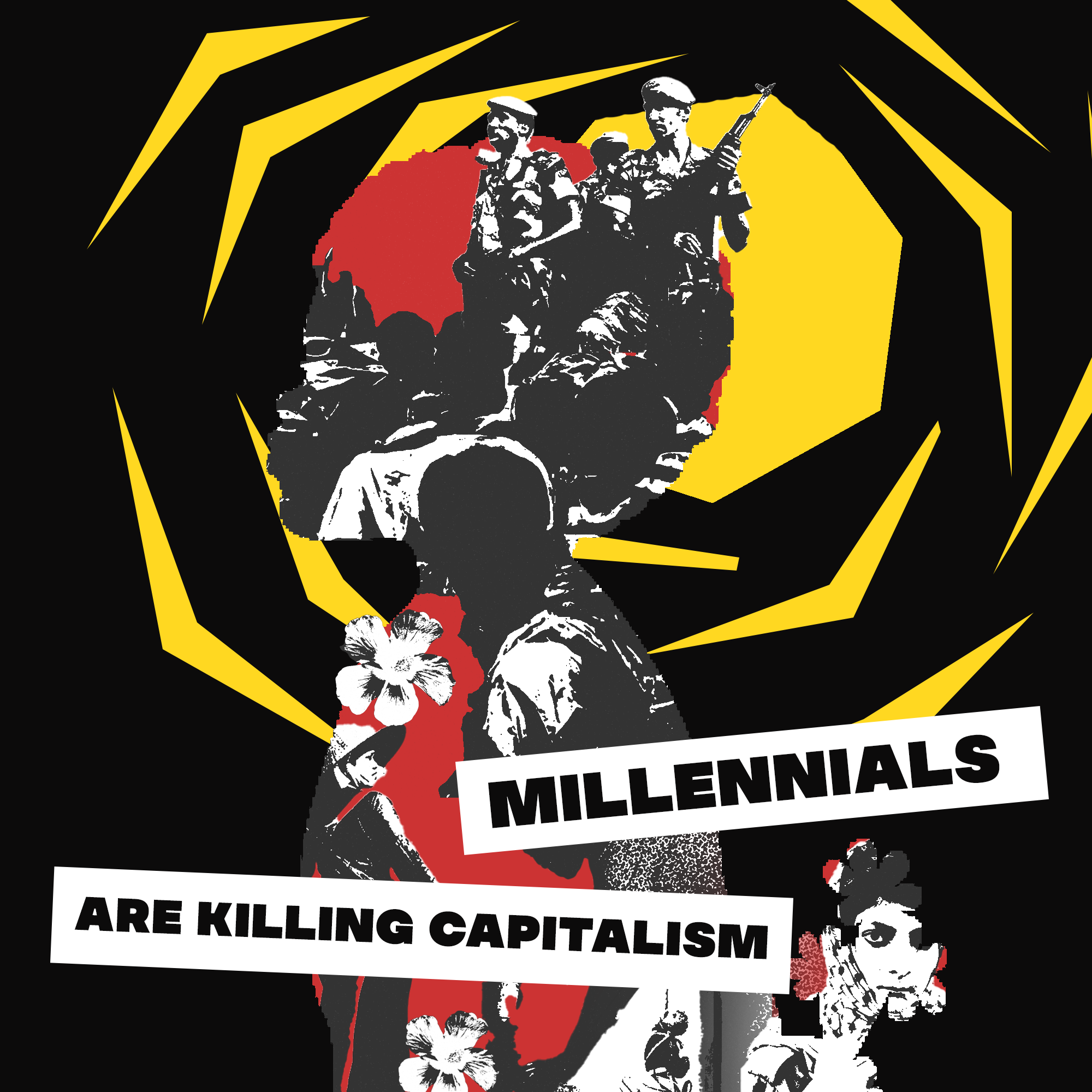
Millennials Are Killing Capitalism is a long-form political interview show grounded in anti-capitalist, anti-imperialist, and abolitionist analysis. It is built for arguments that need time. Recent conversations move from the psychic and political afterlife of the 2020 uprisings to the long transition from capitalism to socialism, from ICE raids and deportation resistance to surveillance systems that link police agencies, corporations, foundations, and border enforcement. The show rarely treats a crisis as isolated. A discussion of Lebanon’s grief becomes a conversation about domination, collective memory, 1982, Gaza, and the unstable meaning of ceasefire. A conversation about Gaza becomes a practical appeal to understand material conditions and support relief work. A study-group discussion of waste becomes a wider inquiry into war-making, social destruction, patriarchy, racism, and capitalist accumulation. The pacing is measured. The language can be dense. That density is part of the point, because the show is interested in how concepts travel into organizing, repression, survival, and political imagination. It gives guests room to build their case, then uses careful prompts and clarifying restatements to keep the argument moving. There is little polish for its own sake. Instead, the show has the feel of political education conducted among people who already share a commitment to struggle but still want sharper tools. Episodes often return from biography or anecdote to structure: Jim Crow and Black revolutionary nationalism, unequal exchange between core and periphery, the surveillance apparatus around Cop City and ICE, or the vocabulary of grief under occupation and war. The result is demanding but purposeful. Millennials Are Killing Capitalism is not background chatter for casual news scanning. It is for listeners who want sustained conversations about power, resistance, history, and the work of making political thought usable.