A grain-market hour framed by weather, safety, and other farm updates.
This Midwest Farm Report hour places John Heinberg's grain-market update inside a wider farm-news rundown, and that setup gives the segment a clear, useful frame.
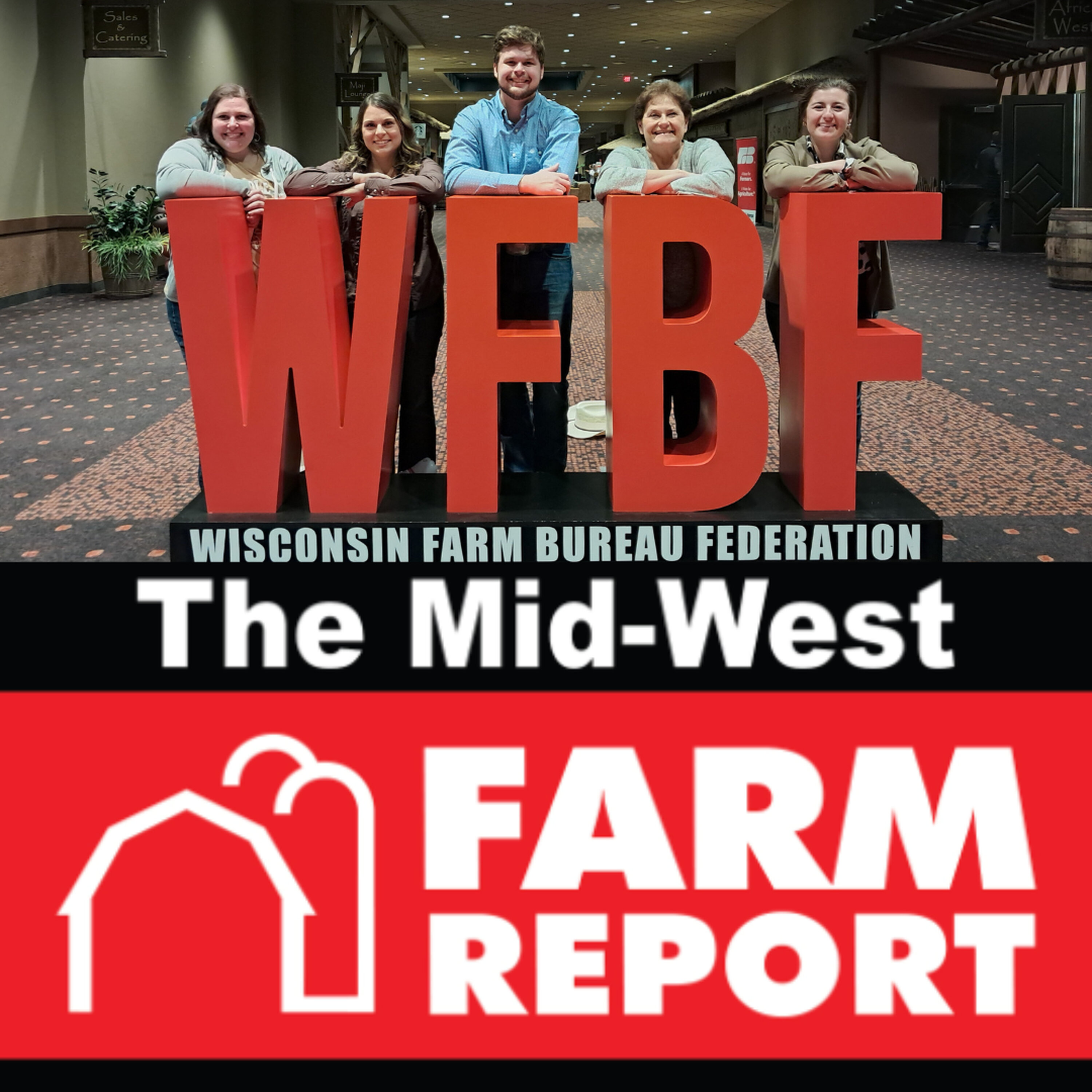
Wisconsin agriculture, reported before sunrise.
Wisconsin agriculture gets an early-morning briefing here, anchored by Pam and a rotating crew of fill-ins. Rainfall reports from listeners, extension specialists on soybean yields, and USDA officials on inspection policy all share the same hour.
PRESS PLAY
This is farm radio in its most useful form. Each episode opens the way a daily broadcast does — sponsor read, greeting, forecast — then settles into the business of the morning. Pam anchors the hour with a familiar cadence and an open invitation for listeners to send in rainfall totals, weather observations, or a note about something greening up in the garden. Stephanie, Ben and Kylie hold the fort when she takes time away. Ben Jarboe files his own reported segments. Ag meteorologist Stumacher arrives about fifteen minutes in with the detailed forecast. Weather is not background here; it is the story. A stretch of rain means wet basements for some listeners and lost yield for others, and the show is comfortable holding both. Dr. Sean Conley, the University Extension soybean specialist, does the arithmetic out loud: roughly one to three bushels per acre lost for every week farmers stay off soggy ground, against a backdrop of federal crop insurance changes that pushed planting earlier. The Wisconsin Soybean Marketing Board's yield contest returns, with checkoff dollars going to research, education and promotion. Meat processing gets sustained attention. USDA Food Safety and Inspection Service administrator Justin Ransom lays out a departmental reorganization, what it means for frontline inspectors, and proposals to streamline plant designations and reduce fees for small operations. Heather Hunt of the UW-Madison Meat Science and Animal Biologics Discovery Program talks through the judging table at the Wisconsin State Fair Meat Products Contest — fresh sausages at one end, blood sausage and old-world artisanal work at the other — and what it takes to keep an open mind about all of it. The show also finds room for volunteers. Jim Goyette explains eight years of Water Action Volunteers work, nitrate and salt monitoring on the streams feeding Green Lake, and how simple it is to join the CoCoRaHS Rain Gauge Rally and improve the rainfall data everyone relies on. Questions tend to be broad and practical, and guests are given room to answer at length. Points get restated once or twice, radio-style, so they land for someone listening with one ear while doing chores. Nothing is dressed up. The tone is neutral by default, warm when a listener writes in, dry when a specialty meat class gets strange. Segments close with a reporter-style recap and a handoff, and the hour keeps moving.
Made for: Wisconsin farmers, growers and gardeners who plan their day around the forecast, plus meat processors, extension folks and anyone with a stake in the state's agricultural economy. It also suits listeners outside farming who want to understand how weather, policy and food production actually connect.
What sets it apart: Rather than commentary about agriculture, this is reporting from inside it — listener rainfall texts, extension specialists doing yield math on air, and USDA administrators answering plain questions about inspection staffing. The Wisconsin focus is total, from state fair meat judging to stream monitoring at Green Lake.
Join Pam Jahnke for the latest farm news. Heard daily on WOZN 96.7 FM and 1670 AM in Madison Wisconsin from 5-6am. Also heard on affiliate stations all over Wisconsin.
Based on 5 episodes we listened to · September 2026
Wisconsin farm economics become concrete through grain-market analysis, agricultural weather, production technology, and reporting tied to daily operating decisions.
MID-WEST FARM REPORT - MADISON treats Wisconsin agriculture as a working economy shaped by weather, commodity prices, technology, and day-to-day operating decisions.
Thirty-one inches in Wausau, then grain markets: your weather forecast has a balance sheet.
Press play if you want
Short reviews from the PlayNext desk, based on the episodes we processed.
A grain-market hour framed by weather, safety, and other farm updates.
This Midwest Farm Report hour places John Heinberg's grain-market update inside a wider farm-news rundown, and that setup gives the segment a clear, useful frame.
Practical farm reporting that turns AI, weather, and food safety into usable context.
The hour keeps its feet on the ground, moving from weather and dairy into produce food safety without losing the thread. The AI discussion on dairy farms lands best, and the food-safety update is useful in the same plainspoken way.
Spring weather, a horse fair giveaway, and a wet weekend outlook.
Midwest Farm Report starts on a spring note for Wisconsin, pairing a Midwest Horse Fair ticket giveaway with a look at whether people can get outside.
A practical Friday farm report shaped by weather, calving-season questions, and local listener voices.
Farm information lands as a practical Friday morning service here, starting with a rain-cooled weather setup and the hint of warmer air before turning toward listener questions around calving season and early fieldwork.
Heavy Wisconsin snow sets a practical farm backdrop before a concise fertilizer-price warning tied to Iran-U.S. war concerns.
Midwest Farm Report keeps its focus on a Wisconsin farm morning shaped by the aftermath of a major winter storm, opening with National Weather Service snow totals that make the scale easy to grasp.
California ag news with field-level stakes.
Saskatchewan farm news, weather, and markets.
This episode discusses a dairy farm's annual educational event for Girl Scouts, focusing on promoting careers in the dairy industry and adapting agricultural practices for the future.
The Midwest Farm Report covers a late-winter storm that dumped record snow across Wisconsin, with Wausau seeing 31 inches.
This episode of the Midwest Farm Report discusses advancements in agricultural computers, the value of Angus beef on dairy, and includes segments on weather, auctions, and farming updates.
Stephanie Hoff hosts the Midwest Farm Report, exploring trends in calf care and online farmers' markets.
The Midwest Farm Report examines the USDA June milk report with EverAg dairy analyst Katie Burgess, who says U.S.
Midwest Farm Report - Madison covers Wisconsin smoke exposure, weather changes, crop disease, dairy production, forestry, and agricultural markets.
This episode features an interview with USDA's Justin Ransom discussing the agency's reorganization plan focused on field leadership and small meat processors, including changes to inspection staffing and processing plant designations.
This episode discusses the return of the Wisconsin Soybean Yield Contest for 2026, featuring an interview with Dr.
This episode of the Midwest Farm Report discusses the upcoming Midwest Horse Fair, highlights beef producers supporting future chefs, and covers weather updates including rainfall reports and drought concerns in Colorado.
This episode features an interview with Heather Hunt, a judge at the Wisconsin State Fair's Meat Products Contest, discussing the diversity of entries and the judging process for specialty meats.
This episode of the Midwest Farm Report provides a weather forecast for Wisconsin, discussing upcoming showers, thunderstorms, and temperature changes affecting local farms and agriculture.
This episode features Jim Goyette discussing his involvement in citizen science programs like the CoCoRaHS Rain Gauge Rally and Water Action Volunteers, which help monitor rainfall and water quality in the Green Lake area.
Thunder starts the morning.
Storms might be headed for Wisconsin.
This episode covers Wisconsin DNR safety tips for boating season and updates on fishing regulations, including trout season changes.
Spring leads the hour.
This episode of the Midwest Farm Report covers agricultural news, including the WPS Farm Show, drone technology, insurance for farm equipment, and discussions on current events impacting commodity prices and financial trends.