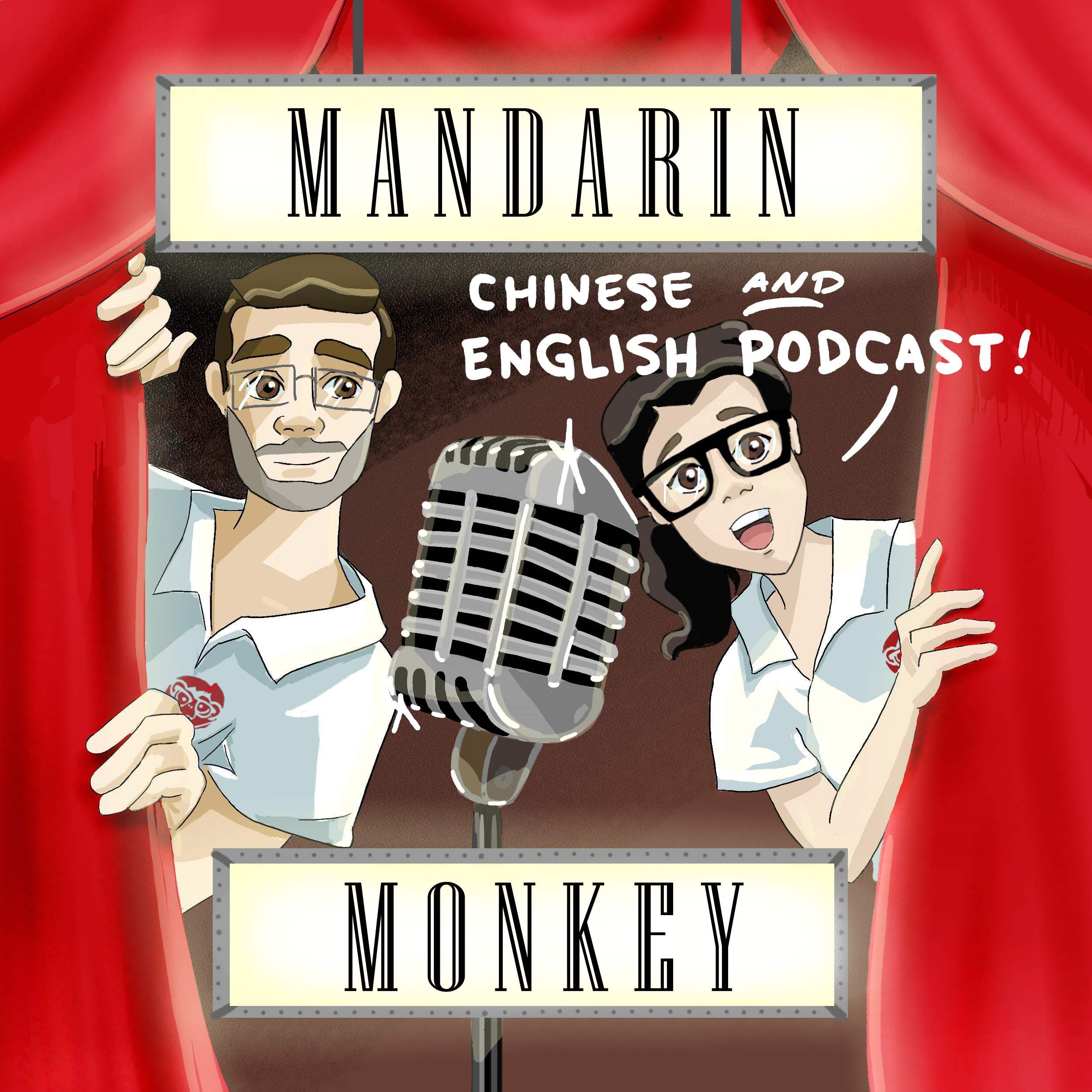
Mandarin Monkey Podcast is a long-running Mandarin-learning show built from bilingual conversation, not classroom performance. It feels lived in. English and Mandarin move together in the same exchange, with one side often restating, translating, teasing, or sharpening what the other has just said. The educational value comes from that motion. Recent episodes use everyday material as the teaching engine: Taiwan Ghost Month rules, saving face, sleep, simplified and traditional characters, travel plans, work pressure, family business, board games, listener stories, and the awkward comedy of a podcast intro said many times. The show rarely lands on a topic in a straight line. It wanders, doubles back, and turns a small joke into a usable language moment. That can mean explaining why wind chimes or laundry matter during Ghost Month, talking through how a board game like Guess Who could help Chinese learners describe people, or translating the idea of burning the boats into a Chinese expression about cutting off the road behind oneself. The rhythm is fast but friendly. Short interjections keep the pace alive, while repetition helps learners catch the shape of the sentence before the topic moves on. Listener mail is more than a segment. It gives the show its social center, bringing in study questions, life updates, and stories that turn Mandarin into something attached to relationships and daily choices. The duo dynamic carries the format, especially when they disagree about whether they are talking to each other or talking to the audience. That self-awareness makes the show feel unusually transparent about how it is made. It also keeps the language grounded. Rather than presenting Mandarin as a polished object, Mandarin Monkey Podcast shows it being negotiated in real time, across jokes, corrections, parenting, travel, tech, business, and culture. The result is useful for learners who want texture, not just vocabulary. It is warm, messy, practical, and very human.