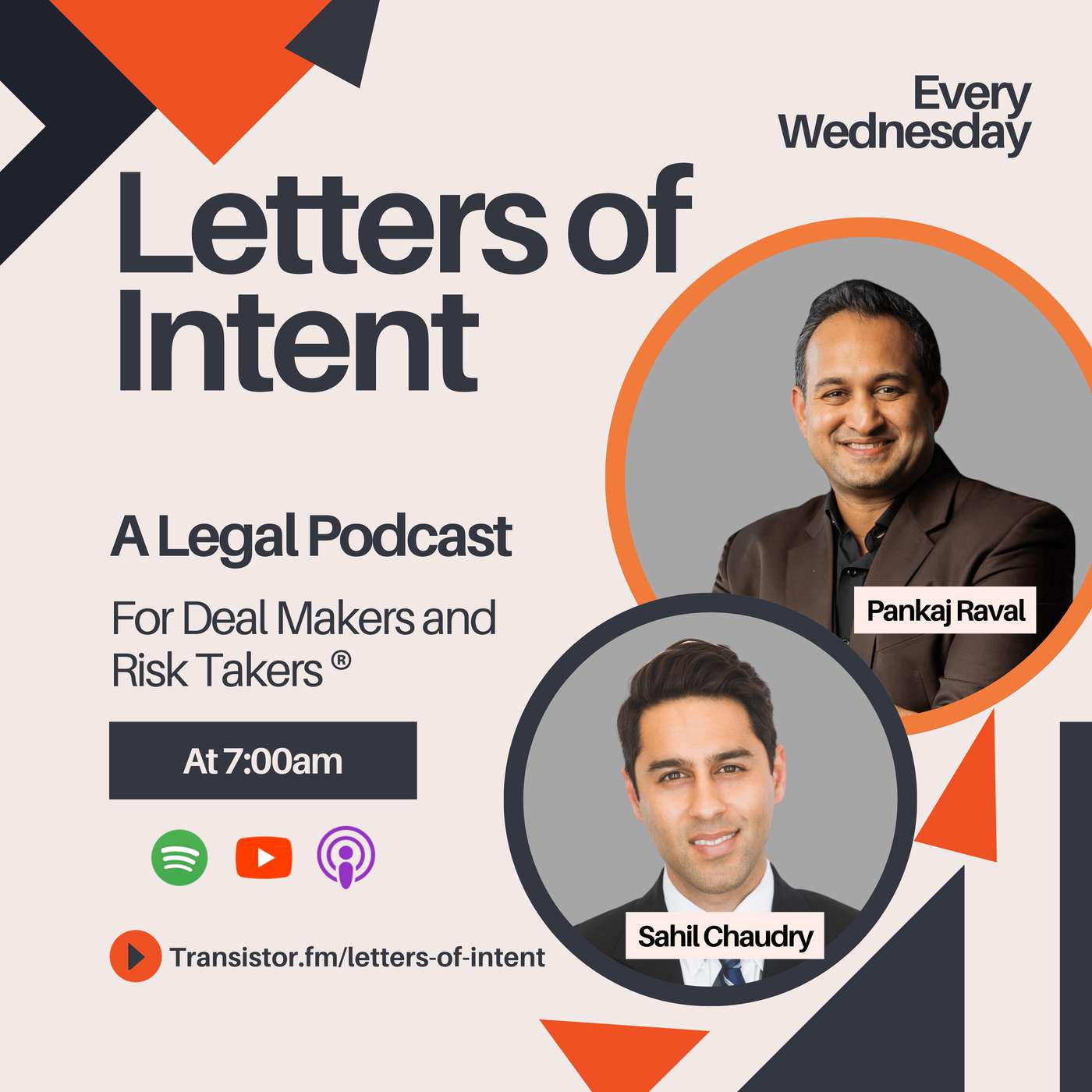
Letters of Intent is a business conversation show with a legal backbone. Its center of gravity is the deal before the deal: the draft, the term sheet, the lease clause, the management agreement, the structure that looks harmless until it decides who owns the upside and who absorbs the downside. Pankaj Raval and Sahil Chaudhry usually work from concrete situations rather than abstract doctrine. That gives the show a practical pace. A buyer spends money on environmental diligence before getting exclusivity. A tenant signs an assignment clause and later cannot sell the business cleanly. A company chooses between an asset purchase and a stock purchase, then discovers that liabilities travel differently depending on the structure. The conversation does not treat those details as paperwork trivia. It treats them as business outcomes waiting to happen. Recent episodes move through acquisitions, management services agreements in healthcare and hospitality, letters of intent, commercial leases, tax-free reorganizations, IP licensing, and growth strategy. The range can be wide, but the habit is consistent: take a business story, identify the pressure points, and ask what an operator should have understood earlier. Public examples help carry the lessons. Bad Bunny's halftime performance becomes a discussion about creative control, licensing, broadcast rights, and cultural value as intellectual property. Elon Musk's reported SpaceX and xAI consolidation becomes a way to talk about stock-for-stock deals, related-party structure, valuation discipline, and tax planning. Guest episodes add another layer, especially when Alvaro de la Cruz explains Showlytics and AI personalization for movie theaters, or Robby Pinamineni walks through commercial leasing traps around SNDAs, tenant improvements, permitted use, and personal guarantees. The show is not slick in a canned way. It has the feel of a working advisory meeting where people slow down enough to name the real issue. Its best moments come when jargon turns into stakes: control, cash timing, exposure, leverage, and the cost of assuming everyone meant the same thing.