A clear introduction to James Early's war-centered path through American history.
James Early's podcast opens with a straightforward promise: Key Battles of American History will use war as an entry point into the history of the United States.

PRESS PLAY
The Civil War was the most important event in American history. That's because it decided what kind of nation America would be and whether or not the promise of universal liberty would be fulfilled. And what decided the outcome of the Civil War was its battles.Hosted by history professors James Early and Scott Rank, this podcast explores the ten most important battles in the Civil War. It features every major conflict, from the initial shots fired at the Battle of First Bull Run to the end of the war at Appomattox Court House. Key battles include Shiloh, the Seven Days Battle, Antietam, Fredericksburg, Chancellorsville, Vicksburg, Chickamauga & Chattanooga, and the Overland Campaign. James a…
At Shiloh, Johnston's surgeon is helping prisoners when Johnston needs him; your what-if brain has found company.
Press play if you want
Short reviews from the PlayNext desk, based on the episodes we processed.
A clear introduction to James Early's war-centered path through American history.
James Early's podcast opens with a straightforward promise: Key Battles of American History will use war as an entry point into the history of the United States.
A wide-ranging finale on Civil War memory and the technologies that changed combat.
The series ends by shifting from battlefield results to the Civil War's long aftermath: how it was remembered, how it shaped American society and politics, and how new technology changed the conduct of war.
A draw at Hampton Roads becomes the moment wooden warships lose their future.
The naval war comes into focus through the Monitor and the Confederate Virginia at Hampton Roads, where even a draw signals a real break with the past.
Grant keeps pressing as casualties mount, morale sinks, and the pressure shifts toward the Shenandoah Valley.
Grant's choice to keep pressing gives the episode its pull. Casualties rise, Northern morale sinks, and the Union's political future looks shaky before Atlanta changes the picture.
Grant's push against Lee is framed through strategy, battlefield horror, and the cost of keeping an army moving.
Grant's Overland Campaign comes through as a hard, unsettled turn in the war, with Grant pressing toward Robert E. Lee while Lincoln's reelection, Sherman's earlier thread, and the question of whether the conflict is truly nearing an end sit in the background.
Atlanta's fall, the 1864 election, and Hood's assault at Franklin tie morale to command.
The fall of Atlanta gives this episode its hinge: a Union victory whose effect on Northern morale reaches into the election of 1864. From there, it tracks General Hood's move into Tennessee, where cold, food shortages, and pressure to strike help set the stage for Franklin…
A focused account of Shiloh's command turn and the overnight pause after Johnston's death.
The episode frames Shiloh as a battle shaped by command pressure and momentum, with Johnston's Confederate army trying to slow Grant after Fort Henry and Fort Donaldson.
Outnumbered units, remembered under fire.

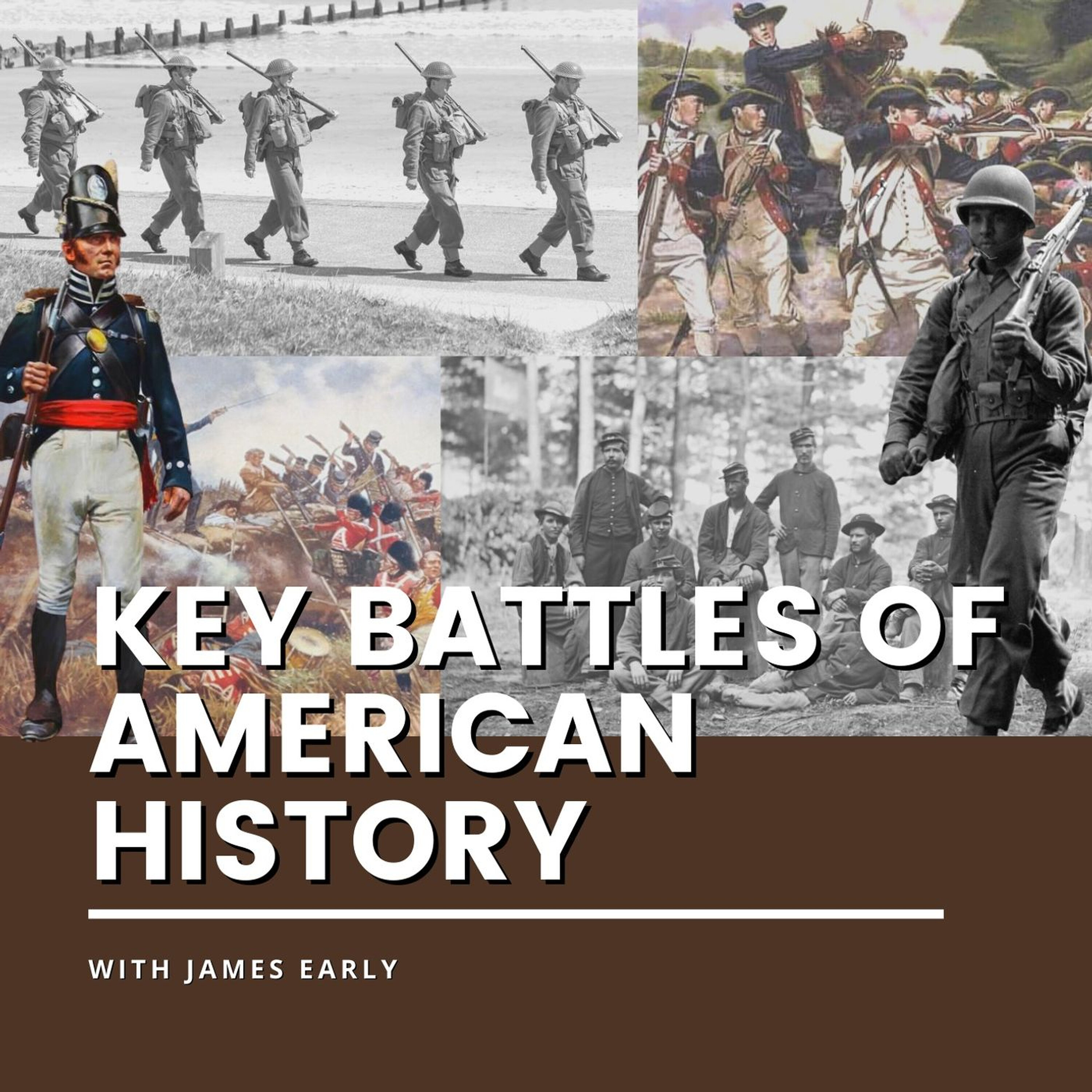
Battle maps, war films, and patient context.

War news, tested against military reality.

Antique European history, read aloud.
Scott introduces James Early's podcast Key Battles of American History, which examines United States history through wars from the nation's founding to the present.
Scott and James examine how the Civil War reshaped the United States after 1865, focusing on memory, political power, military technology, healthcare, and social change.
Key Battles of the Civil War: Episode 20 examines the Union blockade, Confederate technological responses, ironclad warfare, and river campaigns.
Patrick Claiborne proposed arming enslaved men and promising freedom, but Richmond rejected the idea.
Key Battles of the Civil War: Episode 18, "The Overland Campaign," follows Ulysses S.
Scott and James examine the 1864 election after Atlanta’s fall, when Lincoln faced opposition from Democrats, radical Republicans, John C.
This episode discusses the Peninsula Campaign of 1862 and examines Civil War tactics and military technology.
Shiloh turns into a two-day battle in which Grant’s 42,000 men, Johnston and Beauregard’s 40,000, and Buell’s arriving 20,000 decide control of the western theater.
This episode discusses the border states and the war in the West after the Battle of First Bull Run.
This episode introduces the series and discusses the background of the Civil War, leading into the first major battle at Bull Run.