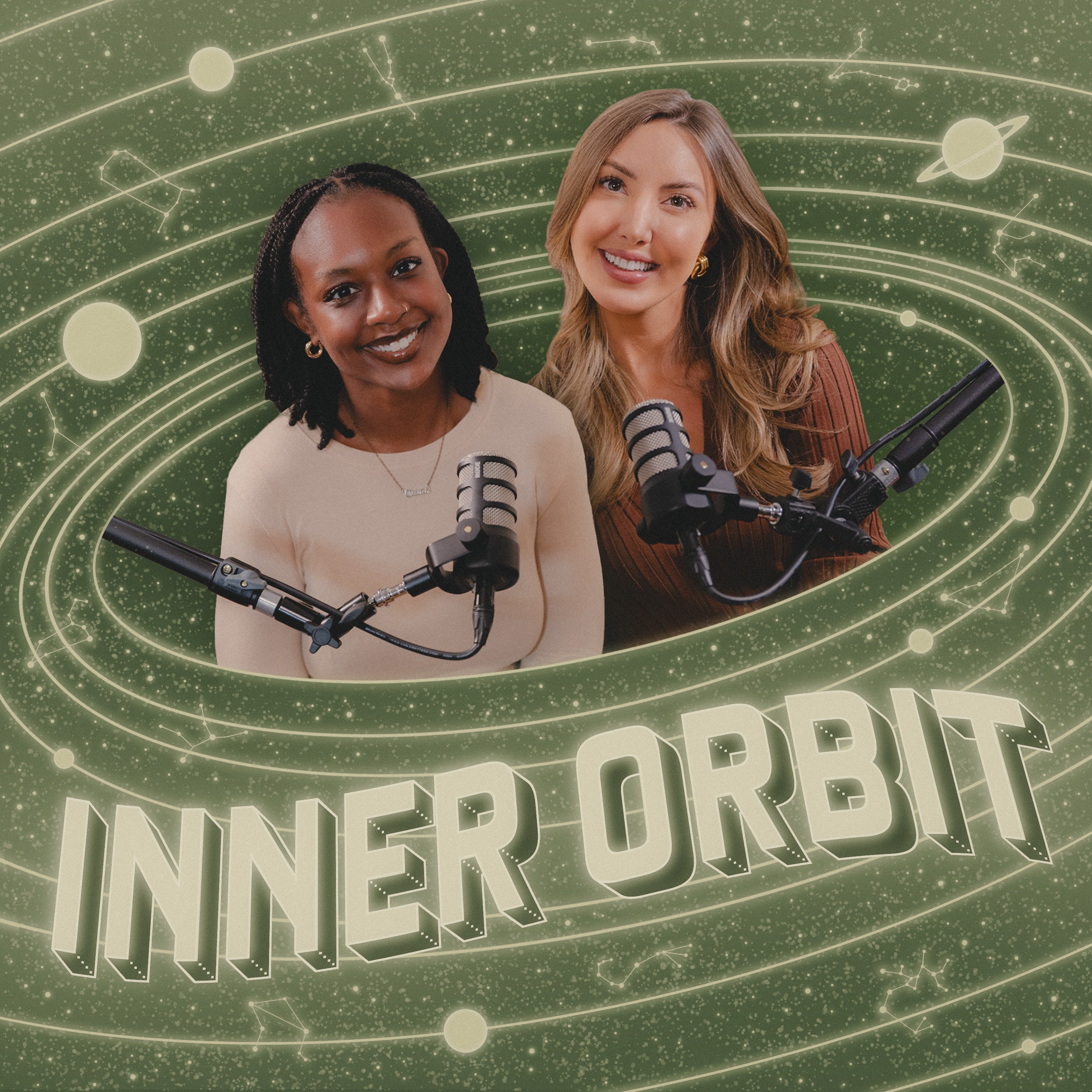
Inner Orbit is an astrology show about turning cosmic language into daily self-awareness. It is fast, friendly, and practical. Tiani Harris and Taylor Starr build episodes around ideas like the Big Six, synastry, compatibility, moon cycles, retrogrades, eclipses, houses, elements, modalities, and generational transits, but the real focus is how those ideas show up in behavior. A placement becomes a question about routine. A relationship pattern becomes a mirror. A moon cycle becomes a way to think about beginnings, endings, and the feeling of moving through a chapter. The show is strongest when it translates chart language into lived experience. It does not treat astrology as a shortcut to certainty. In the relationship episodes, attraction and compatibility keep circling back to self-knowledge, integration, and accountability. The hosts are interested in what a partner might reveal, but just as interested in what a listener is being asked to develop internally. That gives the show a grounded texture. The routine episodes bring the same balance to habits and time management. Planetary hours, cycles, and energetic themes are framed as helpful prompts, not productivity rules. The show is clear about capacity, intuition, and the danger of turning every tool into another reason to do more. Its conversations about retrogrades and eclipses also avoid simple fear. They acknowledge tension and turbulence while looking for the lesson, the reframe, and the seed worth planting. The tone stays casual and warm. The pacing is brisk, with one host setting up a concept and the other testing it against a more personal or practical example. There is banter, but it usually leads back to structure. There is affirmation, but not vague gloss. Inner Orbit works for astrology listeners who want enough explanation to follow the system and enough real-life application to actually use it.