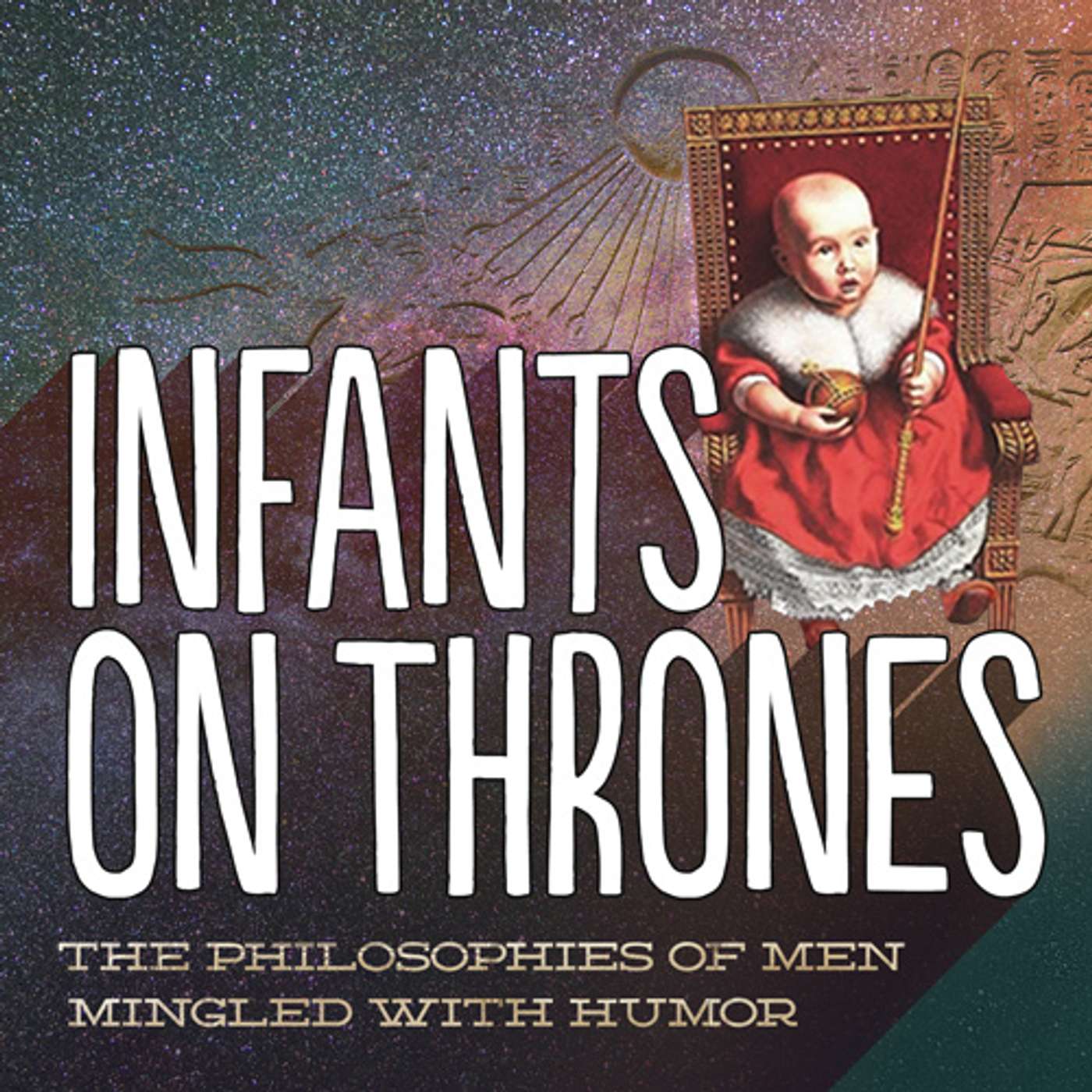
Infants on Thrones is an ex-Mormon show that has evolved from internet-era religious critique into something more therapeutic, reflective, and experimentally structured. Its center of gravity is still faith transition. The Mormon church, the CES Letter, apologetic counterarguments, family pressure, and post-belief identity remain live subjects. But recent episodes treat those subjects as nervous-system events as much as intellectual disputes. Glenn Ostlund describes starting the podcast in 2012 while leaving the Mormon church with several friends, then later becoming a certified life coach and licensed therapist. That biographical thread matters because the show now often asks what faith crisis does to the body. Panic, anger, safety, memory, foundations, and stress responses become part of the same conversation as scripture, Joseph Smith, papyri, temple signs, and ex-Mormon Reddit. The tone is not clinical in a dry sense. It is odd, rhythmic, self-aware, and sometimes deliberately funny. Some episodes revive the old Infants on Thrones “smackdown” mode, reading a claim and pressing against it with skeptical force. Others move slowly through binaural meditation, where headphones are part of the format and the spoken material is designed to stimulate thought while calming the system. The show is comfortable with repetition. It uses phrases, callbacks, and ritualized openings as part of its texture. Recent episodes also branch into cultural and philosophical material, including Pluribus reflections, quantum mechanics, ancient Buddhist philosophy, anthropology, cognitive science, and a personal writing project called You’re Not Broken, Just Rewiring. A conversation with Reed extends that reflective mode, turning a listener’s response to a meditation on anger into a broader exchange. The show suits people who want ex-Mormon content that is not only argumentative. It makes room for analysis, grief, humor, bodily regulation, and the strange afterlife of religious certainty. Its best moments sit in the gap between “that claim is not convincing” and “why did that claim make the body feel unsafe?”