A cancer story that holds onto the shock instead of rushing to the lesson.
The story follows a late-30s stage-four blood cancer diagnosis after a trail run in Hobart, and the plain way it is told gives the shock real force.
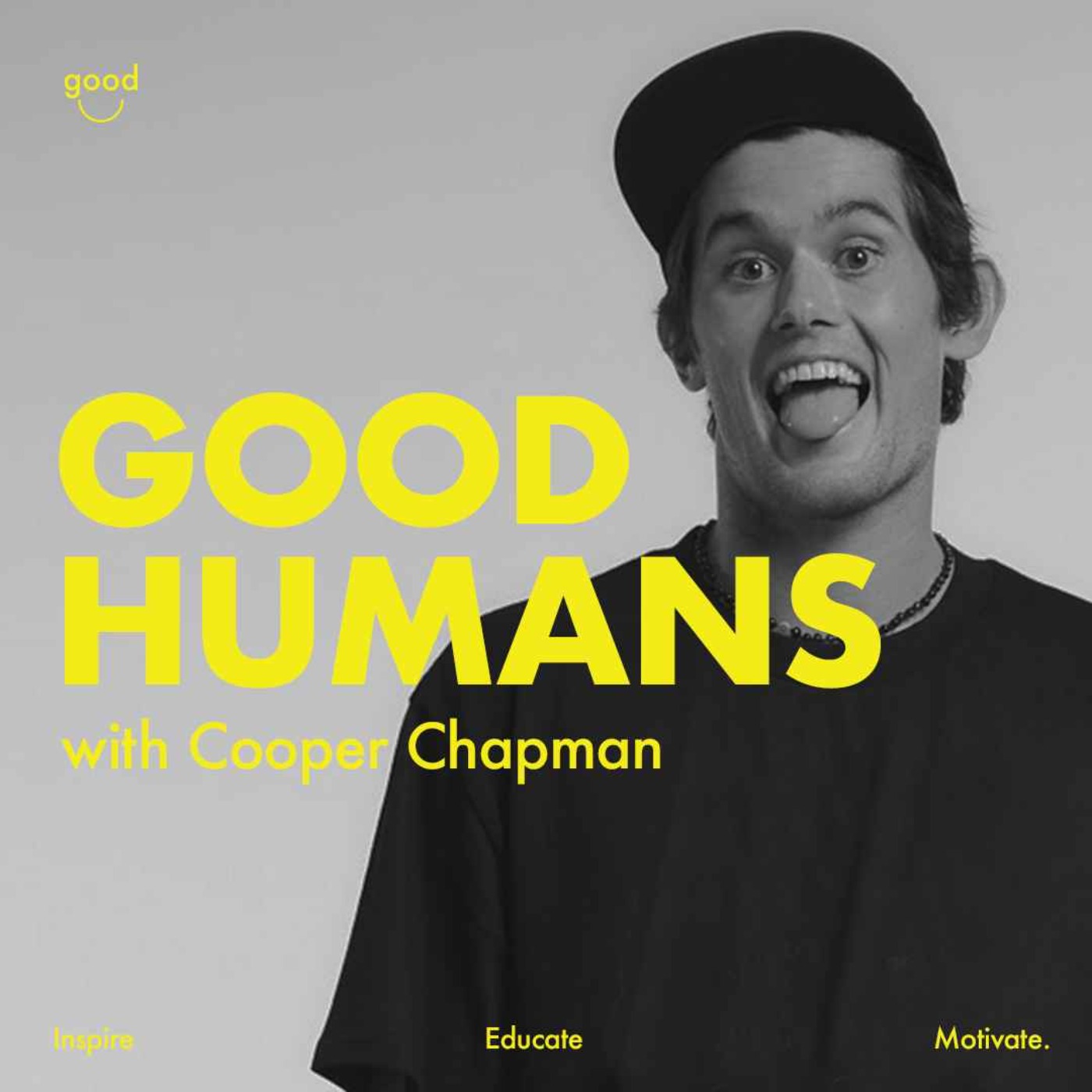
Small daily action, honest human stories.
Good Humans with Cooper Chapman pairs long, emotionally open conversations with shorter 1% Pod reflections built around daily mental health action. Guests bring stories of anxiety, grief, cancer, business, sport, creativity, and community, while the solo episodes keep returning to gratitude and accountability.
PRESS PLAY
Good Humans with Cooper Chapman is built around a simple idea: mental health improves when people talk honestly and take small, regular action. Its interview episodes are relaxed but emotionally direct. A guest might begin with career ambition, a move, a podcast, a startup, a panic attack, or a cancer diagnosis, and the conversation gradually works toward identity, support, purpose, and the choices that helped them keep moving. The show does not frame struggle as a tidy lesson. It lets people tell long stories. It leaves room for grief, fear, uncertainty, and the strange timing of life changing when everything seemed to be going well. Cooper’s interview style is warm and affirming, with a steady habit of asking what a person would do with a small daily window for their mental health. That question gives the show its practical spine. The companion 1% Pod episodes are more intimate and community-driven. They bring in gratitudes from the 1% Good Club, share weekly cheers and challenges, and turn ordinary moments into prompts for reflection. Family dinners, quiet cups of tea, Easter treats, illness recovery, supportive workplaces, and hidden talents all count here. The show’s mental health lens is accessible rather than clinical. Anxiety is discussed through the body, regulation, resilience, panic, and curiosity about what works. Grief appears through sudden loss and the people who stay beside someone afterward. Business and creativity appear too, especially in conversations about founders, content, personal brand, and backing oneself before everything is figured out. The result is a podcast for listeners who want vulnerability without a heavy therapy-room feel. It is matey, values-led, and practical, with enough repetition to feel like a weekly habit and enough guest variety to keep widening the meaning of being a good human.
Made for: For listeners who want approachable mental health conversations grounded in real lives, gratitude, community, and practical habits. It especially suits people who prefer warm, conversational interviews over clinical self-help.
What sets it apart: The show blends long-form guest vulnerability with short 1% Pod community reflections, so mental health is framed as both story and daily practice. Its recurring small daily prompt gives the conversations a clear, memorable shape.
Good Humans is a podcast hosted by professional surfer Cooper Chapman and produced by The Good Human Factory. Each Friday episode features a different guest, who shares their unique perspective on life and offers insight into what makes them a good human. From athletes and artists to activists and entrepreneurs, the guests on Good Humans come from all walks of life, but they all have one thing in common: a passion for making the world a better place. Every Wednesday on the 1% Podcast Cooper shares insights around gratitude and mindfulness in celebration of the 1% Good Club Instagram accountability groups dedicating 1% of their day to their mental health. Each we we champion multiple good hum…
Based on 6 episodes we listened to · September 2026
Personal crisis becomes practical reflection as Cooper Chapman asks guests how they manage fear, recovery, pressure, and disrupted plans.
Cooper Chapman lets guests build their stories from lived detail, then steers the conversation toward what helped them keep going. Anxiety severe enough to prompt a crisis call, two accounts of cancer, and the physical risk behind an unprecedented wakeboarding trick give Good…
A wakeboard triple backflip gets Cooper Chapman asking what it took to keep trying for years.
Press play if you want
Short reviews from the PlayNext desk, based on the episodes we processed.
A cancer story that holds onto the shock instead of rushing to the lesson.
The story follows a late-30s stage-four blood cancer diagnosis after a trail run in Hobart, and the plain way it is told gives the shock real force.
A blunt, humane conversation about panic, friendship, and support.
The episode opens on a blunt mental-health story: a rough reaction in Bali, a panic attack that came back a year later, a doctor urging him to talk to someone, and a failed call to an American hotline because he was in Colorado and from Australia.
A triple backflip becomes a clear, bruising story about the work behind one impossible landing.
Thomas Herman's story of landing a triple backflip behind a boat gives the episode its sharp action-sports spine. The appeal is not just the trick, but the long sequence of attempts, hard crashes, and the strange moment when an athlete feels a move start to attach itself to his…
A warm weekly mental-health check-in where small wins and personal projects make consistency feel tangible.
The episode frames mental well-being as something maintained week by week, not solved in one sweeping reset. Around a community check-in built from gratitudes and personal projects, Emma reflects on the heavy burnout that can arrive at the end of school terms and the effort it…
A chronic myeloid leukemia diagnosis and pregnancy push the guest into a hard reassessment of the life she expected.
A chronic myeloid leukemia diagnosis, followed by the discovery of a pregnancy, gives this episode its emotional pressure point. It begins with the sense of a life changing faster than the guest can process, then moves into the assumptions that made the news so disorienting: her…
A candid account of how cancer can redraw a life that seemed to be going exactly right.
A high-grade, stage-four blood cancer diagnosis lands just as the guest feels physically, mentally, and emotionally at his best, turning a trail run in Hobart into the beginning of a life-altering shock.
A practical Blue Minds update links eco-anxiety work with the patient mechanics of local environmental change.
Blue Minds offers a grounded progress check as Cal Glansney looks back on work to ease young people's eco-anxiety and extend the momentum from last year's Queensland program.

Jonquilyn Hill chases one listener question per episode to the experts who can answer it.

Three hosts and psychologist Dr Emily talk vulnerability, therapy, and imperfection with guests.

Fearne Cotton interviews guests like Boy George and Bryony Gordon about mental health and identity.

Dr. Joy Harden Bradford pairs therapy insight with Black TV recaps, maternal health, and history.


Cooper Chapman interviews Govind Sandhu, who shares his journey through a stage four non-Hodgkin's lymphoma diagnosis at age 38 after completing the 75 Hard fitness challenge.
Noah Wallis discusses overcoming anxiety through surfing and content creation, finding purpose and freedom in the ocean.
Cooper Chapman and Cal Glansney recap Blue Minds' 2025 activities, including reaching 3,900 people in person and 920,000 through media.
A guest describes the moment his body stopped making sense.
This episode introduces the 1% podcast's focus on mental health through the 1% Good Club community, while also promoting a new podcast about anti-Semitism in Canada.
This episode features anxiety coach Anna Ferguson discussing practical strategies for managing anxiety and building resilience when facing life's unexpected challenges.
This episode of the 1% Podcast shares feedback and advice from the 1% Good Club community, focusing on mental health practices and gratitude.
Tahlia Kennedy shares her journey of building tech startup Kinso from scratch, discussing the importance of delusional optimism, learning through experience, and strategies for growing a personal brand in business.
This episode introduces the 1% Podcast's focus on mental health and well-being, highlighting the 1% Good Club community that encourages daily practices like meditation and gratitude for better mental health.
Cooper Chapman sits down with a guest for a relaxed chat that starts with anxiety and quickly gets personal.
The guest talks through the triple backflip that became tied to him in wakeboarding.
Cooper Chapman’s 1% podcast episode shares weekly cheers, challenges, community gratitudes, and a preview of the 28 Days of Good project.
A phone call asking her to come in "first thing Monday morning" changed Elle Halliwell's life in one day.
This episode features hypnotist Oli Hill discussing how hypnosis and goal setting can help people overcome anxiety and achieve personal growth by becoming the type of person who follows through on intentions.
Noah Wallis discusses how surfing and building a YouTube following helped him overcome anxiety and find purpose.
This special bonus episode of the Good Humans podcast features Cooper Chapman discussing his new book 'The 1% Good Club' at its Gold Coast launch, including an interview with his sister Sophia and audience Q&A.