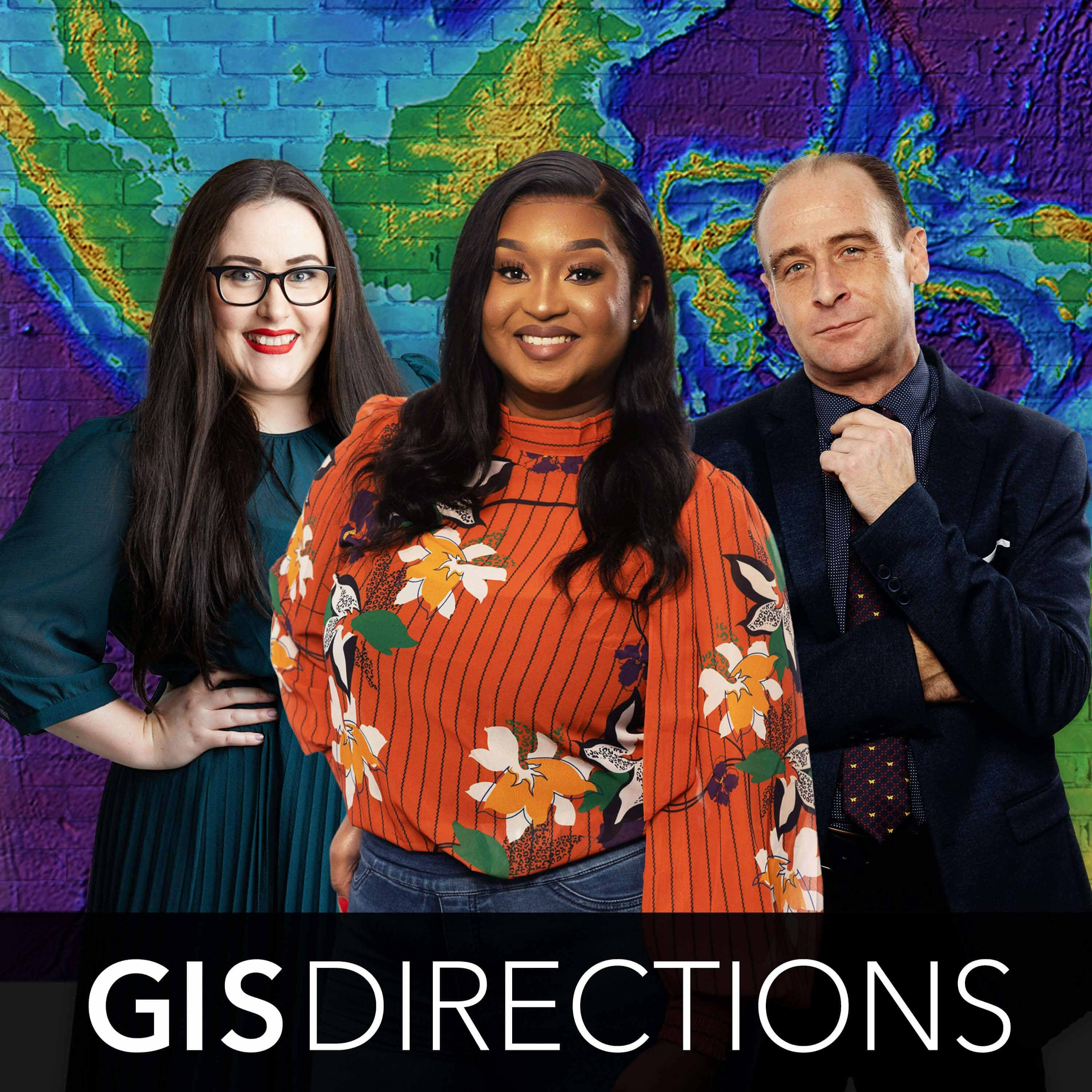
GIS Directions is a podcast about working with spatial data on the ArcGIS platform, made in conjunction with Esri Australia, Esri Singapore, Esri Malaysia and Esri Indonesia. It runs on conversation. Mary Murphy is the constant voice, joined by co-hosts who change from episode to episode: Ellen Carter, Ta Taneka, Wayne Lee-Archer, and Simon Jackson on the year-end round-up. The register is warm and enthusiastic, with the ease of colleagues comparing notes. What makes it useful is how specific it gets. Web editing is the clearest example. 'Exploring ArcGIS Web Editor: Innovations and insights' includes a claim that the app's selection and querying tools are the best in the portfolio. It then asks who gains from using the app now. The answer covers GIS professionals already in ArcMap or Pro, plus the colleagues they could bring into editing. The 'Esri UC 2024 wrap-up' comes back to the same ground with a list of what is heading to the browser: tracing, true curves, extend and trim, copy parallel, branch versioning, 3D editing and better snapping. Editing is called foundational, and moving it to the web brings it to far more people. Desktop is not written off. The same episode notes that finding a tool no longer depends on knowing its exact name, as it once did in ArcMap. 'The final frontier: A 2023 GIS round-up' works as a year-end catch-up. One presenter names ArcGIS Reality as a favourite of the year, crediting Reality Studio and Reality for Pro with being sensor agnostic and easier for someone who does not script. Then Ta is asked for the year's best tech tip. The two-part conversation on digitalisation in natural resources brings in guest Dal Hunter, who came back for a second episode because there was too much for one. Part One moves from knowing where people are during an incident to digital twins of refineries, modelled down to the threads on the bolts so crews have context before going out. In that telling, GIS is what gathers information from many systems into a map people can move through in 2D and 3D. Part Two turns to advanced analytics: more instruments mean more data, and questions that once took days to process now come back in under a minute. It also argues that efficiency gains and care for the environment can go together. Not everything is about software. The feed also includes an episode of the MapScaping podcast, hosted by Daniel, where two guests who host GIS Directions talk about imposter syndrome, mentorship, career progression and diversity. Its sharpest advice is for experienced practitioners: answer a newcomer's question patiently, and say so when you do not know. Episodes close on 'happy mapping', 'stay spatial' or 'stay curious', and the mood matches.