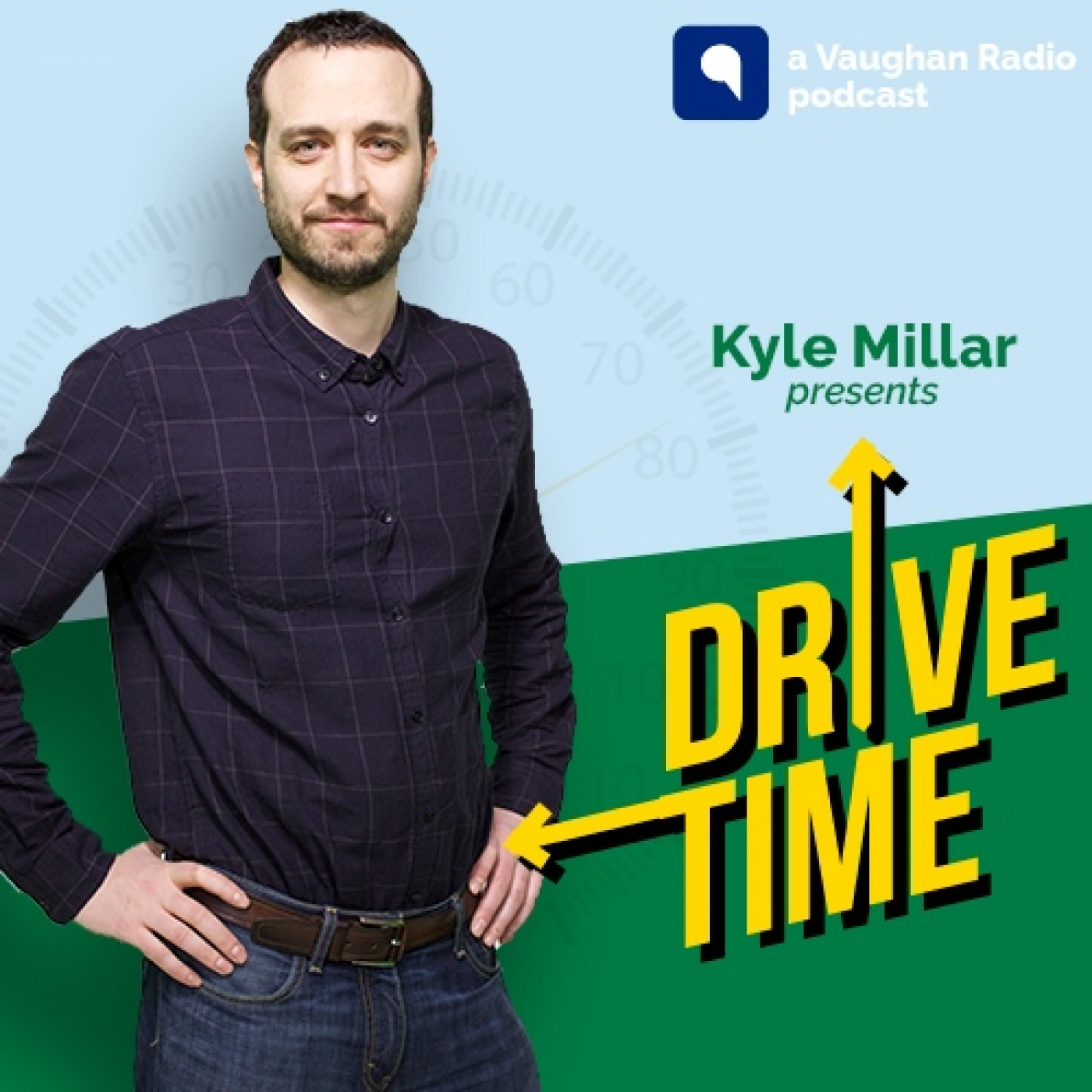
Drive Time is an English-learning radio show with a classroom engine under the hood. It is built around explanation, repetition, correction, and quick movement between Spanish and English. Kyle Miller gives the lesson a lively on-air shape, shifting from direct grammar practice into expressions, pronunciation, business examples, topical stories, and conversation with David. The show does not treat English as abstract theory. It keeps returning to usable phrasing: “no ifs, ands, or buts,” “talk on the phone,” “in the end,” “I envy you,” and other small pieces of language that can go wrong when translated too literally. The teaching style is insistent in a useful way. A sentence is said once, then varied, then corrected, then placed into another example. Basic lessons use simple scene work with people talking, listening, standing, sitting, asking questions, and describing cars or reports. Intermediate material follows travel plans that change from city to city, giving repeated practice with “was going to” and “but I didn’t.” Advanced material uses Adam, Eve, Cain, and Abel to work through conditional forms and vocabulary such as envy. The Drive Time excerpts also widen into business English, including tariffs, free trade, supply, demand, equilibrium, and price elasticity. Other moments touch Canadian election ballots, scuba and snorkeling words, commonly confused terms, social interaction after COVID, Dire Straits, hockey records, and music-of-the-day framing. The format feels busy because the show is busy. It uses radio breaks, recurring lesson labels, and back-and-forth prompts to keep the pace up. Spanish explanations keep the learner oriented while English examples do most of the drilling. Its strongest lane is practical spoken accuracy for Spanish speakers who already know that tiny prepositions, fixed expressions, and false friends can derail otherwise good English.