A grounded look at why a meaningful friendship can still leave someone drained.
Dr. Judy WTF looks at toxic friendship through a useful personal admission: a bond can have genuinely wonderful parts and still leave someone drained.
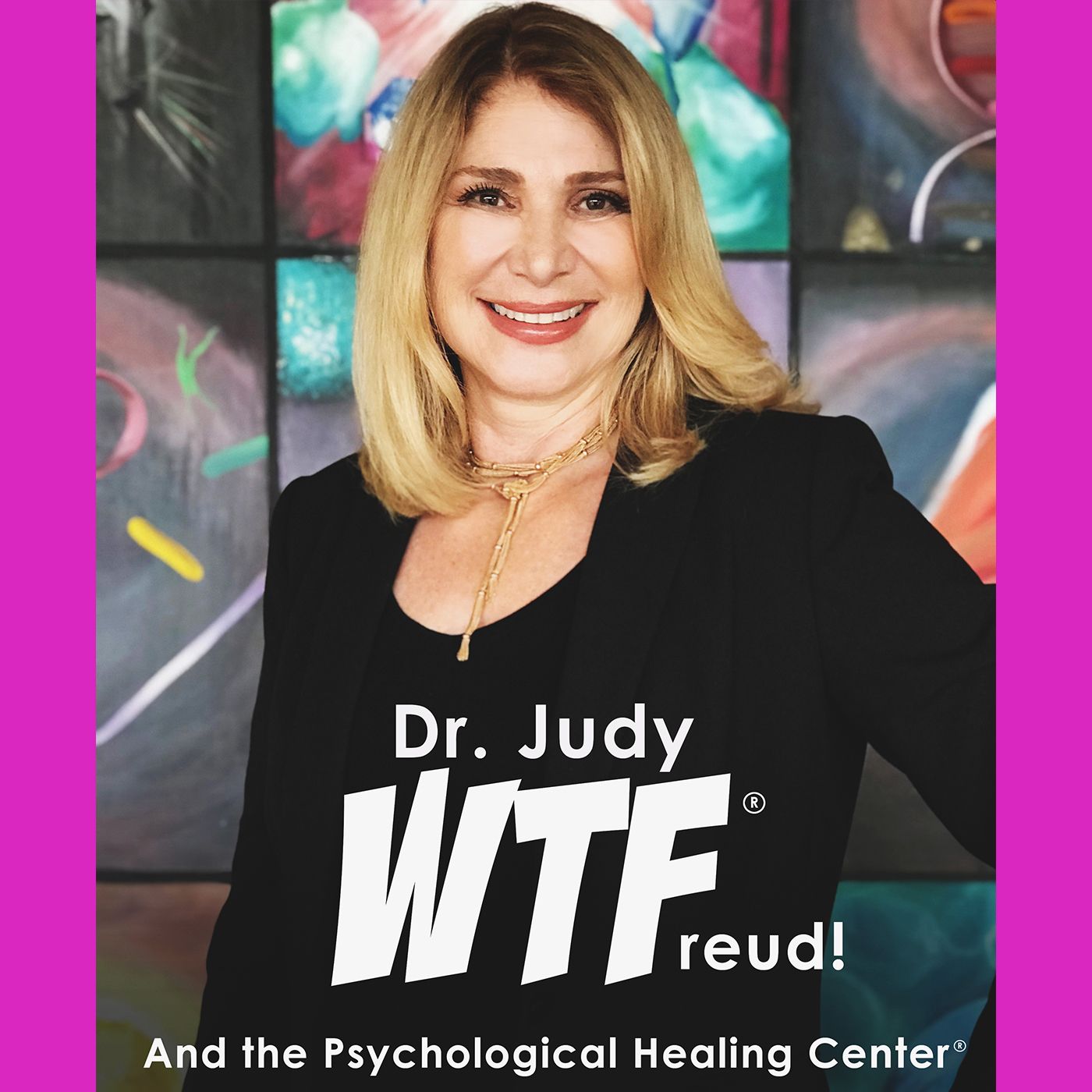
What the Freud, and why the pattern repeats.
Dr. Judy Rosenberg takes calls, puts listeners on the proverbial couch, and traces present-day pain back to how it was first encoded. Narcissists, breakups, boundaries, and addiction all get run through her MindMap System for Healing Human Disconnect.
PRESS PLAY
The name is a joke that turns out to be a thesis. WTF stands for What the Freud, and Dr. Judy Rosenberg uses it to ask why people keep repeating the patterns they say they want out of. She is a clinical psychologist and runs the Psychological Healing Center. The show is built around the MindMap System for Healing Human Disconnect, a framework she created decades ago, originally for global disconnect and then applied to the human kind. Most episodes start the same way. She names the topic, gives the call-in number, and lays out the mind map for anyone hearing it for the first time. The structure has three rows. The first is encoding, the wounds of childhood, and she lists them without softening: physical abuse, sexual abuse, verbal abuse, control, smothering, narcissistic parents, emotional neglect. Out of those wounds come the reactions, fight, flight, fawn or freeze, which she attributes to the amygdala. From there the framework gets applied to whatever the night's subject happens to be. Narcissism is the recurring one. She has covered future faking as another form of trickery, intermittent and partial reinforcement as the mechanism that keeps people hooked, narcissistic abuse by proxy, and narcissists during the holidays, where the gift she recommends is boundaries. Other episodes go elsewhere. One is a guide to ending a relationship with someone who has borderline personality traits and deep abandonment issues, handled as kindly as the situation allows even if it is not received that way. Another treats smoking and other addictions as attempts to fill what she calls the hole in the soul, then asks whether they actually do. She has a book on quitting, and she mentions it. Topics often come from her own practice. She has said outright that a session inspired the episode, that she learns while doing therapy, and that she then thinks about what lesson to bring out of it. Calls are welcome under two conditions she states plainly: keep it short and keep it relevant. The delivery is conversational and slightly unbounded. She has left the door open so her dogs can come and go without any canine disconnect, and she says so mid-explanation without breaking stride. She checks the chat room to see who is listening. She addresses newcomers directly and does not assume anyone has heard the framework before. What holds it together is the promise she repeats to callers, that they can become the cause of better outcomes for their own lives. With more than four hundred episodes, the show has settled into a rhythm: one concept, one framework, and a phone line open to whoever is living it.
Made for: Listeners untangling a relationship with a narcissistic or emotionally dysregulated person, and anyone who suspects their adult patterns and addictions trace back to childhood. It suits people who want a named framework rather than open-ended talk.
What sets it apart: Every topic runs through one consistent structure, the MindMap System for Healing Human Disconnect, which Dr. Judy Rosenberg built and re-teaches from scratch each episode, and the phone line means the framework gets tested on real callers rather than staying theoretical.
Call in, “Get On The Couch” with Dr. Judy, and find the MAIN VEIN OF YOUR PAIN.
Short reviews from the PlayNext desk, based on the episodes we processed.
A grounded look at why a meaningful friendship can still leave someone drained.
Dr. Judy WTF looks at toxic friendship through a useful personal admission: a bond can have genuinely wonderful parts and still leave someone drained.
A spiritual reunion turns into a grounded conversation about conditioned limits, source energy, and reconnecting.
A chance meeting at a chiropractor's office opens into a reflective conversation about coincidence, source energy, connection, and the work of revealing light.
A focused discussion of how hurtful messages can shape a child's self-image, and how mind mapping may help create distance from them.
Children's mental health is framed through a clear, intimate question: what happens when a child starts treating hurtful messages as truth? The episode uses mind mapping as a healing system meant to give children more distance from painful labels and childhood wounds, while also…

Jonquilyn Hill chases one listener question per episode to the experts who can answer it.

Three hosts and psychologist Dr Emily talk vulnerability, therapy, and imperfection with guests.

Fearne Cotton interviews guests like Boy George and Bryony Gordon about mental health and identity.

Dr. Joy Harden Bradford pairs therapy insight with Black TV recaps, maternal health, and history.


Dr.
A practitioner discusses using a mind mapping system to heal multigenerational family disconnects in a treatment room setting.
Dr.
This episode explores narcissistic abuse and future faking, explaining how narcissists use intermittent reinforcement to keep victims hooked, and introduces a mind map for healing human disconnect.
This episode offers guidance on handling a breakup with someone who has borderline personality disorder, focusing on kindness and respect despite potential misinterpretation.
Dr.
Dr.
Dr.
Dr.
Dr.
Dr. Judy argues that oxygen, not nicotine, creates smoking's immediate relaxation effect.
Dr. Judy Rosenberg argues that apathy, not hate, is the opposite of love and the core of true narcissism.
Dr.
Dr.
Dr.