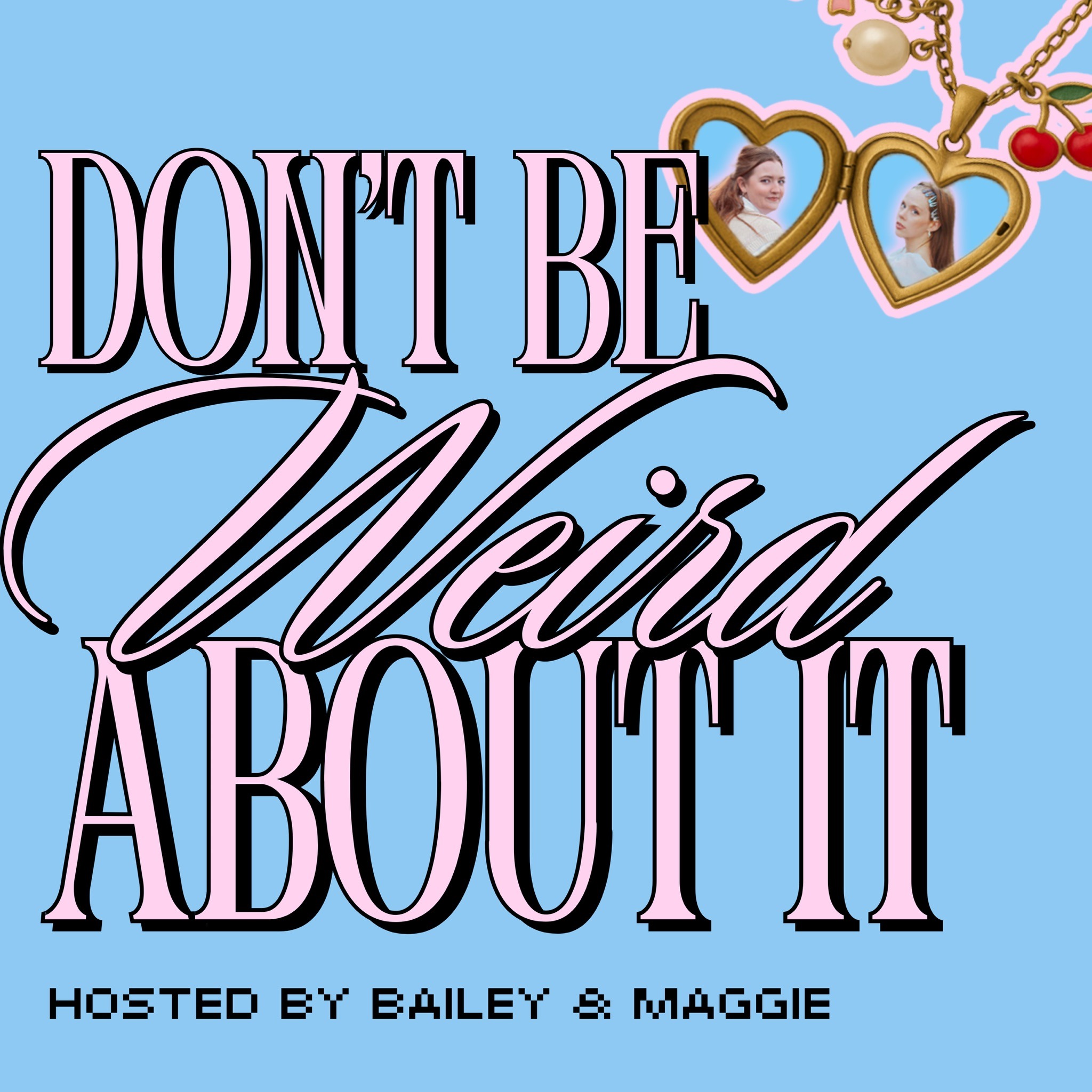
Don't Be Weird About It is casual banter with the speed turned up. The show runs on Maggie and Bailey's overlapping energy, where a thought rarely stays small for long. A contact lens becomes a friendship doctrine. A pink smoothie becomes a visual investigation. A dating anecdote becomes a mock-serious audit of housing, romance, and hypothetical goats. The rhythm is loose, but the comedy is precise in its own chaotic way. Tiny details get seized, repeated, dressed up, and pushed until they become miniature theater. Episodes move through NYC life, pop culture, girlhood, fanfic, Broadway-adjacent chatter, video games, dating, nostalgia, and whatever odd memory has the most charge that day. The show is not trying to sound polished. That is the point. It feels like sitting near people who already have six running callbacks and are willing to explain only half of them. Eli appears in the room, sometimes becoming part of the joke simply by existing. JK is named as the editor and occasionally pulled into the on-air atmosphere. Amari joins as a friend for an episode that moves from Super Bowl talk into stories about being on a film set and seeing costumes, dancers, and vampire makeup come to life. The show's funniest moments often come from over-specific imagined scenes: courtside outfits at a game, a stern Pilates instructor from New York, or a hotel stay spiraling into panic and restaurant enthusiasm. It can be irreverent and blunt, but it usually stays anchored in affection. The attitude is playful exasperation, not distance. Topics are treated less like segments and more like doors someone keeps opening into another hallway. That makes the show especially good for listeners who want personality first and structure second. Its charm is the momentum: the bit finds itself while everyone is already moving.