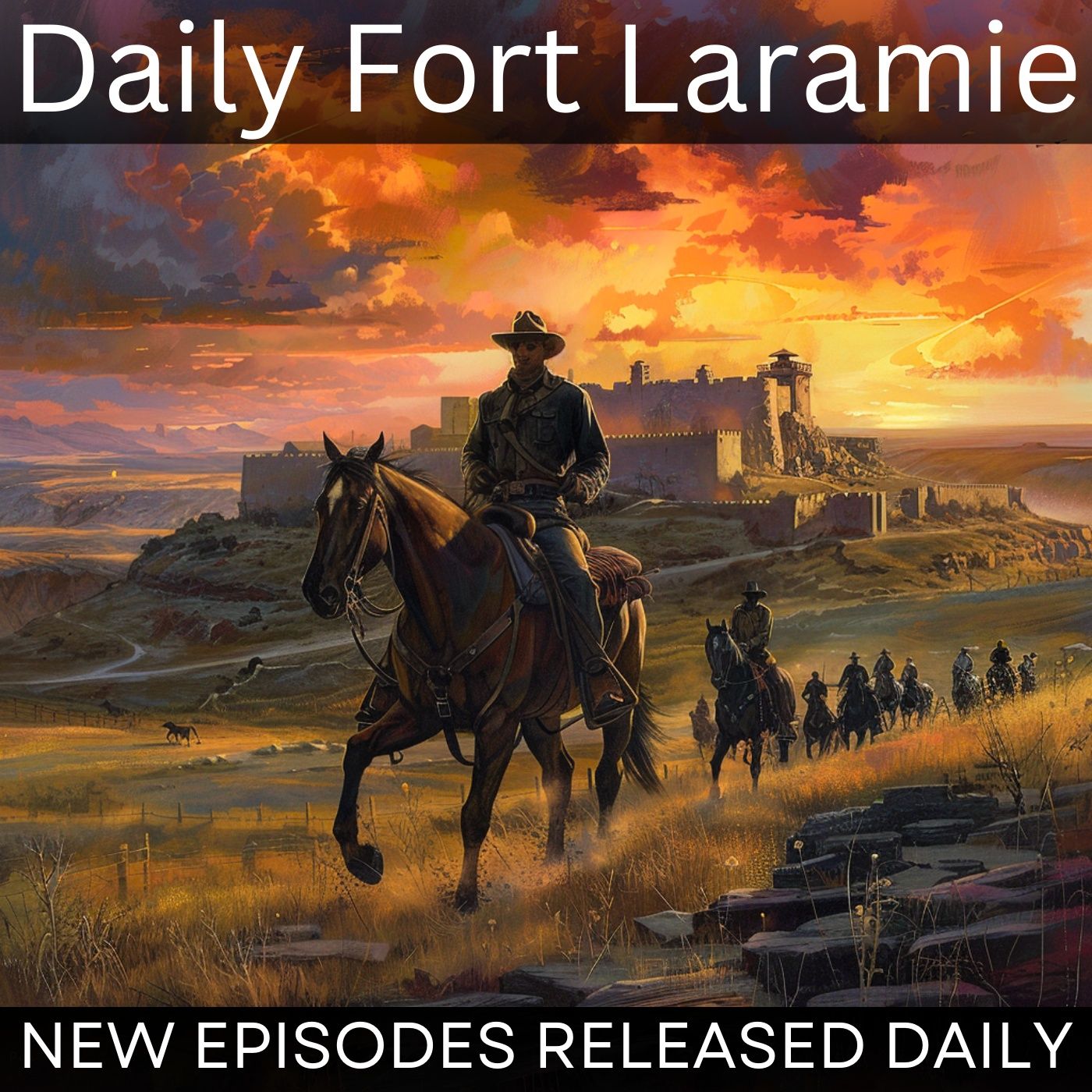
Daily Fort Laramie presents Fort Laramie as a pressure point on the Northwest Frontier. The frame is transcribed radio drama. Mounted orders, sharp entrances, cast announcements, and public-service closing messages place the listener in the world of broadcast storytelling. At the center is Raymond Burr as Captain Lee Quince. The recent episode run gives the show its shape: "Gold," "The Woman at Horse Creek," "Squaw Man," "Captain's Widow," "The Massacre," "Spotted Tail's Return," "The New Recruit," and "Talented Recruits." Those titles point to a Western built from cavalry duty, frontier settlements, scouts, Native groups, wagon trains, military hierarchy, and personal obligation. The scenes are rarely casual for long. A break by a creek can become a report about raids along Horse Creek. A request for a scout can turn into a conflict over loyalty and risk. A widow's visit to the fort can unsettle officers who think command should settle the matter. The writing favors direct confrontation. Characters ask for orders, challenge motives, bargain for time, and speak in the formal cadences of a military outpost. The show also carries the assumptions and language of its period. Native characters and groups appear within Western conventions, including language now widely understood as dated or offensive. That does not erase the dramatic charge, but it does define the texture. Daily Fort Laramie works best as a preserved style of frontier melodrama: disciplined, blunt, theatrical, and often concerned with the gap between official command and human consequence. It is not a loose conversation or a modern history explainer. It is a staged Western world where a captain's decision, a scout's hesitation, a settler's fear, or a flag carried across open ground can hold the whole scene in suspense.