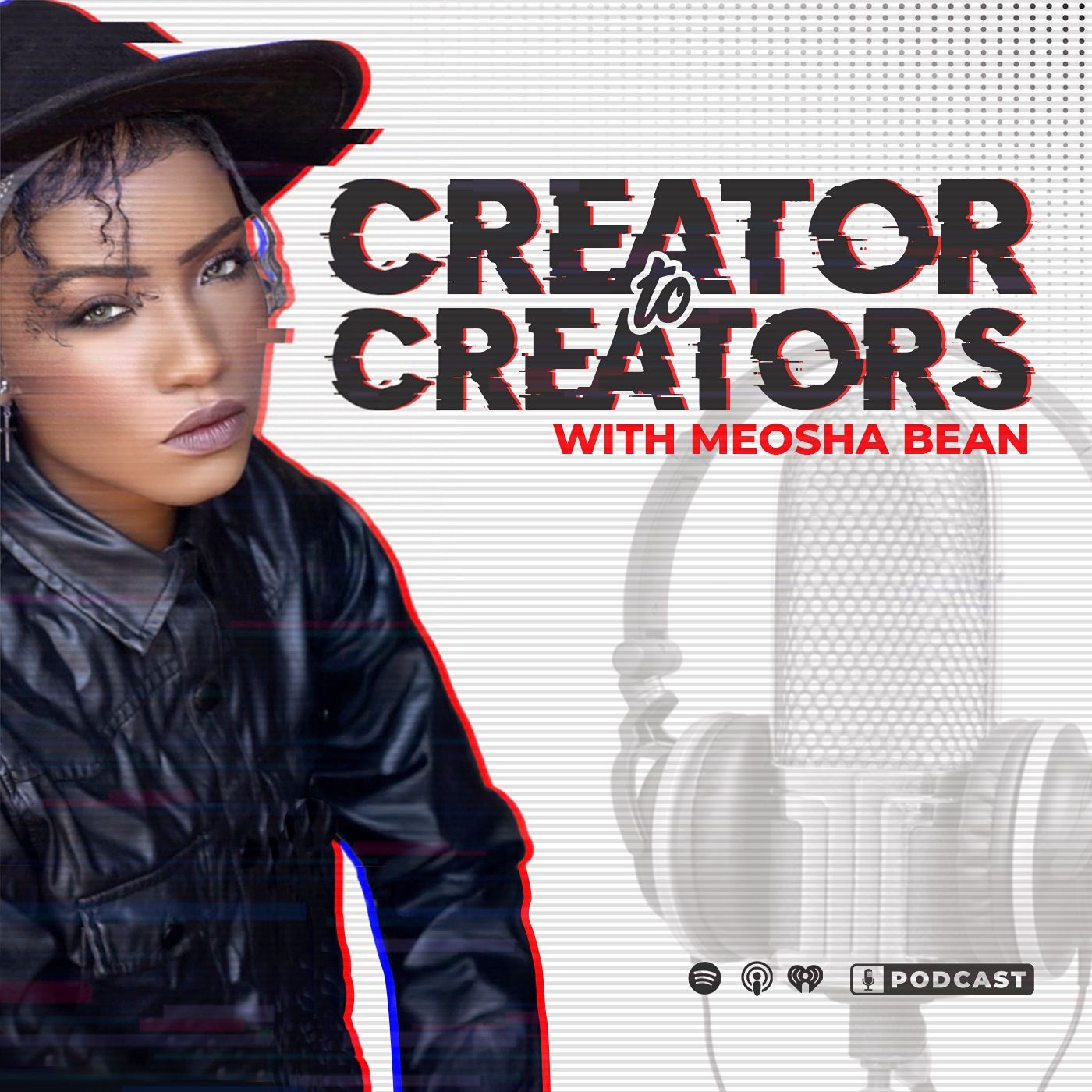
Creator to Creators is an interview show hosted by filmmaker Meosha Bean, who is introduced in each episode as the maker of the documentary Horror Noir and the film Anatomy of an Antihero: Redemption. The guests are independent musicians, producers and creatives from around the world. The format is consistent to the point of ritual. Bean says she loves going back to the beginning, because the beginning charts our trajectory in life. So most episodes start with childhood. One guest described singing in the back of her mother's car while her mother's friends exchanged looks. Another won singing contests through elementary school and was asked by his father, around sixth grade, how seriously he wanted to take it. Dr. Jana Nirvana traced her start to a childhood in Czechoslovakia under the communist regime, with family divided between East and West, and an elementary art school that opened the door to art. Tracy Marcellino of Witch Cabin talked about discovering a love of producing, and about co-producing a track that explores connection in an age of dissociation. Matt Axton spoke plainly about how hard it is for independent artists to compete when larger players have figured out how to flood the algorithms. The through-line across seasons is authenticity — what it means, who still has it, and whether it can survive the current release cycle. AI surfaces repeatedly and the arguments are pointed rather than abstract. Guests keep returning to the idea that a system can study human emotion but cannot live a human life, and that the difference is audible. There is nostalgia here too, for music you felt in your soul rather than music pushed out to meet a schedule. The host's role is facilitator more than interrogator. She praises the work first, then asks about process, and lets guests run long without cutting them off. Interjections are affirming and frequent, which keeps the momentum up without turning the exchange into a segmented interview. Business details get their moment as well — albums in progress, where to find the music, which platforms a guest is uploading to. Episodes end with an open invitation to return and a closing line to live, love, laugh. At more than four hundred episodes across multiple seasons, the archive functions as a running record of working independent artists talking candidly about the trade.